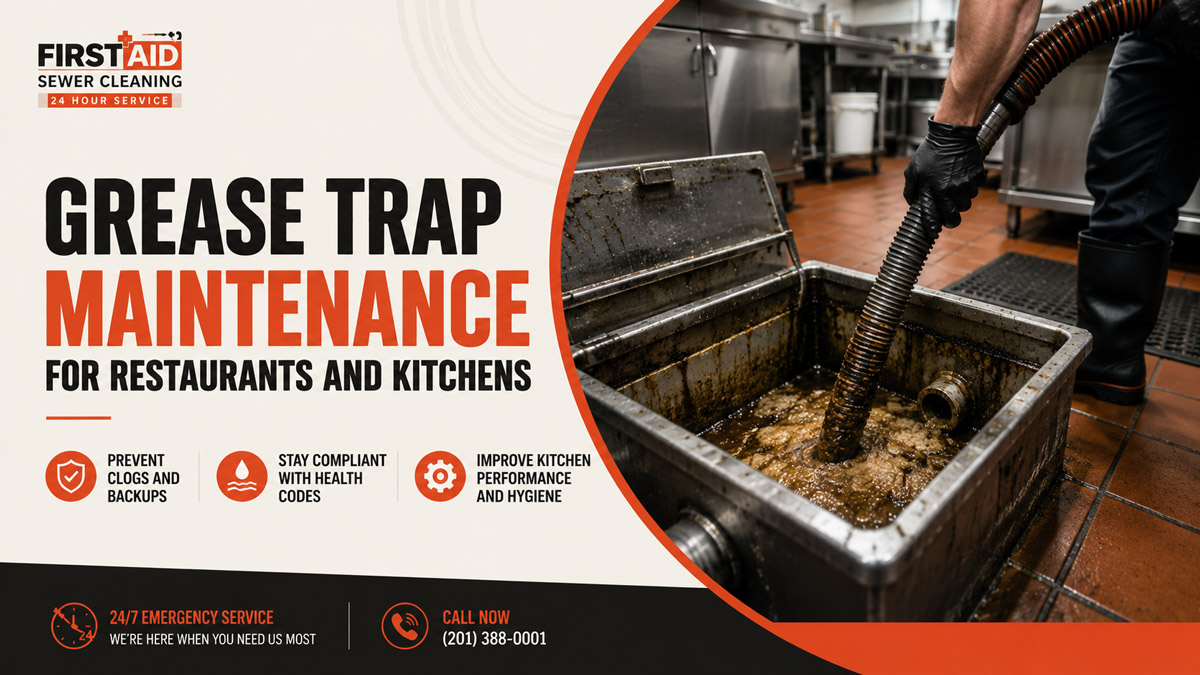
A grease trap is the unsung hero of a commercial kitchen. It catches the grease that would otherwise coat the sewer line, and when it is maintained, the kitchen drains like it should. When it is ignored, the line pays the price.
How a grease trap works
Wastewater from the kitchen enters the trap and slows down. Grease floats to the top, solids settle to the bottom, and the relatively clean water in the middle flows out to the line. The trap is a settling tank, and it works until it is full. Once full, grease and solids flow past it, and the line becomes the trap.
The expensive part
The clog that everyone fears is not in the trap; it is in the line beyond it. Grease that flows past a full trap hardens on the pipe walls, narrowing the line until the kitchen backs up during service. The emergency call, the lost service, and the jetting are all more expensive than the regular trap cleaning that prevents them.
The schedule question
How often a trap needs cleaning depends on its size and the kitchen’s volume. A busy kitchen with a small trap needs more frequent service than a light kitchen with a large trap. The honest answer comes from opening the trap and measuring the buildup, not from a calendar guess.
The signs of a full trap
Slow drains across the kitchen, gurgling from the sinks, odors near the trap, and grease on the water surface in the sink all point to a trap that is full. Catching it at the signs is a scheduled cleaning; missing the signs is an emergency.
What the service includes
A proper cleaning removes the grease and solids, rinses the trap, and handles the material per regulations. The service board at First Aid Sewer Cleaning lists grease trap alongside the drain work, and the storefront reads residential and commercial. The trap is not just pumped; it is cleaned.
The property manager version
For property managers, the trap schedule is part of protecting the building’s line. A restaurant tenant with a full trap is a building-wide risk, and the documented service protects the property and the lease conversation. The record of the cleaning matters as much as the cleaning.
The line follow-up
Even with a maintained trap, the line behind it benefits from an occasional inspection or jetting. The camera shows the line’s condition, and the jetting restores the full diameter. Together, the trap schedule and the line check keep the kitchen draining for years.
The smell test
A grease trap that smells is a trap that is working too hard or not working at all. The odor is the grease and the bacteria doing what they do when the trap is full, and it is the earliest sign the kitchen can notice. The smell test is free, it works every shift, and it is the signal to call before the drain slows and the line pays the price.
The inspection habit
The cleaning is not complete without the inspection: the trap opened, the buildup measured, and the line connection checked. The schedule is set from what the inspection finds, not from a calendar, and the record of the inspection is the documentation the property conversation needs. A maintained trap with a documented schedule is a kitchen asset; a full trap is a liability waiting to clog.
The same discipline applies to the line beyond the trap: a maintained trap protects the pipe, and an occasional camera or jetting check keeps the whole path clean. The trap and the line are one system, and the system works when both are watched.
The same standard applies to the record: the documented schedule is what the health conversation and the lease conversation ask for, and the record of the service is as valuable as the service itself. The trap is maintained; the paper trail is kept.
Related reading
Set up grease trap service for your kitchen.