When a drain keeps clogging, the usual answer is a cable. But a cable punches a hole through a clog; it does not clean the pipe. Hydro jetting is the method that does, and it is the difference between a temporary fix and a clean line.
What hydro jetting is
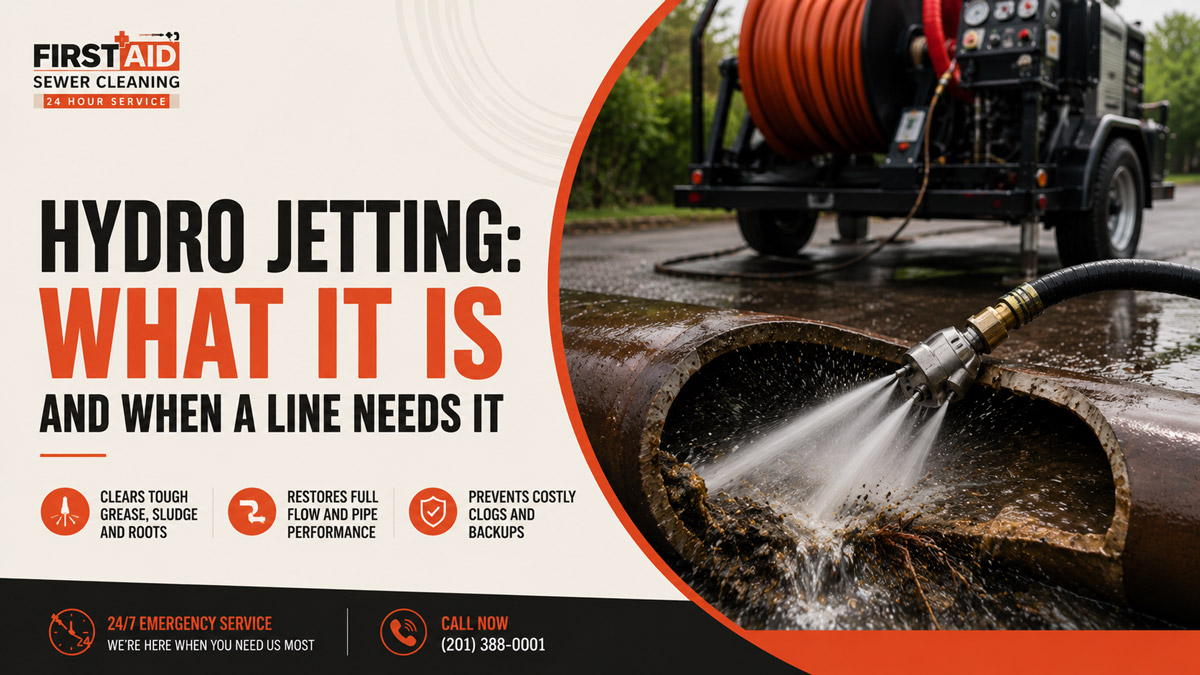
Hydro jetting uses a high-pressure water jet to scour the inside of the pipe. The water is delivered through a hose with nozzles that spray backward and forward, cutting through grease, scale, and roots while propelling the hose down the line. The result is a pipe cleaned to its full diameter, not just a hole through the blockage.
When a cable is not enough
A cable (also called a snake or auger) breaks through a clog but leaves the walls of the pipe coated. Grease stays on the walls, roots regrow from the stubs, and the clog returns weeks later. Recurring clogs are the classic sign that the line needs jetting, not another cable.
The grease problem
Kitchens are where grease wins. Cooking oil cools and hardens on the pipe walls, narrowing the line over time. A cable punches through the narrowest point; jetting removes the coating and restores the full diameter. That is why jetting is the follow-up for restaurant and kitchen lines.
The root problem
Roots enter the line through small cracks and grow into the pipe. A cable cuts the roots at the opening, but they regrow. Jetting cuts and removes more of the root mass, and the camera inspection afterward shows what is left and whether the crack needs a repair.
The pipe safety question
Jetting is powerful, which is why the pipe material and condition are checked before the method is chosen. The archived site describes top-of-the-line equipment and techniques, and the diagnosis confirms the line can take the pressure. The jetting plan is matched to the pipe, not applied blindly.
The preventive schedule
For problem lines, jetting on a schedule is cheaper than the emergency call. A restaurant line that gets jetted before the grease hardens stays clear; a home line with a history of clogs stays predictable. The schedule is built from the line’s history, and the team can set it up.
The evidence afterward
The proof of jetting is a camera pass after the cleaning. The before-and-after footage shows the line clear to its full diameter, and it is the honest record of the work. If the camera shows a crack or a joint failure, that finding becomes the repair plan.
The kitchen reality
Kitchen lines are the jetting department’s busiest customers. Cooking oil, sauces, and food solids cool and harden on the pipe walls, and the narrowing is gradual until the drain slows or backs up. The cable clears the moment; the jetting cleans the walls. For a restaurant or a home kitchen that cooks heavily, the jetting schedule is the difference between a working line and a holiday-weekend backup.
The estimate habit
The jetting estimate is built from the diagnosis: the line length, the pipe material, and the clog type. A photo or a description of the symptom starts the conversation, and the camera, where needed, finishes it. The homeowner who describes the recurring clog and the kitchen history gets the accurate plan, and the accurate plan is the one that stops the cycle.
The scheduling question
Jetting is scheduled around the line, not the calendar. A home line with a known grease history is best jetted before the heavy cooking season, while a restaurant line follows the menu cycle, and the team can set the cadence from the footage of the previous cleaning. Because the service operates 24 hours, the jetting can also run outside the busiest hours of the kitchen, so the cleaning does not cost the business a service day.
The same honest logic applies at home: a kitchen that cooks heavily will coat its line, and the jetting schedule is the maintenance that keeps the holiday dinner from becoming a backup. The diagnosis and the plan are the difference between a line that works and a line that waits for the worst moment.
Related reading
Ask about hydro jetting for your line.