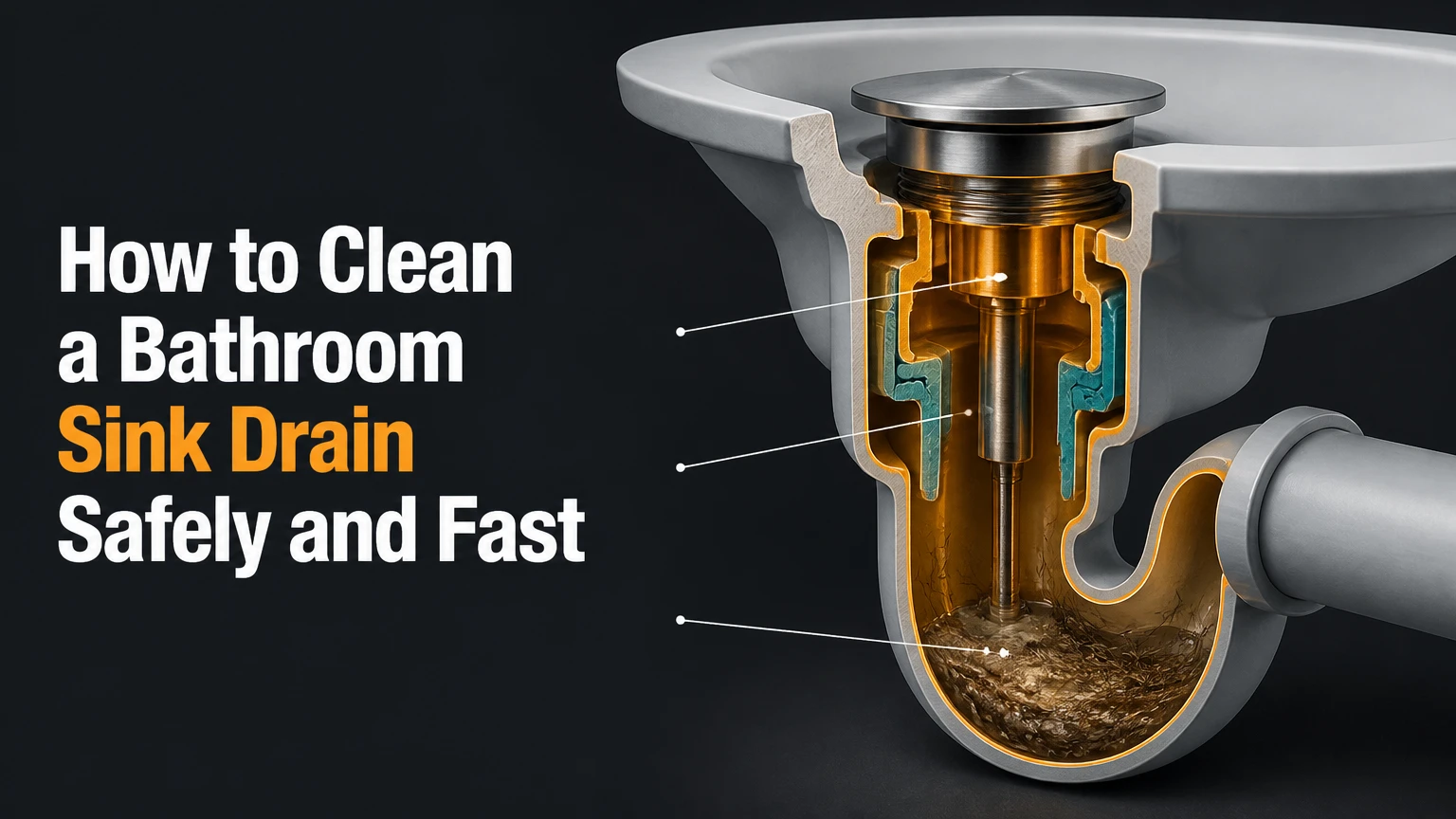
To clean a bathroom sink drain, remove the stopper, extract hair and sludge mechanically, rinse the overflow opening, and flush the drain with hot tap water. For a deeper cleaning, remove and scrub the P-trap, then test every connection for leaks. Mechanical removal works better than chemical cleaner for most bathroom-sink clogs.
Key Facts
A bathroom sink clog usually forms around the stopper, tailpiece, or P-trap, rather than deep inside the wall.
A plastic barbed drain tool removes hair with less pipe damage risk than a rigid metal snake.
Baking soda and vinegar can reduce light residue and odor, but their fizz does not reliably dissolve a compact hair clog.
Use hot tap water for plastic plumbing; do not assume boiling water is safe for every pipe, joint, or sink seal.
Never mix drain cleaner with bleach, vinegar, ammonia, or another drain product.
A P-trap that leaks after cleaning usually has a misplaced, damaged, or incorrectly sized slip-joint washer.
What You Are Cleaning
A bathroom sink drain includes the drain opening, pop-up stopper, flange, tailpiece, P-trap, and wall connection. Each part collects a different type of residue, so cleaning only the visible basin opening often leaves the real obstruction in place.
The pop-up stopper is the plug that closes the basin. Its underside and pivot mechanism commonly collect hair, toothpaste, skin oils, and soap residue. The drain flange is the finished ring around the opening, while the tailpiece is the short vertical pipe beneath it.
The P-trap is the curved pipe below the tailpiece. Water remains in its bend to block sewer gases from traveling through the drain. That water seal is useful, but the bend also catches dense sludge and small objects. The horizontal pipe leaving the trap leads toward the branch drain inside the wall.
A drain does not have a universal “80 percent” hair-capture rate. The amount caught by the stopper depends on its design, clearance, household use, and whether the sink has a separate strainer. That percentage should not be treated as a plumbing specification.
What Causes a Bathroom Sink Drain to Slow Down?
Hair, toothpaste, soap residue, shaving cream, cosmetics, and skin oils combine into a sticky mass that narrows the stopper opening and P-trap. A slow drain can also indicate a deeper branch-line obstruction, a poorly positioned stopper, or a venting problem.
| Symptom | Most likely location | First action | Escalation sign |
|---|---|---|---|
| Water drains slowly but never stops | Stopper or tailpiece | Remove stopper and extract debris | Flow remains weak after trap cleaning |
| Basin fills completely | P-trap or branch line | Bail out water and clean trap | Water backs up into another fixture |
| Black slime on stopper | Stopper, flange, or overflow | Scrub with detergent and rinse | Slime returns within several days |
| Sulfur or sewage odor | Dry trap, overflow, or leak | Run water and inspect connections | Odor persists with a full trap |
| Gurgling sound | Drain line or vent | Check for shared fixture symptoms | Multiple fixtures drain slowly |
Hair is a physical obstruction, not a substance that household vinegar reliably dissolves. Biofilm can create odor and reduce the internal diameter of a pipe, but a thick deposit still needs brushing, flushing, or professional cleaning.
Before You Start
A basic bathroom sink cleaning takes 20-30 minutes and costs about $5-$25 if you already have household cleaning supplies. P-trap removal adds another 15-30 minutes and requires access beneath the vanity.
| Item | Typical quantity or specification | Purpose | Typical cost |
|---|---|---|---|
| Plastic barbed drain tool | 1 tool, 18-24 inches long | Pulls hair from the tailpiece | $3-$8 |
| Small cup plunger | 1, 4-5 inch cup | Moves a nearby soft clog | $8-$15 |
| Bucket | 1, 1-2 gallon capacity | Catches P-trap water | $3-$10 |
| Nylon bottle brush | 1 brush, 12-18 inches | Scrubs the trap interior | $4-$10 |
| Nitrile gloves and eye protection | 1 pair and 1 set | Protects skin and eyes | $3-$12 |
| Old toothbrush and dish detergent | 1 each, 1-2 teaspoons | Cleans stopper and flange | Usually on hand |
Before opening a drain connection, remove items from beneath the sink and place a towel around the bucket. Photograph the trap assembly if its orientation is unfamiliar. Do not start mechanical cleaning if a commercial drain chemical is still in the standing water, because splashing the chemical can cause burns.
How Do You Clean a Bathroom Sink Drain?
Clean a bathroom sink drain in five stages: remove the stopper, extract surface debris, plunge if needed, rinse and deodorize, then clean the P-trap when the obstruction remains. The most important success factor is removing the physical hair mass before using any liquid treatment.
Step 1: Remove and Wash the Pop-Up Stopper
Lift the stopper as high as possible and inspect whether it pulls straight out. Many bathroom sink stoppers connect to a pivot rod beneath the basin, so do not force a stopper that refuses to lift.
For a pivot-rod design, place a bucket beneath the drain assembly. Loosen the retaining nut on the horizontal pivot rod by hand, pull the rod back several centimeters, and lift the stopper from above. Keep the small pivot ball and washer in a safe place.
Scrub the stopper with dish detergent, warm water, and an old toothbrush. Clean the underside, the lift rod hole, and the pivot stem, where compacted hair often forms a ring.
You will know it worked when: the stopper moves freely and its underside has no attached hair or soft black residue.
Common mistake: forcing the stopper upward while the pivot rod is still engaged. That can bend the rod or damage the stopper linkage.
Step 2: Extract Hair from the Tailpiece
Lower a plastic barbed drain strip through the open drain flange. Push gently until the tool meets resistance, rotate it slightly, and pull it upward without snapping the strip sideways.
Expect to remove a wet, unpleasant clump. Repeat with a clean section of the tool until it comes out mostly clear. Wipe each extraction onto paper towel and place it in household waste rather than rinsing it into another drain.
A plastic extraction strip is preferable to a rigid metal auger for the short vertical section beneath a bathroom sink. Older brass or thin-walled metal tailpieces can deform, and an aggressive cable can catch on the stopper linkage or scratch a damaged drain fitting.
You will know it worked when: a cup of water poured into the open flange begins moving immediately instead of pooling.
Common mistake: pushing hair farther into the P-trap. Pull upward whenever possible, and use a small plunger only after loose surface debris has been removed.
Step 3: Use a Plunger for a Nearby Soft Clog
Add enough water to cover the rubber cup of a small sink plunger. Block the overflow opening firmly with a damp cloth, because an open overflow allows pressure to escape.
Center the plunger over the drain and make 10-15 controlled strokes. The first stroke should be gentle to create a seal; subsequent strokes can be firmer without lifting the cup from the basin.
A plunger works best on water-softened toothpaste, soap residue, and a loose obstruction near the trap. It does not reliably remove a solid hair bundle that remains attached to the stopper or tailpiece.
You will know it worked when: the water level drops rapidly during a stroke and the drain continues flowing after the plunger is removed.
Common mistake: plunging without blocking the overflow. The basin may splash, but the pressure reaching the clog remains weak.
Step 4: Rinse the Drain and Overflow Opening
Flush the open drain with 1-2 liters of hot tap water. For plastic plumbing, hot tap water is the safer default because household boiling water can soften some plastic components, stress glued joints, and damage older seals.
Clean the overflow opening separately. Place a small funnel or folded paper cup at the opening, then pour approximately 250 milliliters of warm water mixed with a teaspoon of dish detergent through it. Use a narrow bottle brush or cotton swabs around the visible passage.
Baking soda and vinegar are optional for light odor and surface residue. Use about 120 grams of baking soda followed by 240 milliliters of white vinegar, cover the opening for 10-15 minutes, and rinse with hot tap water. The fizz creates agitation, but the reaction mainly produces carbon dioxide, water, and sodium acetate. It is not a dependable chemical treatment for hair or a thick grease-like blockage.
You will know it worked when: the overflow no longer smells sour or stagnant and the drain accepts a continuous stream of hot water.
Common mistake: treating the fizz as proof that the clog has dissolved. Test the flow, then proceed to the P-trap if water still stands.
Step 5: Remove and Scrub the P-Trap
Clean the P-trap when surface extraction and plunging fail, or when you want a complete sludge removal. Put a bucket under the curved section, loosen both slip nuts, and lower the trap carefully because it may contain several cups of dirty water.
If the nuts are metal and stuck, use tongue-and-groove pliers over a cloth. Apply only enough force to break the nut loose. Excessive force can crack a plastic trap or twist the drain assembly above it.
Empty the trap into the bucket and scrub its interior with warm water, dish detergent, and a nylon bottle brush. Inspect the slip-joint washers for flattening, cracks, stiffness, or missing sections. Replace damaged washers with the same diameter and style.
Reinstall the trap in its original orientation. Align the pipes without side pressure, seat each washer correctly, and hand-tighten the slip nuts. Some washers are beveled, but the correct direction varies by washer design, so match the replacement to the old washer or follow its packaging instructions.
Run the faucet for 60-90 seconds while checking every joint with a dry paper towel.
You will know it worked when: the trap remains dry, the basin drains continuously, and no water appears on the paper towel.
Common mistake: using pliers to achieve maximum tightness. Slip-joint connections seal through washer compression and alignment, not extreme force.
Which Drain-Cleaning Method Is Safest?
Mechanical removal is the safest first choice for a bathroom sink because it removes hair without exposing the user or plumbing to caustic chemicals. Enzymatic products can support maintenance, while baking soda and vinegar have limited deodorizing value; chemical drain openers belong only to carefully controlled last-resort situations.
| Method | Best use | Typical time | Main limitation |
|---|---|---|---|
| Plastic barbed strip | Hair in stopper or tailpiece | 5-15 minutes | Cannot reach a deep branch-line clog |
| Small cup plunger | Soft nearby obstruction | 5-10 minutes | Needs a sealed overflow and standing water |
| P-trap removal | Sludge or objects in the trap | 15-30 minutes | Requires leak testing and access beneath sink |
| Enzymatic drain product | Light organic maintenance | 8-12 hours | Does not pull out compacted hair quickly |
| Baking soda and vinegar | Light odor or residue | 15-30 minutes | Does not reliably dissolve hair |
| Caustic drain opener | Rare emergency use | 15-60 minutes | Burn, mixing, material, and splash hazards |
Chemical drain openers containing sodium hydroxide or sulfuric acid can generate heat and cause severe skin or eye injury. Product labels from manufacturers such as Drano and Liquid-Plumr warn users not to mix formulations with other cleaners, and Poison Control gives the same basic safety direction for household chemicals.
Do not use a chemical opener before removing the P-trap. Liquid trapped in the bend can spill onto hands, tools, flooring, or a plumber called to repair the line. Avoid these products entirely if the pipe material, previous product, or chemical concentration is unknown.
How Much Time and Money Does Drain Cleaning Take?
A simple bathroom sink drain cleaning typically costs $5-$25 and takes 20-30 minutes. A job involving P-trap removal usually costs $10-$40 in replacement supplies and takes 35-60 minutes, excluding repairs to corroded fittings.
| Situation | DIY supplies | Typical duration | Likely next step |
|---|---|---|---|
| Stopper hair buildup | $3-$10 | 10-20 minutes | Add a drain strainer |
| Slow drain with soft residue | $8-$20 | 20-35 minutes | Plunge after extraction |
| P-trap sludge | $10-$30 | 35-60 minutes | Replace washer if needed |
| Corroded metal trap | $20-$60 | 45-90 minutes | Replace trap or call plumber |
| Recurring or shared blockage | $0-$25 initially | 30-60 minutes | Professional branch-line diagnosis |
Professional service pricing varies by location, access, time of day, and whether the plumber must use a cable machine or camera. A request for a written estimate is sensible when the blockage recurs, the trap is corroded, or multiple fixtures are affected.
What Should You Avoid When Cleaning the Drain?
Avoid actions that move debris deeper, damage pipe materials, or create a chemical exposure. A clean-looking basin does not prove that the tailpiece, trap, overflow, and branch connection are clear.
- Do not mix products. Never combine drain opener with bleach, vinegar, ammonia, toilet cleaner, or a second drain opener.
- Do not pour automatic-boiling water into unknown plumbing. Use hot tap water unless the fixture manufacturer and pipe materials confirm a higher temperature is appropriate.
- Do not force a metal snake through the stopper linkage. Remove the stopper first and use a plastic tool for short bathroom-sink clogs.
- Do not tighten slip nuts until plastic threads deform. Replace the washer or trap when the joint will not seal through normal hand-tightening.
- Do not rinse extracted hair into the drain. Bag it and discard it.
- Do not ignore a dry P-trap. Running the faucet for 30 seconds restores the water seal in an unused sink.
One practitioner rule is especially useful: if the obstruction comes out in one cohesive hair-and-sludge mass, mechanical cleaning has probably addressed the immediate cause; if only clean water comes out of the trap, investigate the branch line or vent instead of repeating the same rinse.
How Do You Handle Different Pipe and Household Situations?
The safest method changes with pipe material, access, and responsibility for water damage. Renters should begin with reversible cleaning, older homes need gentler treatment of corroded metal, and heavily used bathrooms benefit most from prevention.
For a rental bathroom
Remove and wash the stopper, use a plastic barbed strip, and clean the overflow. Avoid P-trap disassembly if the fittings are corroded or the lease assigns plumbing repairs to the property owner. Photograph the slow drain and report recurring problems before a leak develops.
For galvanized or older metal plumbing
Use mechanical extraction and manual trap cleaning. Corrosion can make old threads brittle, and caustic chemicals may worsen an already weakened pipe. Stop if the trap begins twisting the pipe entering the wall.
For PVC or ABS plastic plumbing
Hot tap water is appropriate for routine rinsing. Hand-tighten plastic slip nuts and avoid bending the trap sideways, because a small misalignment can cause a persistent washer leak.
For a frequently used family bathroom
Install a removable hair catcher that fits beneath or over the stopper. Clean the catcher weekly and perform a 1-2 liter hot-water rinse every one to two weeks, adjusting the interval when several people use the basin daily.
Why Does the Sink Still Drain Slowly or Smell?
A bathroom sink that remains slow after stopper and P-trap cleaning usually has a deeper branch-line obstruction, a pipe defect, or a venting issue. A persistent odor can come from residue in the overflow, a dry trap, a leak that allows sewer gas around the trap, or a problem farther in the drainage system.
Use the following diagnostic sequence:
- Run water for 30 seconds. If the sink was unused, a dry P-trap may have caused the odor.
- Watch another fixture. If the shower, toilet, or second basin gurgles or backs up, the problem is probably not limited to the sink.
- Inspect the trap with a dry tissue. Moisture at a slip nut indicates a seal or alignment problem.
- Clean the overflow. Odor can remain there even when the main drain is open.
- Check the drain speed again. A continuing slow flow after a clean trap points toward the wall branch or vent.
A blocked roof vent is possible, but it should not be the first assumption for an isolated slow bathroom sink. Vent diagnosis involves roof access and shared-fixture symptoms, so a plumber should investigate when several fixtures gurgle or drain poorly.
When Should You Call a Plumber?
Call a plumber when the bathroom sink remains blocked after stopper and P-trap cleaning, when multiple fixtures share the symptom, or when the drain assembly is corroded and cannot be loosened safely. Professional help is also appropriate after accidental chemical exposure or a leak that reaches the cabinet, wall, or floor.
Seek prompt assistance for these conditions:
- Wastewater backs up into a second fixture.
- The P-trap or wall connection is cracked.
- A metal pipe twists when you loosen a slip nut.
- The blockage returns within days after mechanical cleaning.
- Sewer odor persists even with a full trap and clean overflow.
- A chemical drain product may still be present.
- Water has damaged cabinetry, drywall, or flooring.
A professional may use a longer cable, hydro-jetting equipment, or a drain camera when the obstruction lies beyond the accessible trap. Those tools are unnecessary for most isolated hair clogs but useful when the same line repeatedly fails.
How Do You Prevent the Next Bathroom Sink Clog?
Prevent bathroom sink clogs by capturing hair, removing stopper debris weekly, and avoiding the disposal of thick products into the basin. A short recurring cleaning routine reduces the amount of material that reaches the P-trap.
| Maintenance action | Frequency | Quantity or duration | Purpose |
|---|---|---|---|
| Wipe the stopper | Weekly | 2-3 minutes | Removes hair before it enters the tailpiece |
| Clean the hair catcher | Weekly | 1 rinse and scrub | Prevents surface accumulation |
| Hot tap-water rinse | Every 1-2 weeks | 1-2 liters | Moves loose residue |
| Overflow cleaning | Monthly | 250 milliliters of warm detergent water | Reduces stagnant odor |
| P-trap inspection | Every 6-12 months | 10 minutes | Finds leaks and sludge early |
Do not pour shaving cream clumps, cotton swabs, dental floss, adhesive labels, or large cosmetic residue into the sink. Enzymatic maintenance products may help with light organic film when used according to the label, but they cannot replace physical removal of hair.
Frequently Asked Questions
Can I clean a bathroom sink drain without removing the stopper?
Yes. A plastic barbed drain strip can remove some hair through the stopper opening, but the stopper underside and pivot channel remain dirty. If the strip stops immediately or the sink has a recurring blockage, remove the stopper before using a plunger or opening the P-trap.
Is bleach a good way to sanitize a sink drain?
Bleach is not a reliable clog remover and can create dangerous gas when mixed with acidic products, ammonia, or drain opener. Clean removable parts with detergent and water instead. For persistent mold or sewage odor, identify the moisture source rather than repeatedly pouring disinfectant into the plumbing.
Can I use a wire hanger to pull out hair?
A straightened wire hanger may scratch the drain flange, catch the stopper linkage, or damage thin plumbing. A $3-$8 plastic barbed drain tool is easier to control and designed for short household drain openings. Remove the stopper first whenever possible.
How often should I clean a bathroom sink drain?
Clean the stopper and hair catcher weekly in a heavily used bathroom, and rinse the drain with hot tap water every one to two weeks. A monthly overflow cleaning helps control odor. Clean the P-trap when flow slows or during an annual plumbing inspection.
Why does water rise in the sink when the washing machine drains?
That pattern can indicate a restriction in a shared branch drain rather than a local bathroom-sink clog. Stop using fixtures that send water into the affected line and arrange a professional inspection if the backup repeats, smells of sewage, or affects several fixtures.
The Bottom Line
The safest way to clean a bathroom sink drain is to remove the stopper, pull out hair with a plastic drain tool, plunge only after sealing the overflow, and scrub the P-trap when necessary. Use hot tap water and limited detergent rinsing rather than relying on chemical drain openers. Clean the stopper weekly, test every trap connection for leaks, and call a plumber when multiple fixtures are affected or the blockage returns.