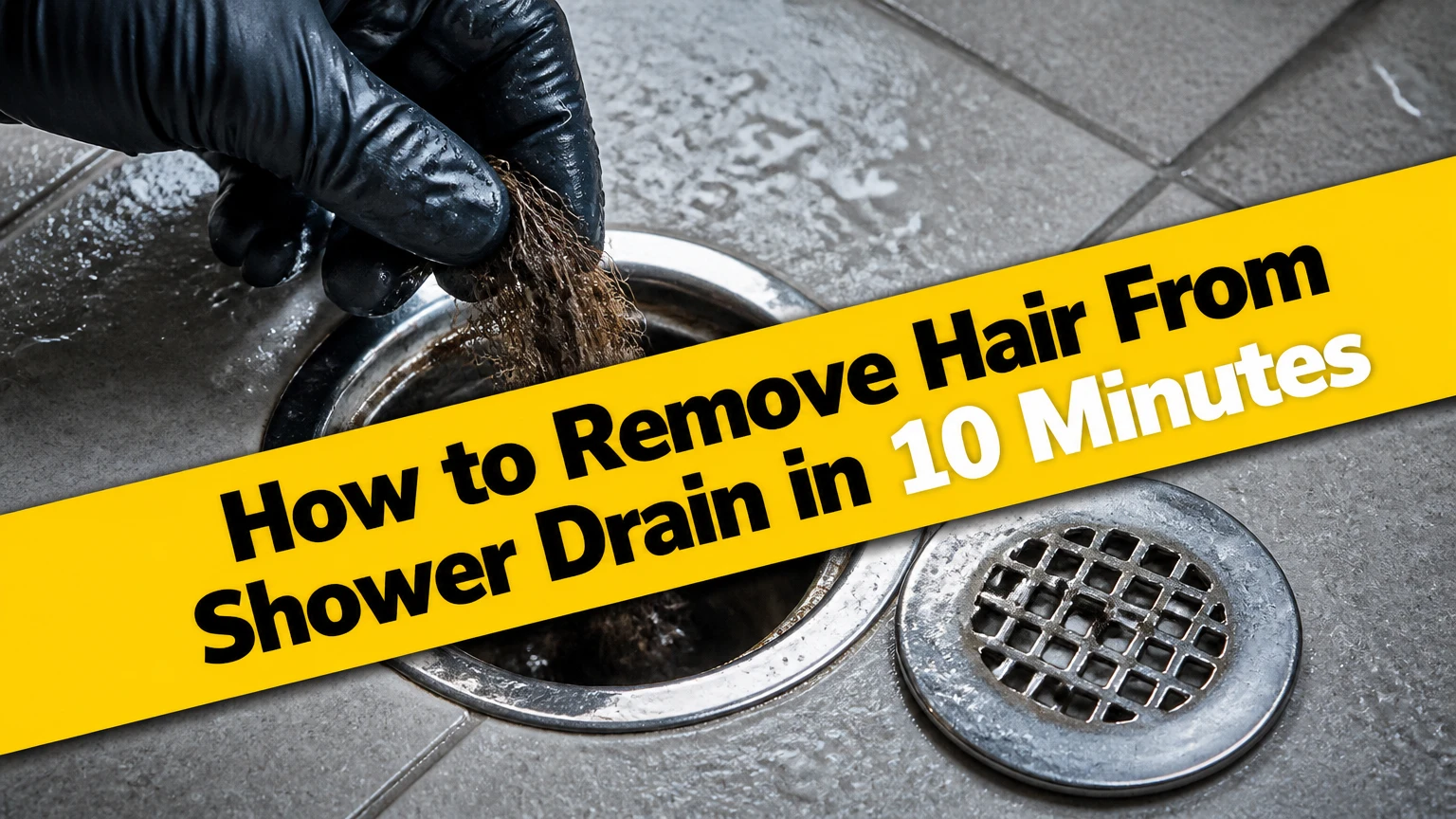
To remove hair from a shower drain, take off the drain cover, pull the hair out with a plastic barbed drain wand, and repeat until the tool comes up clean. The job usually takes 5-15 minutes and costs $3-$8. Mechanical extraction works better than baking soda and vinegar because hair must usually be removed, not dissolved.
Key Facts
A plastic barbed drain wand is usually the fastest first tool for a shower hair clog.
Most reachable hair clogs sit beneath the grate or near the shower trap, not deep in the main sewer line.
Baking soda and vinegar may reduce odor and light residue, but the reaction does not reliably dissolve a dense hair mat.
Never mix drain cleaners, bleach, ammonia, vinegar, or other cleaning products.
Do not use a plunger or snake after pouring caustic drain cleaner unless the product label and a professional specifically permit it.
A hair catcher cleaned weekly prevents more clogs than monthly chemical treatment.
Before You Start
A typical shower drain hair removal job requires 5-15 minutes, beginner skill, and $3-$8 for a disposable plastic barbed wand. Gather thick waterproof gloves, safety glasses, a screwdriver if the cover is screwed down, paper towels, a trash bag, a flashlight, and a bucket for standing water.
| Item | Typical specification | Purpose | Typical cost |
|---|---|---|---|
| Plastic drain wand | 18-24 inches long | Hooks hair below the grate | $3-$8 |
| Waterproof gloves | 8-12 mil nitrile or rubber | Protects hands from sludge | $2-$8 |
| Safety glasses | ANSI Z87.1-rated | Protects against contaminated splashes | $4-$15 |
| Screwdriver | Phillips or flat-head | Removes cover screws | $5-$15 |
| Trash bag | 4-13 gallon size | Contains extracted hair | Under $1 |
Turn off the shower and remove bottles, mats, and loose objects from the floor. If any chemical cleaner has already been poured into the drain, stop the mechanical procedure, ventilate the bathroom, and follow the product label. Chemical residue can remain in standing water even when the drain appears nearly empty.
Identify the Drain Cover
Shower covers commonly lift out, slide, or attach with two screws. A removable strainer may reveal the pipe opening immediately, while a decorative cover can conceal a separate stopper mechanism.
Do not pry against tile, grout, or a fragile acrylic shower base. Put screws in a small container, photograph the cover orientation, and use a flashlight to identify the opening before inserting a tool.
Why Do Shower Drains Clog With Hair?
A shower drain clog forms when shed hair catches on the grate, stopper, or rough pipe surfaces and then binds with soap scum, body oil, conditioner, and skin debris. The resulting mat holds water and additional strands, so a slowly draining shower can become a complete blockage after several weeks of accumulation.
Hair itself is made largely of keratin, a tough structural protein. Ordinary water does not break it apart quickly, and soap residue makes the mass more cohesive and water-resistant. Hard-water minerals can add a brittle coating that makes chemical or household remedies less useful.
The clog location determines the correct method:
| Clog location | Common symptom | Best first response | Typical access |
|---|---|---|---|
| Drain grate underside | Drain slows gradually | Remove and wipe the grate | 0-2 inches below opening |
| Stopper or strainer | Water pools during every shower | Clean stopper and grate | 1-4 inches below opening |
| Shower trap | Snaking pulls out wet hair repeatedly | Use a longer hand auger | 6-24 inches below opening |
| Branch drain | Several fixtures drain slowly | Stop DIY work and investigate | 2-15 feet from shower |
The first three locations are often suitable for homeowner extraction. A branch-line blockage becomes more likely when the toilet gurgles, a nearby sink drains slowly, sewage odors appear, or multiple fixtures back up at the same time.
How Do You Remove Hair From a Shower Drain?
Remove hair from a shower drain by extracting it mechanically before trying any liquid treatment. The reliable sequence is to expose the opening, hook the hair mass, pull it out slowly, clean the strainer, and test the drain with several gallons of warm water.
Step 1: Remove the Cover and Inspect the Opening
Put on gloves and safety glasses, then remove the drain cover without forcing it. Use a flashlight to look for hair within reach and check whether a stopper, crossbar, or narrow grate will obstruct the wand.
If visible hair is within reach, pull it out with needle-nose pliers or a folded paper towel. Do not push the hair farther down the pipe.
You will know this step worked when: the opening is clear enough to insert the barbed wand without scraping the cover or forcing it past a crossbar.
Common mistake: dropping screws, hair, or sludge into the open drain. Keep a trash bag beside the shower.
Step 2: Insert a Plastic Barbed Drain Wand
Push an 18-24-inch plastic barbed wand gently into the drain until you feel mild resistance. A normal insertion may stop at the hair mat, a bend, or the trap baffle. Do not force the tool through hard resistance.
Rotate the wand one-quarter to one-half turn, then move it up and down about 1-2 inches. The barbs need contact with the hair, but aggressive twisting can lodge the tool against the grate.
You will know this step worked when: the wand feels lightly snagged rather than immovably stuck.
Common mistake: inserting a thick metal auger through a narrow decorative grate. A plastic wand is safer for the first pass.
Step 3: Pull the Hair Out Slowly
Pull the wand upward with steady pressure. Keep a paper towel around the tool as it emerges, then place the hair directly into the trash bag. Expect a dark, slippery bundle if soap and body oils have accumulated around the strands.
Repeat the insertion and extraction cycle until the wand comes up with little or no material, usually after 2-6 passes. Wipe the barbs between passes so each insertion remains effective.
You will know this step worked when: the extracted material decreases and water begins moving through the opening without rising.
Common mistake: rinsing extracted hair into a sink or toilet. Hair can create a second clog downstream.
Step 4: Clean the Cover and Stopper
Scrub the drain cover, stopper, and any removable screen with an old toothbrush and warm detergent solution. Remove conditioner film from the underside because that surface catches new strands quickly.
Inspect rubber seals and plastic parts for distortion. A stopper that sits too low, a loose crossbar, or a damaged strainer can restrict flow even after the hair has been removed.
You will know this step worked when: light passes through every opening and no soft residue remains on the underside.
Common mistake: reinstalling a cover packed with hair. The drain may appear fixed until the next shower.
Step 5: Flush and Test the Drain
Run warm tap water for 2-3 minutes, or pour approximately 1-2 gallons gradually if the shower cannot run. Use warm water rather than automatically pouring boiling water, especially when the pipe material or glued fittings are unknown.
Watch the water level while testing. A clear drain should accept the flow without pooling, gurgling, or forcing water back through a nearby fixture.
You will know this step worked when: the water level stays below the grate throughout the test and the pipe does not gurgle after the tap is turned off.
Common mistake: assuming temporary flow proves the clog is gone. A partially removed mat can permit water through while remaining large enough to regrow.
Which Shower Drain Hair Removal Method Works Best?
Mechanical extraction is the best first method for most shower hair clogs because it removes the blockage instead of attempting to dissolve it. The table below compares practical options by location, time, cost, and risk.
| Method | Best clog location | Typical time | Typical cost | Main limitation |
|---|---|---|---|---|
| Plastic barbed wand | Grate to trap entrance | 5-15 minutes | $3-$8 | Limited reach and pulling strength |
| Hand auger | Trap and nearby branch | 15-30 minutes | $15-$40 | Can catch on fittings or grate |
| Cup plunger | Complete blockage with water | 5-10 minutes | $5-$15 | Requires an airtight seal |
| Enzyme cleaner | Residual organic film | 8-24 hours | $10-$25 | Too slow for standing water |
| Baking soda and vinegar | Odor or light residue | 25-40 minutes | $1-$3 | Does not reliably remove hair |
| Caustic drain cleaner | Label-approved deep organic clog | 15-60 minutes | $7-$20 | Splash, fume, material, and mixing hazards |
Should You Use Baking Soda and Vinegar?
Baking soda and vinegar are acceptable for odor and light residue, but they are not a dependable treatment for a compact shower hair mat. The fizzing reaction produces carbon dioxide and agitation, yet the reaction does not provide the sustained chemical action needed to remove most hair clogs.
If you use the mixture after mechanical extraction, place about one-half cup of baking soda into a dry or mostly clear drain, add one cup of white vinegar, and cover the opening for 10-15 minutes. Flush with warm tap water. Do not use this mixture if another cleaner is present.
The method is useful as a low-risk cleaning step, not as a substitute for pulling out hair. Vinegar can also affect some natural-stone surfaces if spilled, so wipe the shower floor immediately.
Is a Chemical Drain Cleaner Safe for Hair?
Chemical drain cleaner can break down some organic material, but it should be a last resort rather than the default solution for a shower hair clog. Sodium hydroxide or other active ingredients can cause severe burns, damage vulnerable materials, and leave hazardous liquid in a drain that still requires manual work.
Read the exact product label before use. Never combine drain cleaner with bleach, ammonia, vinegar, baking soda, another drain opener, or toilet-bowl cleaner. The U.S. Consumer Product Safety Commission and Poison Control both warn that household cleaning products can create dangerous reactions or corrosive exposures when mixed.
Chemical cleaners are particularly poor choices when:
- The drain contains standing water and the product cannot reach the clog.
- A plastic wand, auger, or plunger may be needed afterward.
- The home uses a septic system and the product label gives no septic guidance.
- The plumbing is old metal, damaged, poorly ventilated, or inaccessible.
- Children, pets, or anyone with respiratory sensitivity could contact the area.
A label-approved product may help a deep organic blockage, but mechanical extraction remains easier to verify because the hair physically leaves the plumbing.
When Is a Plunger Appropriate?
A cup plunger is appropriate when water is standing in the shower and the drain opening can be sealed around the plunger cup. Add enough water to cover the rubber cup, block an overflow opening if the fixture has one, and use 10-15 controlled strokes rather than violent pumping.
Plunging is less useful when the drain only contains a small amount of water or when the grate prevents an airtight seal. Do not plunge after chemical cleaner has been used unless the label specifically permits it and you can prevent contaminated water from splashing.
How Much Do the Methods Cost and How Long Do They Take?
A routine shower hair clog costs $3-$15 and takes 5-20 minutes when the blockage is near the opening. Deep clogs, inaccessible traps, damaged covers, or professional drain cleaning can increase the typical total to $50-$300 or more, depending on location and local labor rates.
| Situation | Likely method | Typical duration | Typical DIY expense |
|---|---|---|---|
| Slow drain, hair visible | Pliers and plastic wand | 5-10 minutes | $0-$8 |
| Slow drain, no visible hair | Two or three wand passes | 10-20 minutes | $3-$8 |
| Standing water, no chemicals used | Cup plunger, then wand | 10-20 minutes | $5-$15 |
| Clog beyond short wand | 15-25-foot hand auger | 20-45 minutes | $15-$40 |
| Repeated clog or several slow fixtures | Plumber diagnosis | 1-3 hours | $50-$300 typical |
The cost range is a practical household estimate, not a universal price schedule. Emergency calls, urban labor rates, access panels, tile removal, and after-hours service can change the professional total substantially.
What Should You Do If the Drain Still Drains Slowly?
If a shower drain remains slow after two or three successful wand passes, test for a deeper blockage, mineral scale, a partially closed stopper, or a branch-line problem. Do not keep forcing a short tool into the pipe, because repeated attempts can wedge the wand or damage a fragile grate.
Use the symptom pattern to narrow the cause:
| Symptom after extraction | More likely cause | Next action |
|---|---|---|
| Water improves briefly, then slows | Residual hair below the trap | Try a hand auger or plumber |
| Gurgling from toilet or sink | Shared branch obstruction | Stop using affected fixtures |
| White or gritty debris | Hard-water scale | Arrange mechanical cleaning |
| Drain smells but flows normally | Biofilm or dry trap issue | Clean strainer and maintain trap |
| Shower backs up during laundry use | Main or branch-line restriction | Request professional diagnosis |
A 15-25-foot hand auger may reach beyond a short plastic wand, but the operator must avoid excessive force. Professional cable equipment is more appropriate when the line contains old cast iron, fragile fittings, repeated roots, or an inaccessible cleanout.
What If the Plastic Wand Breaks?
If a plastic drain wand breaks inside the opening, remove the visible piece with long needle-nose pliers and stop inserting additional tools. A broken fragment that disappears below the grate may require cover removal, a longer retrieval tool, or access through the trap.
Do not flush the drain repeatedly to “push it through.” The fragment can lodge at the trap outlet and combine with new hair, creating a larger blockage.
What If a Chemical Cleaner Did Not Work?
If chemical cleaner did not clear the drain, do not immediately plunge, snake, or mix another product. Keep children and pets away, ventilate the bathroom without spreading splashes, and follow the product label or contact Poison Control for exposure guidance.
A plumber should be told exactly what product was used and when. That information determines the protective equipment and method required for safe mechanical clearing.
How Do You Prevent Hair From Returning?
Install a removable hair catcher that fits the drain opening, then clean it at least weekly and more often in households with long hair, pets, or multiple daily showers. Prevention works because the catcher intercepts strands before soap scum can bind them inside the trap.
| Catcher type | Typical material | Cleaning interval | Best use |
|---|---|---|---|
| Flat mesh screen | Stainless steel or silicone | Every 2-3 days | Wide, level shower drains |
| Dome or mushroom catcher | Silicone or stainless steel | Weekly | Standard round openings |
| Internal stopper catcher | Plastic and silicone | Weekly | Tub-shower combinations |
| Disposable hair basket | Plastic mesh | Every 1-2 weeks | Rental units with limited changes |
Choose a catcher that does not reduce the drain opening below the shower’s normal flow capacity. Clean the catcher outside the plumbing, and discard collected hair rather than washing it down another fixture.
Enzymatic cleaners can support monthly maintenance after the bulk hair has been removed, but they are slow and cannot reliably rescue a drain filled with standing water. Follow the label, especially for septic systems, and never combine biological products with caustic cleaners.
Common Mistakes and How to Fix Them
The most damaging shower drain mistakes involve pushing hair deeper, using force before identifying the obstruction, and adding chemicals without knowing what is already in the pipe. Correcting the procedure usually costs less than repairing a damaged grate, trap, or glued fitting.
- Pushing hair down with a brush: Pull the material upward with pliers or a barbed wand. A brush often compacts the mat deeper in the trap.
- Using boiling water on unknown plumbing: Use warm tap water unless the pipe manufacturer and fitting condition support higher temperatures. Heat can soften some plastic components and damage sealants.
- Forcing a metal snake: Stop when the tool binds. Retract, change the angle, or use professional equipment rather than twisting against a grate or fitting.
- Plunging an untreated chemical clog: Avoid splash exposure. Identify the product and follow its label before any pressure method.
- Removing only the visible top layer: Make several controlled passes and inspect the tool after each one. A thin remaining mat can collect hair again quickly.
- Ignoring other slow fixtures: A shower-only problem usually points to the shower branch, while several affected fixtures suggest a larger drainage restriction.
One practitioner rule is worth remembering: if a short plastic wand repeatedly returns hair but the water never reaches normal flow, the tool is proving the clog exists, not proving that the clog is accessible.
Which Situation Changes the Best Method?
The best response depends on whether the shower has standing water, whether chemicals were used, whether the drain cover is removable, and whether other fixtures are affected. A renter usually needs reversible extraction, while a homeowner with an access panel may have more options.
For a Renter
Use a plastic barbed wand, pliers, and a removable hair catcher. Avoid disassembling concealed plumbing or using caustic chemicals that could damage a landlord-owned drain system. Photograph the drain condition if repeated clogs return, then report the pattern to the property manager.
For a Septic-System Owner
Prefer mechanical extraction and label-approved enzymatic maintenance. Septic safety depends on the specific product and the quantity discharged, so “septic-safe” should never be assumed from a generic marketing claim.
For a Tub-Shower Combination
Remove the stopper according to its design, then seal the overflow opening if plunging. A tub overflow can prevent the pressure seal needed for effective plunging, and a stopper linkage can hold hair below the visible drain opening.
For a Drain With No Removable Cover
Do not pry against a permanently bonded grate or tile assembly. Use a narrow plastic tool through the openings, and call a plumber if the grate blocks access or the drain requires repeated deep snaking.
Frequently Asked Questions
Can I remove shower drain hair without taking off the cover?
Often, yes. A narrow plastic barbed wand can pass through many grate openings, but removing the cover improves visibility and reduces the chance of catching the tool on a crossbar. If the cover is fixed, use gentle pressure and stop when the tool meets hard resistance.
Does bleach dissolve hair in a shower drain?
Bleach is not a dependable hair-clog remover. Bleach may disinfect and reduce odor, but it does not reliably remove a compact mat mixed with soap and oils. Never combine bleach with vinegar, ammonia, acidic cleaners, or drain opener because dangerous gases or corrosive reactions can result.
Can hair go through a shower drain hair catcher?
A catcher can allow short strands, fine particles, and soap residue through, especially when the screen is damaged or cleaned infrequently. A weekly inspection catches most accumulated material before it reaches the trap. Replace a warped or cracked catcher rather than relying on a poor seal.
How often should a shower drain be cleaned?
Inspect the drain weekly in a long-hair household and monthly in a low-use bathroom. Clean the catcher whenever visible hair covers a substantial part of its surface. Waiting for standing water increases the chance that soap scum and mineral scale will harden around the hair.
When should I call a plumber for a shower hair clog?
Call a plumber when several fixtures drain slowly, sewage backs up, the shower remains blocked after careful mechanical extraction, or a tool breaks below the grate. Professional help is also appropriate when chemical cleaner is present, the trap is inaccessible, or old plumbing may be damaged by force.
The Bottom Line
The fastest answer to how to remove hair from shower drain is mechanical extraction: remove the cover, use a plastic barbed wand, pull out the hair, repeat until clean, and flush with warm water. Baking soda and vinegar are optional cleaning aids, not reliable hair dissolvers. Install a hair catcher and clean it weekly to prevent the next blockage.