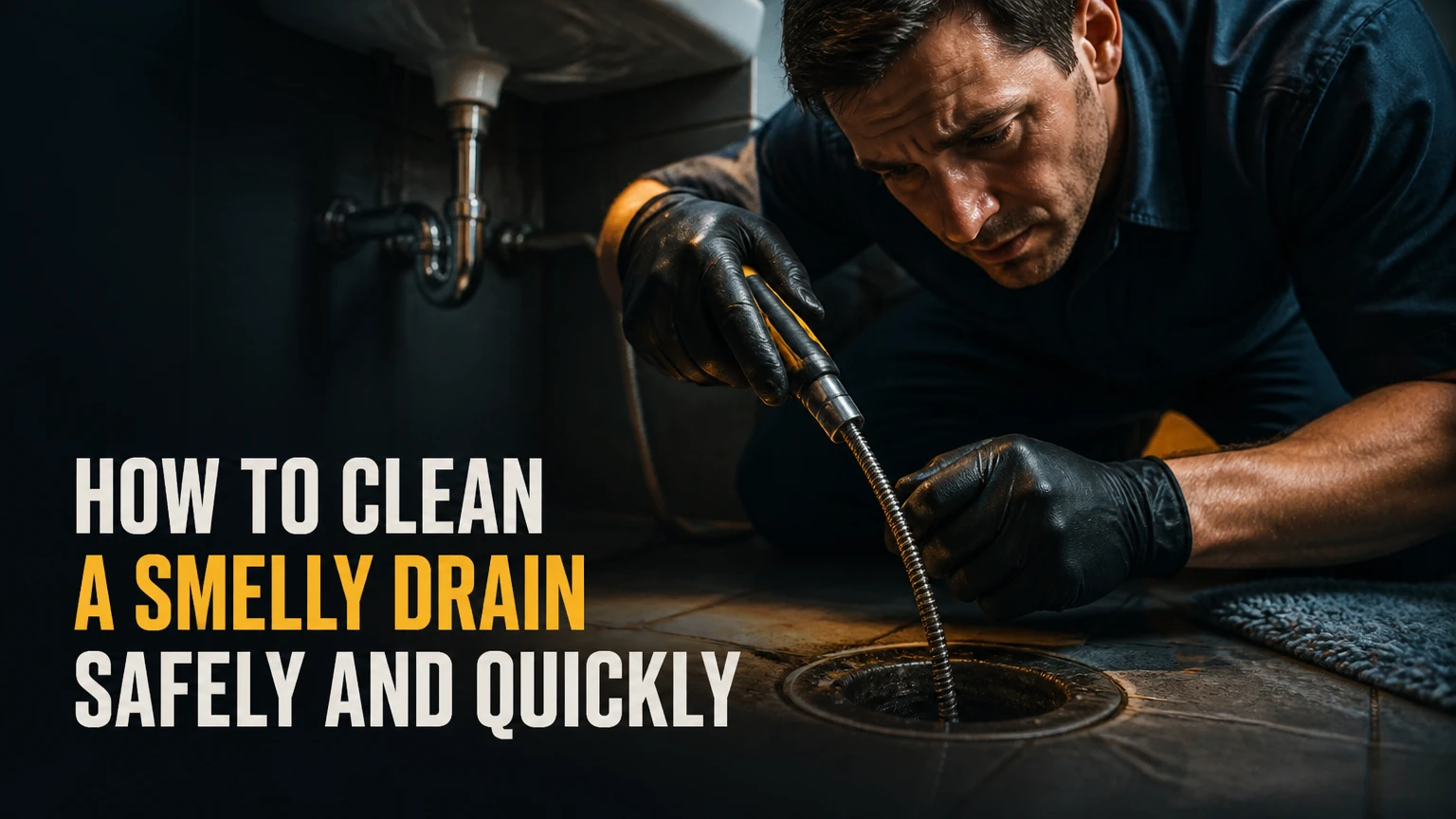
To clean a smelly drain, remove debris from the stopper or splash guard, flush the pipe with hot water, scrub accessible biofilm, and refill the P-trap. The process usually takes 20-30 minutes and costs less than $10 for mild odors. Persistent sewer-like smells, slow drainage, or multiple affected fixtures require further diagnosis.
Key facts at a glance
Organic drain odors usually come from biofilm, trapped food, hair, grease, soap, or mold on wet surfaces.
A dry P-trap allows sewer gases to enter a room, so pouring water into an unused drain can solve the odor.
Baking soda and vinegar create foam, but they do not reliably dissolve hair, thick grease, or a structural blockage.
Enzyme treatments typically need 6-8 hours of contact time and may require 2-3 applications for heavy buildup.
Never mix bleach, vinegar, ammonia, acids, or caustic drain cleaners because dangerous gases or heat-producing reactions can result.
A recurring rotten-egg smell, several smelly fixtures, or sewage backup is a plumbing problem rather than a deodorizing problem.
Why Does a Drain Smell Bad?
A smelly drain usually contains decomposing organic residue, or its water seal has failed. Grease, food particles, hair, skin oils, soap, and bacteria form a sticky layer called biofilm, while a dry or damaged P-trap permits odor from the drainage system to rise into the room.
The odor location provides useful evidence. A kitchen sink commonly collects fat, starch, food particles, and residue beneath the garbage-disposal splash guard. A bathroom sink often hides hair and toothpaste film around the stopper and inside the overflow channel. A shower drain collects hair, shampoo residue, skin oils, and drain flies.
A drain that smells but empties normally often has surface contamination. A drain that smells and empties slowly may have buildup farther inside the branch pipe. Odor from several fixtures points toward a venting, sewer, or shared drainage issue rather than one dirty drain opening.
| Symptom | Most likely source | First diagnostic action |
|---|---|---|
| Sour or musty odor at one sink | Biofilm on stopper or P-trap | Remove and scrub the stopper |
| Rotten-food smell near kitchen sink | Food and grease in disposal or trap | Clean splash guard and trap |
| Sewer odor from unused fixture | Dry P-trap | Add 2-4 cups of water |
| Rotten-egg smell at several fixtures | Sewer gas or hydrogen sulfide | Ventilate and arrange professional inspection |
| Smell with slow drainage | Organic blockage or pipe buildup | Use a plunger or hand snake before chemicals |
| Small black flies around drain | Drain-fly larvae in wet sludge | Scrub the drain walls and overflow passage |
What Is Biofilm in a Drain?
Drain biofilm is a wet microbial layer that binds grease, food particles, hair, soap, and mineral deposits to a pipe or drain component. Pouring water through the pipe may reduce the smell briefly, but physical scrubbing is needed when the film remains on a stopper, splash guard, overflow, or P-trap.
Drain flies are a useful clue because their larvae feed in gelatinous organic sludge. Surface sprays kill adult flies temporarily, but removing the sludge from the drain interior addresses the source. A small brush, flexible drain brush, or folded plastic drain-cleaning tool reaches places a kettle of water cannot.
Before You Start Cleaning
Prepare rubber gloves, eye protection, a bucket, an old toothbrush or drain brush, dish detergent, a removable drain tool, and hot tap water. For a mild odor, budget 20-30 minutes and less than $10; for P-trap removal, add 30-45 minutes and allow space beneath the sink.
Do not begin with a chemical drain opener if you may need to remove the P-trap. Residual sodium hydroxide or sulfuric acid can remain in stagnant water and cause serious skin or eye injuries when the fitting opens.
| Item | Typical quantity | Purpose | Approximate cost |
|---|---|---|---|
| Rubber gloves | 1 pair | Protect skin from sludge and cleaners | $2-$8 |
| Bucket | 1, 2-5 gallons | Catch P-trap water | $0-$10 |
| Flexible drain brush | 1, 15-24 inches | Scrub pipe walls and overflow | $5-$15 |
| Dish detergent | 1-2 teaspoons | Loosen grease on removable parts | Less than $5 |
| Baking soda | 1 cup | Mild deodorizing and abrasion | Less than $2 |
| White vinegar | 1 cup | Acidic rinse and foaming reaction | $2-$5 |
| Bio-enzymatic cleaner | 4-8 fluid ounces | Digest organic residue over time | $10-$25 |
Which Cleaning Method Should You Use?
Use physical cleaning first for accessible residue, hot water for loose grease, and an enzyme product for recurring organic buildup. Baking soda and vinegar are reasonable for mild surface odors, while caustic cleaners should be a last resort and are inappropriate when the cause may be a dry trap, blocked vent, damaged pipe, or sewer defect.
| Method | Typical time | Typical cost | Best use | Main limitation |
|---|---|---|---|---|
| Scrubbing and hot tap water | 20-30 minutes | $0-$10 | Stopper, guard, light grease | Limited reach |
| Baking soda and vinegar | About 20 minutes | Under $2 | Mild odor and loose residue | Weak against hair and thick grease |
| Bio-enzymatic cleaner | 6-8 hours per treatment | $10-$25 | Organic film and maintenance | Does not repair plumbing |
| Hand snake | 30-60 minutes | $15-$40 | Hair or localized blockage | May leave biofilm behind |
| Professional hydro-jetting | 30-90 minutes | $150-$500 typical | Heavy pipe-wall buildup | Requires inspection and suitable pipe condition |
| Caustic or acidic opener | 15-30 minutes | $7-$15 | Some compatible clogs | Corrosive, hazardous, and often misapplied |
How to Clean a Smelly Drain in Five Steps
The safest general procedure has five stages: remove accessible residue, flush with hot water, use a mild treatment if appropriate, rinse thoroughly, and apply an enzyme product only when organic odor remains. The factor that most determines success is locating the odor source rather than repeatedly pouring products into the drain.
Step 1: Remove and Clean the Drain Components
Put on gloves, remove the stopper, strainer, or garbage-disposal splash guard, and place the part in a bucket or sink. Scrub both sides with dish detergent and an old toothbrush, then clean the drain rim and the first several inches inside the opening.
Bathroom sink stoppers often hold a compact plug of hair coated with soap. Garbage-disposal splash guards trap food paste beneath their folds, so clean the underside rather than wiping only the visible top surface. If the sink has an overflow opening, scrub that channel with a narrow brush because odor can persist there after the basin looks clean.
Success checkpoint: The stopper or splash guard has no visible slime, hair, grease, or dark film.
Common mistake: Cleaning only the drain cover while leaving the removable component contaminated.
Step 2: Flush With Appropriate Hot Water
Run the hottest tap water available for 2-5 minutes, or pour 4-8 cups of hot water slowly into the drain. Hot tap water is preferable for most household plumbing because water from a kettle can soften some plastic fittings, loosen sealant, or stress older pipe joints.
A brief kettle flush may be suitable for metal plumbing or a manufacturer-approved disposal procedure, but boiling water is not automatically safer or more effective. PVC and ABS drain systems tolerate normal hot tap water, while repeated near-boiling discharges can contribute to deformation in thin or poorly supported components.
Success checkpoint: Water flows freely and the odor decreases after the drain warms and rinses.
Common mistake: Pouring boiling water into a fully blocked drain, where heat remains concentrated near plastic fittings.
Step 3: Choose a Mild Treatment
For a mild odor, pour 1 cup of baking soda into the damp drain, followed by 1 cup of white distilled vinegar. Cover the opening for about 15 minutes, then flush with hot tap water. The reaction produces carbon dioxide foam that can disturb loose residue, but it is not a powerful solvent for hair or hardened grease.
Do not expect the reaction to clean the entire pipe circumference. Baking soda is alkaline and vinegar is acidic, so much of their chemical strength is consumed during the fizzing reaction. Scrubbing, a hand snake, or an enzyme product is more appropriate when the drain remains slow or the smell returns quickly.
Success checkpoint: The drain accepts the ingredients without backing up, and the odor remains reduced after rinsing.
Common mistake: Sealing a blocked drain and creating pressure without an overflow route or plunger-ready setup.
Step 4: Refill the P-Trap
Pour 2-4 cups of clean water into an unused sink, shower, floor drain, or laundry drain to restore the P-trap water seal. The curved trap normally holds water that blocks sewer gas; evaporation, siphoning, or an incorrectly vented fixture can remove that barrier.
A floor drain may need a trap primer or a small amount of manufacturer-approved trap-seal product when evaporation is frequent. Do not pour oil into a trap as a long-term fix because oil can contaminate wastewater, collect debris, and create disposal problems.
Success checkpoint: The odor disappears after water enters the trap and remains absent during normal use.
Common mistake: Treating a dry trap with vinegar while failing to add enough water to recreate the seal.
Step 5: Apply an Enzyme Product Overnight
Use a labeled bio-enzymatic drain treatment when scrubbing and rinsing reduce but do not eliminate an organic odor. Follow the product label, commonly adding 4-8 fluid ounces before bed, avoiding water use for 6-8 hours, and repeating the treatment for 2-3 nights when buildup is heavy.
Enzymes or bacterial cultures digest organic residues gradually. They cannot open a collapsed pipe, remove a solid object, correct a failed trap, or clear a major mineral obstruction. Septic-system owners should select a product labeled compatible with septic systems and avoid assuming that every biological product has identical ingredients or directions.
Success checkpoint: The smell continues to improve after each overnight treatment instead of returning immediately.
Common mistake: Flushing the product away after five minutes and concluding that the treatment failed.
How Do Kitchen, Bathroom, and Shower Drains Differ?
Kitchen odors usually require grease and food removal, bathroom sink odors usually require stopper and overflow cleaning, and shower odors usually require hair removal from the strainer and trap. The same vinegar mixture cannot address these different physical sources with equal reliability.
Kitchen Sink and Garbage Disposal
Turn off the disposal and disconnect power before placing fingers or tools near the grinding chamber. Never reach into the disposal opening while the unit is connected, even if the switch is off. Remove and scrub the splash guard, then clean the visible rubber components with detergent and a brush.
Run cold water while operating a disposal because cold water helps keep grease more solid until the grinder can break it into smaller particles. Avoid treating lemon peels or ice as a substitute for cleaning: ice may sharpen or dislodge residue temporarily, while citrus can mask odor without removing the grease layer.
Check the dishwasher hose connection if the odor occurs after dishwasher use. A missing high loop or improperly installed air gap can allow dirty water or food residue to remain in the hose, producing an odor that appears to come from the sink drain.
Bathroom Sink
Lift out the pop-up stopper and remove hair from the rod and drain opening. Scrub the stopper, the drain flange, and the overflow channel, then flush with hot tap water.
If the sink drains slowly, place a bucket beneath the P-trap and inspect the removable trap after loosening the slip nuts by hand or with adjustable pliers. Do not dismantle a trap that may contain chemical cleaner. Clear the sludge mechanically and replace worn washers before tightening the fitting.
Shower or Bathtub
Remove the strainer and pull out hair with a plastic barbed tool or a small hand snake. A shower drain often smells because hair holds soap, skin oil, and stagnant water in the trap.
Avoid repeatedly using liquid drain opener in a bathtub. The product may sit in the trap, damage finishes, and create a hazard for anyone who later removes the strainer or uses a snake. A plunger or hand snake gives better control for a localized hair blockage.
Floor, Basement, and Laundry Drains
Pour 2-4 cups of water into an infrequently used floor drain, then check whether the odor disappears within an hour. If the smell returns, the trap may be damaged, siphoned by drainage pressure, or missing a functioning primer.
Basement floor drains can also receive odor from a failed cleanout cap, sewage backup, sump-pump area, or cracked drain connection. A persistent smell in a basement deserves inspection rather than repeated chemical treatment because moisture and sewer gases can indicate a larger defect.
When Should You Use a Snake or Hire a Plumber?
Use a hand snake when one fixture drains slowly and accessible cleaning does not restore flow. Hire a plumber when odor affects multiple fixtures, returns after the P-trap is refilled, accompanies sewage backup, or appears with gurgling that suggests a vent or main-line problem.
A 15-25-foot hand auger may clear a nearby hair or grease obstruction. Hydro-jetting, typically performed at approximately 1,500-4,000 pounds per square inch, removes more circumferential buildup but requires assessment of pipe material, age, access, and structural condition.
| Situation | Reasonable next action | Avoid |
|---|---|---|
| One sink smells, normal flow | Scrub components and rinse | Repeated caustic chemicals |
| One drain smells and drains slowly | Plunge, then hand-snake | Forcing a tool through unknown fittings |
| Several fixtures smell | Inspect vent or main drain | Masking the odor with fragrance |
| Sewage backs up into a fixture | Stop water use and call a plumber | Adding cleaner to standing sewage |
| Odor returns after trap refill | Check siphoning, venting, or trap damage | Repeating water-only treatment |
| Heavy grease buildup in older pipes | Professional inspection before jetting | Hydro-jetting without pipe assessment |
Are Chemical Drain Cleaners Safe for Smelly Drains?
Chemical drain cleaners are usually the wrong first choice for an odor-only problem because they may not reach the source and can create a hazard during later mechanical work. Sodium hydroxide and sulfuric acid products can generate heat, damage some materials, corrode fittings, and injure skin or eyes.
Never combine drain cleaner with bleach, vinegar, ammonia, another drain opener, or a toilet cleaner. If a chemical product has already been used, tell the plumber exactly what product was added and when. Ventilate the area, keep children and pets away, and follow the product label or local poison-control guidance after exposure.
Why Does the Smell Keep Coming Back?
A recurring drain odor usually means the source remains active, the trap is losing its water seal, or the plumbing system has a venting or drainage fault. Cleaning the opening can provide temporary relief when the true problem is inside the P-trap, branch line, dishwasher hose, or main sewer connection.
A pungent rotten-egg odor can involve hydrogen sulfide, a toxic gas associated with sewage decomposition. Odor intensity alone cannot diagnose its concentration, so leave the area if the smell is strong, symptoms such as headache or dizziness occur, or multiple fixtures release the odor, then contact a qualified professional or emergency service.
Drain gurgling, bubbles in a toilet, fluctuating trap water, and several slow fixtures suggest pressure changes in the drainage or vent system. A blocked roof vent is one possibility, but a partially obstructed main sewer line, shared building drain, or defective trap can create similar symptoms.
How Much Does Drain-Odor Cleaning Cost?
A mild DIY cleaning typically costs $0-$10 and takes 20-30 minutes, while a hand snake costs about $15-$40 and may take 30-60 minutes. Professional drain cleaning commonly ranges from $100-$500 depending on access, location, blockage severity, camera inspection, and whether hydro-jetting is needed.
Prices vary significantly by region and by whether the contractor charges a service call. Hydro-jetting is not automatically the best value for one smelly sink; it is more appropriate when inspection confirms extensive pipe-wall buildup or repeated blockages.
| Approach | Typical total cost | Typical duration | Appropriate condition |
|---|---|---|---|
| Component cleaning and hot rinse | $0-$10 | 20-30 minutes | One mild odor |
| Enzyme treatment course | $10-$25 | 2-3 nights | Organic buildup without blockage |
| DIY hand snaking | $15-$40 | 30-60 minutes | Localized hair or sludge |
| Standard professional augering | $100-$300 | 30-90 minutes | Persistent localized blockage |
| Camera inspection | $100-$500 | 30-90 minutes | Recurring or uncertain problem |
| Hydro-jetting | $150-$500 | 30-90 minutes | Heavy confirmed pipe buildup |
How Can You Prevent Drain Odors?
Prevent drain odors by keeping food, grease, hair, and soap out of the plumbing, cleaning removable drain parts monthly, and running water through unused traps at least once every few weeks. Kitchen disposal users should also clean the splash guard because residue there can produce odor even when the drainpipe is clear.
Use a strainer in kitchen and bathroom sinks, wipe greasy cookware into the trash before washing, and remove hair from shower screens after each use. Do not pour fats, oils, coffee grounds, paint, solvents, or cement products into household drains.
For an unused fixture, run water for 30-60 seconds every two to four weeks. In hot, dry, or heavily ventilated spaces, inspect floor drains more often because evaporation can empty a trap sooner. A trap primer may be a better permanent solution for a frequently dry commercial or basement drain.
Common Mistakes and How to Fix Them
- Mistake: Pouring boiling water into a blocked plastic drain. Stop using heat, remove standing water safely, and use a plunger or hand snake.
- Mistake: Cleaning only the visible drain opening. Remove the stopper, splash guard, or strainer and scrub both sides.
- Mistake: Using bleach to deodorize biofilm. Rinse thoroughly if bleach was already used, never add vinegar or acid, and switch to physical cleaning.
- Mistake: Adding products without checking what is already in the pipe. Wait, ventilate, and read labels before combining any substances.
- Mistake: Ignoring a dry P-trap. Add water first, then investigate siphoning or evaporation if the odor returns.
- Mistake: Snaking after chemical opener was added. Do not proceed without neutralization guidance from the product label or a licensed professional.
Frequently Asked Questions
Can I clean a smelly drain without vinegar?
Yes. Scrub the stopper or splash guard, flush with hot tap water, remove hair mechanically, and refill the P-trap. A septic-compatible enzyme treatment can address organic residue overnight. Vinegar is optional, and it is not necessary for removing trapped hair, thick grease, drain-fly sludge, or a mechanical blockage.
How long should I leave baking soda and vinegar in a drain?
Leave the baking soda and vinegar reaction for about 15 minutes, then rinse with hot tap water. Longer contact does not turn the mixture into a strong drain opener because the acid and bicarbonate largely neutralize each other. Use a brush, snake, or enzyme product when the odor involves persistent buildup.
Is a rotten-egg drain smell always dangerous?
A rotten-egg smell is not always dangerous, but it can indicate hydrogen sulfide or sewer gas, especially when several fixtures are affected. Ventilate without creating unnecessary exposure, leave the area if the odor is intense or causes symptoms, and arrange professional assessment rather than masking the smell.
Why does my drain smell after it rains?
Rain can expose drainage or venting defects by increasing flow and pressure in municipal or private sewer systems. A loose cleanout cap, overloaded sewer line, blocked vent, or damaged connection may allow odors to enter. A one-time odor can be monitored, but recurring post-rain smells merit a plumbing inspection.
Will a water softener or water heater cause drain odor?
A water heater can produce a sulfur odor when bacteria react with the sacrificial anode rod, and the smell may appear at hot-water fixtures rather than every drain. Test cold and hot water separately. If only hot water smells, have a qualified plumber assess the heater instead of treating the drain.
Should I use an enzyme cleaner every month?
Monthly enzyme treatment may help a kitchen or commercial drain with recurring organic residue, but the product label should determine frequency. Enzymes cannot correct poor venting, a dry trap, pipe damage, or a main-line obstruction. Regular physical removal of grease, hair, and food remains more important than routine chemical dosing.
The Bottom Line
To clean a smelly drain, scrub the removable parts, rinse with hot tap water, use baking soda and vinegar only for mild residue, refill the P-trap, and apply a septic-compatible enzyme treatment overnight when organic buildup remains. If the odor returns quickly, affects multiple fixtures, accompanies slow drainage, or smells strongly of rotten eggs, stop treating the symptom and arrange a plumbing inspection.