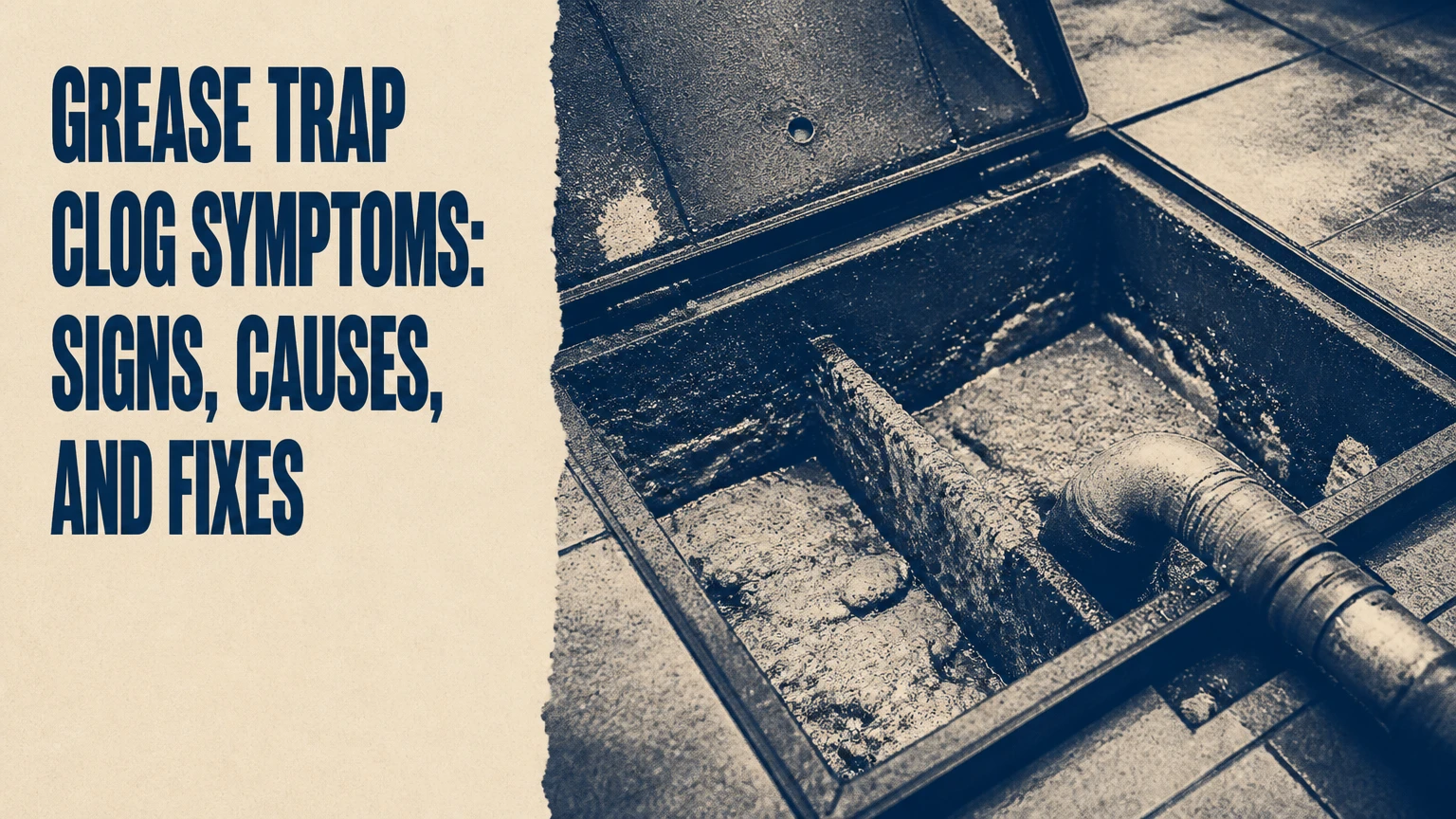
Grease trap clog symptoms usually begin with slow drainage or persistent rancid odors and progress to gurgling, standing water, grease overflow, and backups at multiple fixtures. The blockage may be inside the grease trap, in the inlet pipe, or farther downstream, so the correct diagnosis depends on which fixtures are affected and how wastewater behaves when tested.
Key Facts at a Glance
- A grease trap becomes functionally restricted when accumulated grease and settled solids reduce its usable flow area.
- The common 25% rule refers to grease and solids occupying about one-quarter of the trap’s operating depth, but the enforceable cleaning threshold varies by local authority.
- One slow fixture usually indicates a local branch-line problem; several affected fixtures point toward the trap outlet or building drain.
- Chemical drain openers can liquefy grease temporarily and move the blockage into a colder downstream pipe.
- A commercial kitchen with sewage, contaminated water, or a floor-drain backup should stop water use and contact a licensed plumber or approved waste contractor.
- Cleaning restores capacity, but recurring clogs usually indicate poor source control, inadequate sizing, damaged baffles, or an obstructed downstream line.
What Is a Grease Trap and Why Does It Clog?
A grease trap is a plumbing device that separates fats, oils, grease, and food solids from kitchen wastewater before the wastewater reaches the sanitary sewer. The term often describes a small under-sink unit, while grease interceptor commonly describes a larger outdoor tank, although local codes and manufacturers use the terms differently.
Kitchen wastewater carries cooking oil, butter, animal fat, sauces, food particles, and detergent. Inside the trap, reduced flow velocity allows heavier solids to settle and less-dense grease to rise. The outlet draws water from the middle zone, but the device cannot separate unlimited material.
A clog develops in one of four places:
- The sink or appliance branch pipe before the trap.
- The trap inlet, baffle opening, or internal chamber.
- The trap outlet and downstream building drain.
- The municipal connection or shared sewer line.
The trap itself may look relatively clear while its outlet pipe remains packed with grease scale. That distinction prevents a common diagnostic error: pumping or scooping the tank without clearing the line that actually restricts flow.
How Does a Grease Trap Separate Grease and Solids?
A passive grease trap slows wastewater so gravity can separate floating FOG from sinking solids. The top layer contains grease, the bottom layer contains sludge, and the middle water layer moves toward the outlet through openings controlled by baffles.
The process depends on time, temperature, and calm flow. Hot discharge from a fryer or commercial dishwasher can carry grease farther into the plumbing before it cools and adheres to pipe walls. Detergent may disperse grease briefly, but dispersed grease can later re-form as deposits downstream.
Baffles perform two jobs: they reduce turbulence and prevent floating grease from passing directly to the outlet. A missing, cracked, reversed, or loose baffle can create symptoms even when the tank is not full.
What Happens When the Trap Reaches Capacity?
When the grease and solids layer approaches the outlet opening, wastewater loses its clear passage and drains slowly. A typical maintenance trigger is the 25% rule, meaning grease and settled solids occupy approximately 25% of the operating depth, measured according to the local authority’s method.
The 25% rule is not a universal legal limit. Cities may require cleaning by a fixed interval, by measured accumulation, or whenever the trap impairs flow. The U.S. Environmental Protection Agency identifies fats, oils, and grease as a major source of sewer blockages, while local sewer departments set the requirements businesses must follow.
What Are the First Grease Trap Clog Symptoms?
The earliest grease trap clog symptoms are slower-than-normal drainage, recurring foul odors, and visible grease near the lid, inlet, or connected sink. These signs usually mean the trap is losing effective capacity, although a single slow sink can also have a local pipe obstruction.
Slow Drainage
A sink that once emptied in seconds but now takes 30-60 seconds deserves attention. Gradual slowing across several connected fixtures is more significant than one isolated slow drain.
Compare the pattern:
- One prep sink is slow: suspect its strainer, P-trap, or branch line.
- All sinks connected to one trap are slow: suspect the trap or its outlet.
- A sink drains normally until another fixture runs: suspect restricted downstream capacity.
Do not wait for a complete backup. A trap that still drains slowly can already be sending grease into the outlet line.
Persistent Foul Odors
A clogged grease trap often produces rancid, sour, or decomposing-food odors because organic solids remain warm and wet for long periods. Odor around a lid, floor drain, or sink cabinet becomes more likely when cleaning is overdue or the lid gasket has failed.
Odor alone does not prove a clog. Sewer-gas odor, a dry floor-drain trap, a cracked lid, and poor venting can produce similar conditions. If the smell resembles rotten eggs and appears in occupied areas, treat it as a ventilation or sewer-gas concern rather than assuming grease is the only cause.
Visible Grease or Sludge
A thick grease mat touching the lid, baffle, or outlet opening indicates the trap needs service. Black or gray sludge at the bottom is settled food waste and grease solids, not a harmless residue that can remain indefinitely.
Never judge capacity from the surface alone. A deep bottom layer can reduce the water volume enough to cause a backup even when the top grease layer looks modest.
Which Symptoms Indicate an Active or Dangerous Blockage?
Gurgling, standing water, grease discharge, and wastewater backing up from a floor drain indicate an active restriction. Sewage, black sludge, or backups at multiple fixtures require immediate water shutoff and professional response because the problem may have reached the building drain or sewer connection.
Gurgling and Air Movement
Gurgling occurs when wastewater encounters a restricted passage and displaces air through the plumbing system. It commonly appears after another sink, dishwasher, or mop basin discharges.
A gurgle from one sink can result from a local vent or branch-line issue. Gurgling across multiple fixtures is more consistent with a shared trap outlet or downstream restriction.
Standing Water in Floor Drains
Water rising from a floor drain is a high-value diagnostic clue because floor drains are often lower than sinks. Wastewater follows the lowest available opening when the downstream pipe cannot accept flow.
Stop using sinks, dishwashers, ice machines, and hose stations immediately. Continued discharge can spread contaminated water across food-preparation areas and increase cleanup and regulatory consequences.
Grease at the Lid or Fixtures
Grease around the lid may indicate overfilling, a failed gasket, excessive inflow, or pressure caused by an obstructed outlet. Grease appearing in a dishwasher, prep sink, or floor drain is more serious because it shows the restriction is affecting connected plumbing.
Do not tighten bolts aggressively to compensate for a damaged gasket. A warped lid or failed seal needs replacement after the flow problem is corrected.
Multiple Fixture Backups
A sink causing water to rise in another sink or floor drain strongly suggests a shared downstream blockage. The trap may be full, but the obstruction can also sit between the trap and the building sewer.
Raw sewage or black wastewater changes the response. Close the affected area, keep staff away from contamination, document the incident, and follow local health-department procedures before reopening.
How Can You Tell Where the Blockage Is?
Fixture testing identifies the likely blockage zone faster than opening every drain. Test one fixture at a time, observe nearby drains, and inspect the trap only if doing so is safe and permitted.
| Observation during testing | Most likely location | Immediate action |
|---|---|---|
| One sink drains slowly, other fixtures work | Local branch pipe or P-trap | Clean strainer and arrange branch-line inspection |
| All fixtures before one trap drain slowly | Trap inlet, chamber, or outlet | Stop grease discharge and inspect the trap |
| Trap is full of grease and solids | Internal trap capacity problem | Pump or clean under local requirements |
| Trap looks normal, floor drain backs up | Downstream outlet or building drain | Stop water use and call a drain professional |
| One fixture makes another overflow | Shared downstream line | Avoid snaking through a fixture without diagnosis |
| Sewage backs up from several low drains | Building sewer or municipal connection | Isolate area and escalate immediately |
A Safe Diagnostic Sequence
First, stop adding wastewater. Then run a small amount of clean water through the affected fixture while observing the trap area and nearby floor drains. A licensed worker can open the lid, check liquid and solids depth, inspect baffles, and determine whether the outlet accepts flow.
Do not enter an underground interceptor. Confined spaces can contain toxic gases and oxygen-deficient air. A tank inspection requires appropriate equipment and trained personnel.
What Should You Do for a Clogged Grease Trap?
A small passive trap can sometimes be cleaned by trained kitchen staff when local rules allow it, but a full commercial backup, outdoor interceptor, damaged baffle, or downstream obstruction generally requires a licensed plumber or approved pumping contractor.
Step 1: Stop the Source
Stop dishwashing, sink use, dishwasher cycles, and discharge from food-preparation equipment. Place warning signs over affected fixtures and protect food, packaging, and electrical equipment from contaminated water.
Step 2: Use Appropriate Personal Protection
Wear chemical-resistant gloves, eye protection, waterproof footwear, and protective clothing. Grease-trap waste contains decomposing organic material and may contain sharp food debris.
Step 3: Inspect Without Disturbing the System
For an accessible passive trap, loosen the lid carefully and lift it away from your face. Check the grease layer, bottom solids, liquid level, baffles, gasket, and outlet opening.
Avoid probing blindly. A broken baffle or damaged outlet can turn a maintenance task into a plumbing repair.
Step 4: Remove Waste According to Local Rules
Skim floating grease and remove settled solids with dedicated tools. Place waste in a sealed, labeled container or use a licensed hauler when required; never pour recovered grease into a sink, floor drain, storm drain, or outdoor soil.
Outdoor gravity interceptors normally require a vacuum truck. Pumping the liquid without removing settled solids from the tank walls can leave the restriction in place.
Step 5: Restore and Verify Flow
Reinstall intact baffles and replace a damaged gasket. After the trap is closed, introduce a controlled amount of clean water and confirm that the level falls without rising at another fixture.
A successful cleanup has three checkpoints: the trap accepts flow, the outlet line carries water away, and no connected floor drain rises during the test. If any checkpoint fails, stop and escalate.
Which Grease Trap Problems Need a Professional?
Professional service is necessary when wastewater backs up, the blockage is downstream, the trap is underground, the unit has mechanical components, or cleaning records are legally required. A technician can use a drain cable, camera inspection, or hydro-jetting after confirming the pipe material and condition.
Hydro-jetting can remove grease scale from a downstream line more completely than a cable, but high pressure can damage weak, cracked, or poorly connected pipes. A camera inspection is valuable when clogs recur, because it can reveal collapsed pipe, roots, offset joints, or inadequate slope.
Automatic grease removal devices add another failure category. A failed motor, scraper, heater, sensor, or collection container can reduce separation even when the unit appears clean.
How Much Does Grease Trap Cleaning Cost?
Typical service pricing ranges from about $150-$500 for a small accessible trap, $300-$1,000 for a larger interceptor pump-out, and $500-$2,000 or more when downstream cleaning, emergency response, or camera inspection is included. Local labor rates, access, waste volume, and disposal rules cause substantial variation.
| Service condition | Typical price range | Typical duration | Main cost driver |
|---|---|---|---|
| Small under-sink cleaning | $150-$500 | 30-90 minutes | Access and waste handling |
| Outdoor interceptor pump-out | $300-$1,000 | 1-3 hours | Tank size and truck access |
| Emergency commercial backup | $400-$1,500 | 1-4 hours | After-hours labor and contamination |
| Mechanical drain cleaning | $250-$900 | 1-3 hours | Pipe length and blockage density |
| Hydro-jetting with inspection | $600-$2,000 | 2-5 hours | Pressure setup and camera work |
| Baffle, lid, or gasket repair | $100-$800 | 1-4 hours | Replacement part and excavation |
These are typical North American service ranges, not regulated prices. A facility should request a written scope stating whether the quote includes pumping, scraping, disposal documentation, downstream line cleaning, and tax.
How Often Should a Grease Trap Be Cleaned?
Clean a grease trap before grease and solids reach the applicable legal threshold or impair flow. Many small commercial traps need service every 1-4 weeks, while larger outdoor interceptors often require pumping every 1-3 months, but actual frequency should follow measured accumulation and local code.
| System or facility | Typical service interval | Monitoring method | Common risk |
|---|---|---|---|
| Café under-sink trap | 1-2 weeks | Weekly depth check | Coffee grounds and dairy solids |
| Bakery or low-volume kitchen | 2-4 weeks | Written inspection log | Flour, batter, and fats |
| Busy restaurant trap | 1-2 weeks | Measured FOG and solids | High dishwasher and fryer load |
| Automatic removal device | Daily container check, deep service every 2-6 months | Motor and scraper inspection | Mechanical failure |
| Outdoor interceptor | 1-3 months | Pump-out measurement | Incomplete tank cleaning |
| Institutional kitchen | 2-12 weeks | Flow and accumulation records | Variable seasonal demand |
The correct interval is the shortest interval that prevents accumulation from reaching the outlet and satisfies the authority having jurisdiction. A fixed quarterly schedule is not adequate for every restaurant.
What Causes a Grease Trap to Clog Repeatedly?
Repeated grease trap clogs usually result from excessive FOG input, food solids, an undersized unit, a damaged baffle, poor flow control, or a downstream pipe that was never fully cleared. Cleaning frequency alone cannot correct a capacity or design defect.
Common root causes include:
- Fryer oil, pan grease, sauces, and dairy entering the sink.
- Plates being rinsed without scraping solids into trash.
- Rice, pasta, flour, and starch swelling in the trap.
- Dishwashers sending high-temperature, high-flow discharge through a small unit.
- Missing strainers allowing bones, labels, and food scraps into the chamber.
- Detergent dispersing grease into the outlet instead of removing it.
- A trap sized for a café being used by a high-volume restaurant.
- A blocked vent or damaged baffle disrupting normal flow.
- An outlet line with inadequate slope, scale, roots, or a collapsed section.
Does a Dishwasher Make Clogging More Likely?
A commercial dishwasher can increase grease-trap stress because it combines high flow, elevated temperature, detergent, and food residue. The dishwasher should connect only where the plumbing design and local authority permit it, and the trap must be sized for the fixture load.
Hot discharge is not harmless. It can keep FOG liquid through the trap and allow deposits to form farther downstream, where cooler pipe walls encourage solidification.
What Must Never Go Into a Grease Trap?
Grease traps should receive only wastewater from approved fixtures, not concentrated oil, solid food waste, chemicals, paint, mop water containing hazardous materials, or stormwater. Source control reduces both floating grease and bottom sludge.
Use a sink strainer and scrape plates into a waste container before washing. Wipe greasy pans with absorbent material, store used cooking oil for recycling or sealed disposal, and keep fryer-cleaning waste out of the drainage system.
Do not use boiling water, caustic drain opener, acid, or unapproved emulsifying additives to “melt” a grease blockage. These products can shift the material into a downstream sewer, expose workers to burns or fumes, and violate local discharge requirements.
Enzyme or bacterial products are not universal substitutes for pumping. Some authorities restrict additives because they can mask accumulation, alter sampling results, or transfer FOG beyond the interceptor.
Grease Trap Types: Which System Has Which Risk?
Passive hydro-mechanical traps suit lower-volume kitchens, automatic grease removal devices reduce manual skimming but add mechanical failure points, and gravity interceptors provide higher capacity for large facilities. No type is maintenance-free.
| System type | Typical capacity or flow | Typical installed cost | Typical service pattern |
|---|---|---|---|
| Passive hydro-mechanical trap | 10-50 gallons per minute; 20-100 lb grease storage | $500-$2,500 | Clean every 1-4 weeks |
| Automatic grease removal device | 25-100+ gallons per minute | $4,000-$9,000 | Empty container daily; deep service every 2-6 months |
| Gravity interceptor | 500-5,000+ gallons | $8,000-$25,000+ | Pump every 1-3 months |
| Residential under-sink unit | 5-20 gallons per minute | $200-$1,000 | Inspect monthly if installed |
| Industrial FOG system | Site-specific flow and tank volume | $10,000-$50,000+ | Engineer-defined monitoring |
A large interceptor is not automatically better. An oversized or poorly located tank can be difficult to access, while an undersized under-sink trap can clog rapidly under dishwasher and fryer demand.
Common Mistakes and Better Corrections
Waiting for a Complete Backup
A full backup creates contamination, downtime, and emergency charges. Correct the problem when drainage slows or odor returns after cleaning.
Pouring Boiling Water Down the Drain
Boiling water can carry melted grease beyond the trap before it cools. Use controlled warm water only during an approved cleaning procedure, and do not treat heat as a substitute for waste removal.
Using Chemical Drain Openers
Chemical openers rarely remove the total grease mass. They create a hazardous mixture for the next person opening the trap and may damage seals or move FOG into public infrastructure.
Cleaning Only the Surface
Skimming the floating layer leaves sludge, wall deposits, and outlet restrictions behind. A complete service addresses the full liquid, grease, and solids volume.
Ignoring the Outlet Line
A clean trap does not prove a clear drain. If the liquid level rises during a flow test or a floor drain backs up, inspect the downstream line.
Failing to Keep Records
Record the date, measured accumulation, waste volume, hauler, manifest, repairs, and next service date. Documentation helps identify whether a recurring clog is operational, mechanical, or capacity-related.
How Can a Facility Prevent Future Clogs?
Prevention combines source control, measured inspections, correct equipment sizing, and complete service records. The most effective kitchen rule is simple: keep concentrated grease and food solids out of the drainage system before the trap has to separate them.
Use this operating checklist:
- Scrape plates before rinsing.
- Install and clean sink strainers.
- Collect fryer oil in a sealed recovery container.
- Train staff not to use the sink as a waste bin.
- Check the trap weekly during high-volume operation.
- Measure grease and solids rather than judging odor alone.
- Inspect baffles and gaskets during each service.
- Schedule the next cleanout before the legal or operational threshold.
- Investigate every repeat clog with a downstream camera inspection.
- Match trap capacity to peak flow, fixture count, and wastewater temperature.
The practitioner rule is to shorten the service interval after menu changes, seasonal demand increases, or installation of a larger dishwasher. A trap that worked for a breakfast café may fail quickly after the business adds frying, catering, or late-night service.
FAQ
Can a grease trap clog if it was cleaned recently?
Yes. A recently cleaned trap can clog when the outlet line is blocked, the baffle is damaged, the unit is undersized, or a large grease discharge entered after service. Repeated failure within days or weeks warrants a downstream camera inspection and a review of fixture connections.
How long can a restaurant operate with a slow grease trap?
A restaurant should not continue normal operation once a grease trap drains slowly enough to cause standing water, gurgling, or cross-fixture backup. Reduce discharge only while arranging service, because continued use can turn a restricted line into a contaminated floor backup.
Can I unclog a grease trap with a drain snake?
A drain snake can clear a localized branch or downstream line, but it does not remove accumulated grease and sludge from the trap. Snaking is safest through an identified cleanout, not through a food sink, and should be followed by inspection when the problem recurs.
Does a grease trap smell when it is working normally?
A maintained grease trap may have a mild waste odor when opened, but strong persistent odor around closed equipment indicates accumulated organic matter, a poor seal, inadequate venting, or a dry nearby floor-drain trap. Odor combined with slow drainage strongly supports overdue service.
Are grease traps required in homes?
Residential requirements vary by plumbing code, wastewater authority, property type, and sewer connection. Most homeowners prevent FOG problems through source control rather than installing commercial equipment, while restaurants and food-service sites commonly face specific interceptor, pumping, and recordkeeping rules.
Can a grease trap overflow into a floor drain?
Yes. When the trap or its downstream outlet cannot accept flow, wastewater can rise through the lowest connected opening, often a floor drain. Stop water use immediately, isolate contaminated areas, and determine whether the restriction is inside the trap or beyond it.
The Bottom Line
The most reliable grease trap clog symptoms are progressive: slow drainage, rancid odors, gurgling, visible grease, standing floor-drain water, and multi-fixture backups. Test the fixture pattern before choosing a remedy, because the obstruction may be in a branch pipe, the trap, or the downstream building drain.
Clean the entire trap at the applicable accumulation threshold, never rely on boiling water or chemical openers, and document each service. If wastewater backs up, sewage appears, or a clean trap still fails a flow test, stop operations and call a qualified professional. Recognizing grease trap clog symptoms early is the fastest way to protect the kitchen, sewer connection, and operating license.