Tree Roots and Sewer Lines: The Underground Battle
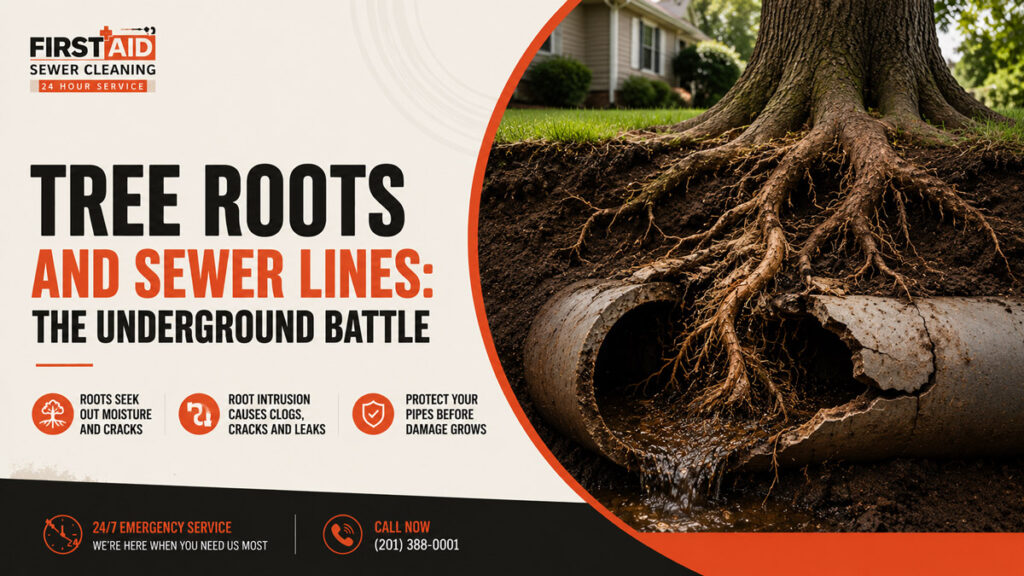
Tree roots and sewer lines are natural enemies with an unfair fight: the roots always win unless the line is protected. Understanding how roots get in is the first step to keeping them out. How roots find the line Roots grow toward moisture, and a sewer line is a pipe full of moisture. The roots […]
Sewer Backup: The First Steps Before the Crew Arrives
A sewer backup is one of the most stressful home emergencies, and the first steps decide how much damage happens. Here is what to do before the crew arrives. Stop the water The first job is to stop adding to the problem. Do not run water, flush toilets, or use the washing machine or dishwasher. […]
Hydro Jetting: What It Is and When a Line Needs It
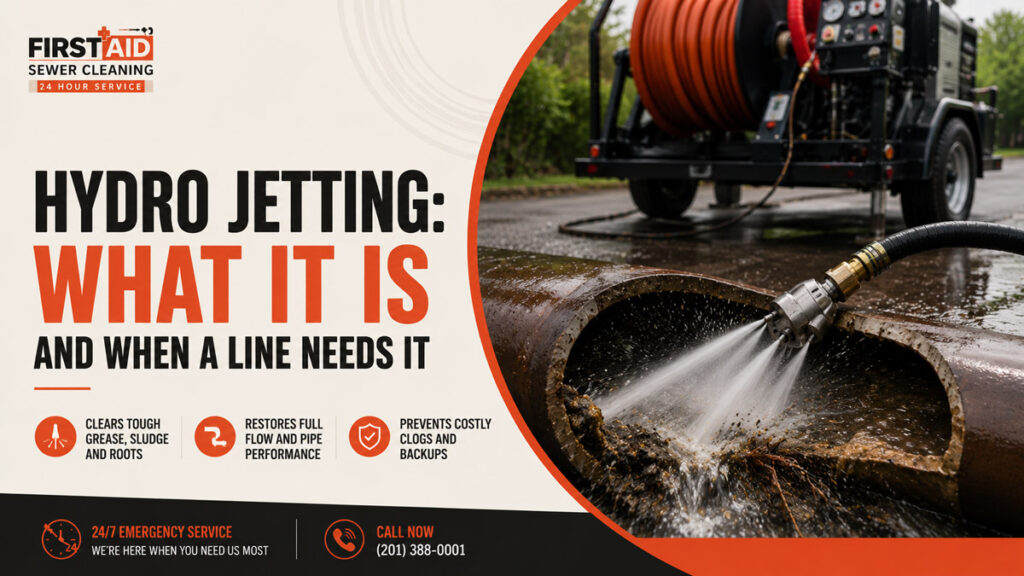
When a drain keeps clogging, the usual answer is a cable. But a cable punches a hole through a clog; it does not clean the pipe. Hydro jetting is the method that does, and it is the difference between a temporary fix and a clean line. What hydro jetting is Hydro jetting uses a high-pressure […]
Grease Trap Maintenance for Restaurants and Kitchens
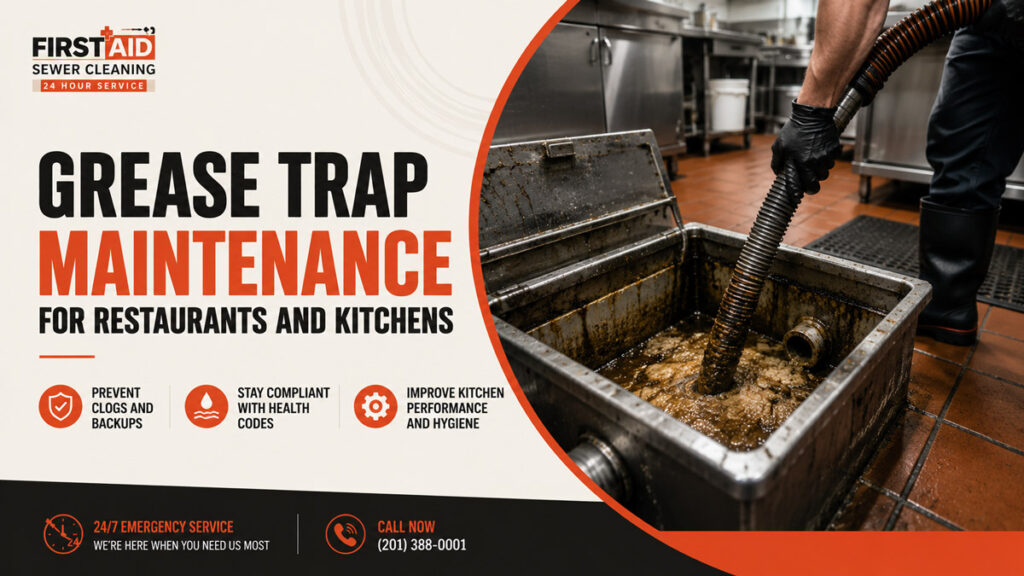
A grease trap is the unsung hero of a commercial kitchen. It catches the grease that would otherwise coat the sewer line, and when it is maintained, the kitchen drains like it should. When it is ignored, the line pays the price. How a grease trap works Wastewater from the kitchen enters the trap and […]
Why Camera Inspections Come Before Repairs
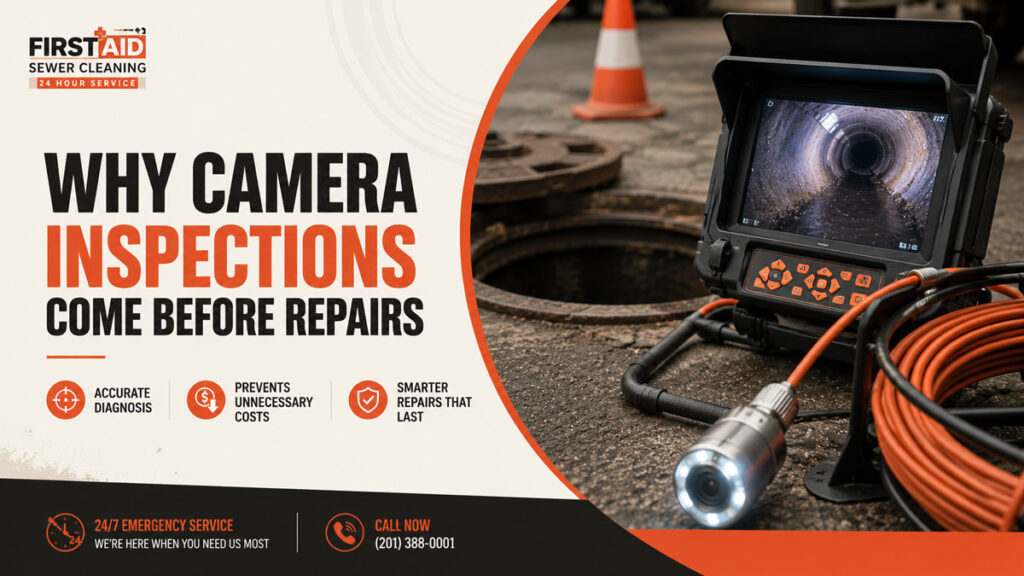
The sewer line is the one part of a home that no one can see, and that is exactly why camera inspections exist. A video inspection turns the invisible line into evidence, and the evidence turns repair guesses into plans. What the camera shows A waterproof camera travels through the line and records what is […]
Commercial Sewer Inspection Process: A 6-Phase Guide
The commercial sewer inspection process is a planned assessment of underground sanitary, stormwater, or industrial drainage pipes using cameras, robotic crawlers, locating equipment, and condition-reporting software. A complete inspection normally includes safety planning, access review, cleaning or flow control, video examination, defect location, standardized coding, and an actionable repair report. Key Facts at a Glance […]
How to Prevent Commercial Drain Clogs: A Practical FOG Plan
To prevent commercial drain clogs, control solids at the source, separate fats, oils, and grease before wastewater reaches building mains, inspect drainage assets on a schedule, and clean lines before flow becomes restricted. The most reliable program combines staff procedures, correctly sized grease-control equipment, documented pumping, targeted biological treatment, and periodic professional inspection. Key Facts […]
Why Sewage Comes Up Through Floor Drain: Causes and Fixes
Sewage comes up through a floor drain when wastewater cannot continue through the building sewer or public sewer, so pressure reverses the flow toward the lowest available opening. A basement floor drain is often that opening because it connects near the main drain and sits below toilets, sinks, showers, and washing machines. Key Facts at […]
Sewer Emergency Warning Signs: Act Before a Backup
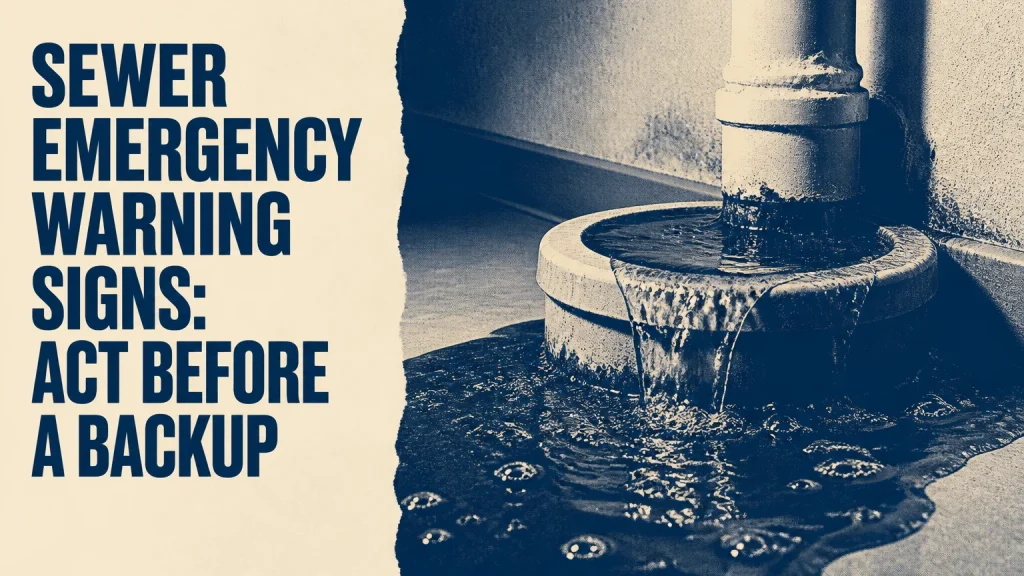
Sewer emergency warning signs include several fixtures draining slowly, wastewater moving between fixtures, repeated toilet gurgling, persistent sewage odors, cleanout overflow, and unexplained wet or sunken ground. Multiple symptoms together indicate a main sewer lateral, municipal sewer, or septic-system problem that requires immediate water stoppage and professional diagnosis. Key Facts at a Glance A single […]
How to Prevent Restaurant Drain Clogs With FOG Control
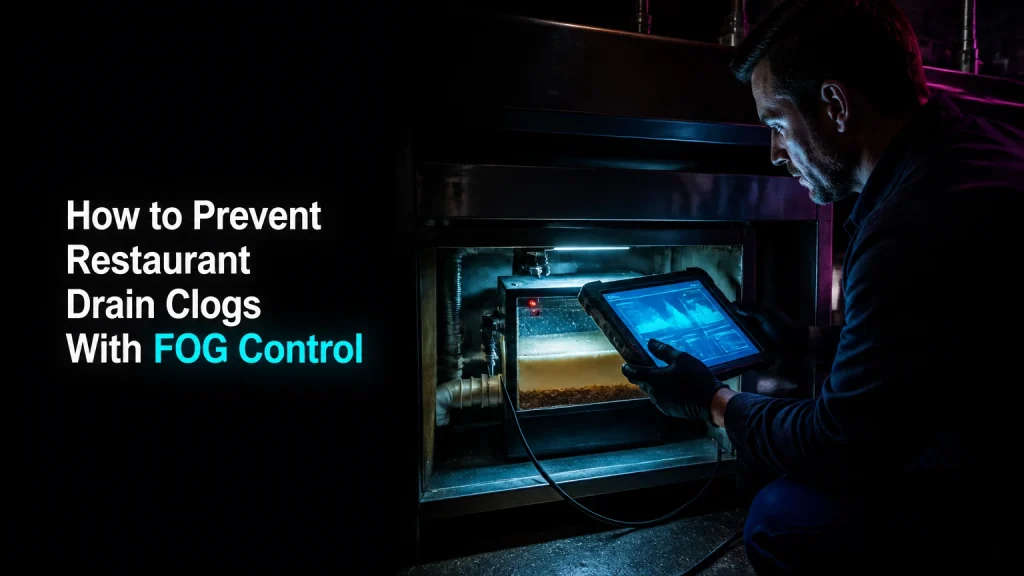
To prevent restaurant drain clogs, control fats, oils, and grease at the source, keep food solids out of wastewater, maintain strainers and grease interceptors, and train every shift to follow the same procedure. The most effective system combines dry scraping, measured trap pumping, correct equipment sizing, biological maintenance where appropriate, and documented inspections. Key Facts […]