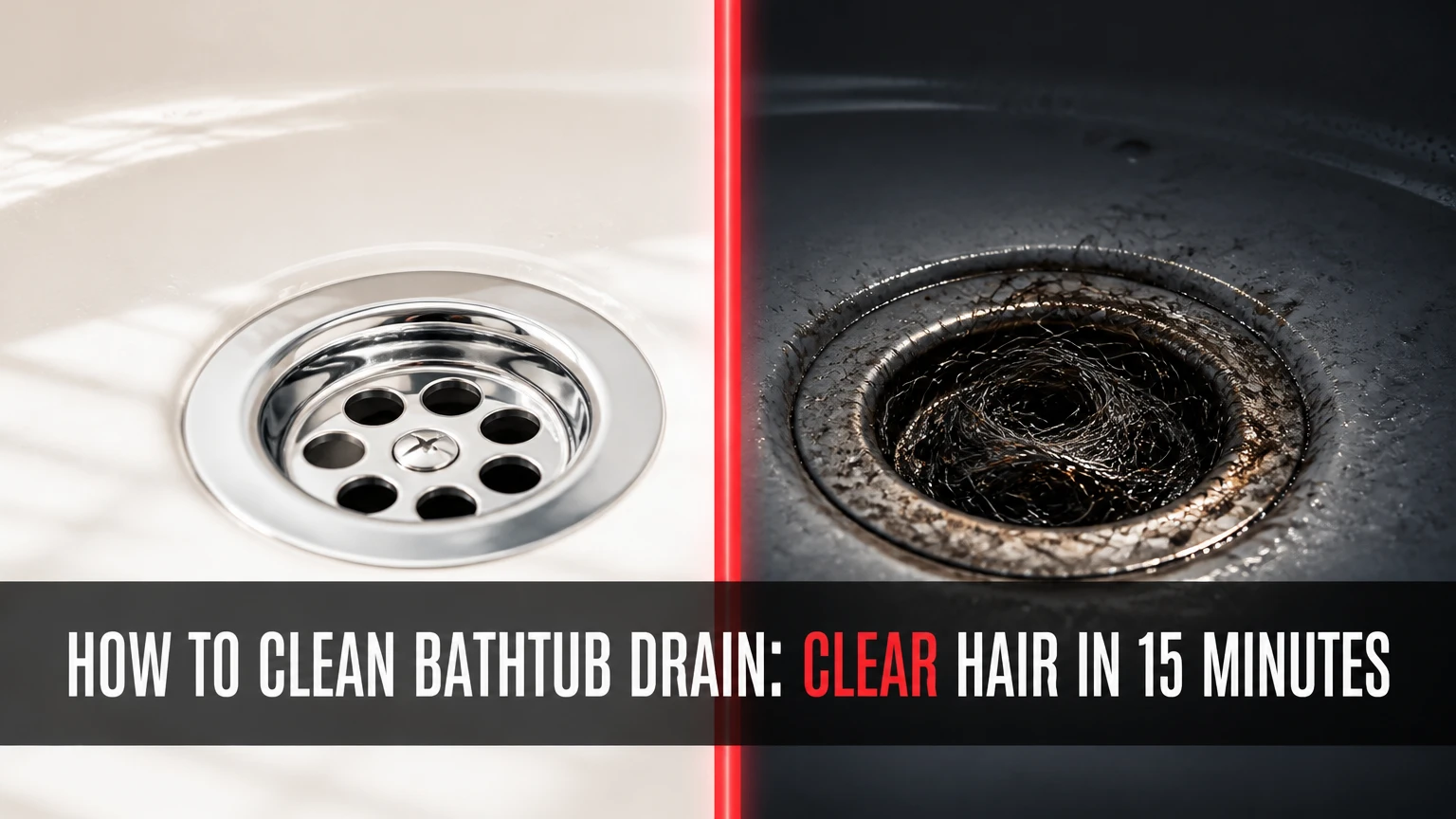
To clean a bathtub drain, remove the stopper, extract hair with a barbed plastic drain snake, then flush the opening with hot water and test drainage. A plunger can shift a loose partial blockage, while a hand auger reaches deeper obstructions. Sealing the overflow opening is the factor that most determines plunging success.
Key Facts
A plastic drain snake is usually the safest first tool for a bathtub hair clog.
A bathtub drain commonly measures about 1.5 inches, but stopper designs and pipe layouts vary.
Cover the overflow opening before plunging, or pressure will escape instead of moving the blockage.
Baking soda and vinegar can reduce odors and light residue, but they rarely remove a compact hair mass.
Typical DIY clearing takes 10-30 minutes and costs about $5-$40 for a reusable tool.
Do not mix drain chemicals with vinegar, bleach, ammonia, a plunger, or a drain snake.
What Is Blocking the Bathtub Drain?
Hair usually forms the core of a bathtub clog, while soap residue, body oils, skin particles, and bacterial film bind to that material. The obstruction often sits immediately below the stopper or in the shallow trap, so extracting the mass mechanically works better than trying to dissolve it with a household reaction.
A slow drain usually indicates a partial obstruction. Standing water means the opening is either fully blocked or the restriction lies farther into the waste line. A rotten or musty smell can come from trapped organic residue, although sewer gas, a damaged trap, or a venting problem requires a different diagnosis.
The drain opening is commonly 1.5 inches in residential tubs, but that dimension does not tell you the size or shape of the entire waste path. A stopper, crossbar, narrow trap, or overflow connection can prevent a straight tool from reaching the same location as a plumber’s cable.
How do hair and soap create a clog?
Hair catches on the stopper or drain crossbars first. Soap scum and oils then coat the strands, reducing the open area until water moves slowly. Hot water may soften greasy residue, but it does not reliably break the tensile structure of a dense hair bundle.
Biological film contributes odor and slipperiness rather than forming every clog by itself. Removing the physical obstruction first is more reliable than repeatedly flushing an unseen blockage with cleaners.
Which Stopper Does the Tub Have?
Identify the stopper before turning a screw or pulling a linkage. Pop-up and trip-lever designs can include a metal rocker arm or brass plunger inside the overflow pipe, and pulling at the wrong angle can bend the mechanism or drop a component into the drain.
| Stopper type | Visible feature | Typical removal approach | Main risk |
|---|---|---|---|
| Pop-up | Rod or knob moves a stopper | Lift and wiggle gently; remove overflow plate if linkage remains attached | Bent rocker arm |
| Lift-and-turn | Small knob on stopper | Open it, loosen setscrew, or unscrew the body counterclockwise | Stripped setscrew |
| Push-pull or toe-touch | Pushes down to close | Hold the lower cylinder and unscrew the cap or body | Damaged finish |
| Trip-lever or rotary | Lever or dial on overflow plate | Remove faceplate and pull linkage upward | Lost plunger or gasket |
| Flip-It | Toggle moves left or right | Pull upward with slight twisting | Damaged O-rings |
How do you remove a pop-up stopper?
Lift a pop-up stopper slowly and wiggle it until the rocker arm clears the drain opening. If the linkage will not release, remove the overflow faceplate with a screwdriver and pull the attached assembly upward through the overflow opening.
Place a towel over the drain before removing small screws. Inspect the rocker arm for hair and soap deposits, then clean it with a nylon brush. Do not force a corroded linkage; a replacement stopper assembly is cheaper than repairing a broken mechanism inside the waste pipe.
How do you remove lift-and-turn and push-pull stoppers?
Set a lift-and-turn stopper to the open position and look beneath the knob for a small setscrew. Use the correctly sized Allen key or screwdriver, then lift the stopper. If no setscrew exists, hold the shaft or lower body and turn the stopper counterclockwise.
For a push-pull or toe-touch stopper, stabilize the lower cylinder with pliers protected by a thick cloth and unscrew the cap or body. Stop if the entire drain fitting begins turning, because excessive force can loosen the drain flange or damage its seal.
What should you do with a trip-lever stopper?
Remove the two overflow-plate screws and pull the lever assembly straight upward. The linkage may include a plunger that is several inches long and coated with sludge, so support it with a towel while removing it.
Clean the linkage and inspect the brass or plastic parts for corrosion. A trip-lever plunger can cause slow drainage even when the drain opening contains little hair because the plunger may remain partly lowered inside the overflow tee.
How to Clean a Bathtub Drain Step by Step
The most dependable sequence is stopper removal, mechanical extraction, controlled flushing, and a drainage test. The process usually takes 10-20 minutes for a shallow hair clog, but a deep obstruction can require 30-60 minutes or a professional cable.
Before you start
| Requirement | Typical specification |
|---|---|
| Time | 10-30 minutes for a local clog |
| Cost | $5-$15 for a plastic snake, $25-$40 for a hand auger |
| Tools | Screwdriver, needle-nose pliers, plastic drain snake, bucket, gloves |
| Optional tools | Cup plunger, flashlight, nylon brush, 1/4-inch hand auger |
| Preparation | Remove standing water, ventilate the room, avoid chemical residue |
Wear waterproof gloves and eye protection. If chemical drain cleaner was recently poured into the tub, do not insert a snake or use a plunger until the product label gives a safe waiting and flushing procedure; caustic liquid can splash onto skin and eyes.
Step 1: Remove the stopper and clean its parts
Lift, unscrew, or remove the stopper according to its design. Put screws in a small container, then wipe the stopper, linkage, rocker arm, or plunger with paper towels and a nylon brush.
You will know this step worked when you can see the drain crossbars and the tool can enter the opening without striking the stopper. A common mistake is pulling a trip-lever linkage quickly and allowing the plunger or guide to snag inside the overflow pipe.
Step 2: Extract the visible hair
Insert a barbed plastic drain snake into the drain opening until the barbs meet resistance. Rotate the strip slightly, push it another inch or two, and pull it upward without jerking.
Wrap the extracted material in paper towel and discard it. Repeat the insertion two to five times, changing the angle slightly each time, because hair often collects on one side of the crossbar or trap entrance.
You will know the opening is cleaner when the snake comes out with only a few strands and the standing water level begins to fall. Do not push a hair mass farther down with a screwdriver or rigid wire.
Step 3: Use a hand auger for a deeper obstruction
Feed a 1/4-inch hand-crank auger through the drain opening after removing the stopper. Advance the cable slowly, rotating the handle when resistance begins, then retract it while continuing to turn the handle.
A typical household drum auger reaches 15-25 feet, but the bathtub trap and overflow geometry may limit useful reach. Use light, steady pressure. Excessive force can kink the cable, damage an old trap, or make a blockage harder to retrieve.
You will know the auger has engaged the obstruction when the cable feels springy or the handle becomes harder to turn, followed by a change in resistance. Withdraw the cable gradually and wipe it clean between passes.
Step 4: Plunge only after sealing the overflow
Close the stopper or remove it, then cover the tub’s overflow opening completely with painter’s tape over a damp cloth or with a firmly held wet rag. Add 1-2 inches of water so a cup plunger forms a seal over the drain.
Press the cup down gently first, then pull upward firmly. Repeat six to ten cycles without breaking the seal, and check whether the water begins moving faster. A cup plunger works by changing pressure in the waste line; an uncovered overflow lets that pressure escape.
You will know the attempt worked when the water swirls and drains rapidly after the plunger lifts. Stop if water backs up through the overflow, if the fixture leaks below the tub, or if chemical cleaner may still be present.
Step 5: Flush and test the drain
Run hot tap water for two to five minutes after mechanical removal. Add a small amount of dish soap only if greasy residue remains, and avoid pouring a large volume of boiling water into a cold porcelain or acrylic tub.
Replace the stopper temporarily and fill the tub with 2-3 inches of water. Remove the stopper and observe the flow, then inspect the overflow plate and accessible plumbing for leaks.
The drain is clean enough for normal use when the test water clears continuously without pooling and the stopper operates at its full open and closed positions. A fast initial drain followed by slowing indicates remaining material or a deeper restriction.
Which Cleaning Method Should You Use?
Choose a plastic snake for hair, a plunger for a loose partial blockage, and a hand auger for resistance that lies beyond the opening. Baking soda and vinegar are maintenance treatments rather than dependable substitutes for removing a compact obstruction.
| Method | Best target | Typical time | Typical cost | Limitation |
|---|---|---|---|---|
| Barbed plastic snake | Hair within 12-18 inches | 5-15 minutes | $5-$15 | Limited depth |
| Cup plunger | Loose partial blockage | 5-10 minutes | $8-$20 | Needs sealed overflow |
| Hand-crank auger | Deeper organic clog | 15-45 minutes | $25-$40 | Can damage plumbing if forced |
| Hot-water flush | Soft oil and soap residue | 5 minutes | $1-$3 | Does not remove hair |
| Professional cable | Repeated or deep blockage | 30-90 minutes | $100-$350 typical US range | Higher cost |
Are baking soda and vinegar effective?
Baking soda and vinegar create carbon dioxide, water, and sodium acetate, producing visible fizz but not a powerful hair-dissolving treatment. The mixture may loosen light surface residue and reduce some odors, yet a physical hair bundle normally remains in the pipe.
For maintenance, put about 1/2 cup of baking soda into a dry opening, add 1 cup of vinegar, cover the opening for 10-15 minutes, and rinse with hot tap water. Do not combine this mixture with a commercial drain cleaner, bleach, or other product.
The boiling-water recommendation requires qualification. Hot tap water is a safer default for acrylic, fiberglass, older seals, and uncertain plumbing; a large volume of boiling water can deform some plastics or thermally stress a cold fixture.
Should you use a chemical drain cleaner?
Chemical drain cleaner should not be the first choice for a bathtub hair clog. Sodium hydroxide or sulfuric-acid products can burn skin, create heat, damage finishes, and leave hazardous liquid in the trap when mechanical work follows.
Never mix drain cleaner with vinegar, bleach, ammonia, or another drain product. If a cleaner fails, tell the plumber exactly which product was used and when, because hidden residue changes the required protective equipment and procedure.
An honest limitation matters here: no household flush is good at extracting a dense hair mat. Mechanical removal is messier, but it removes the obstruction instead of changing its chemistry temporarily.
What Are the Common Mistakes?
Most failed bathtub-drain cleanings result from using the wrong access point, failing to seal the overflow, or pushing debris deeper. Recovery depends on stopping before force, chemicals, or repeated plunging damage the drain assembly.
- Plunging without covering the overflow: Reseal the overflow with tape and a wet cloth, then repeat with enough water to cover the plunger lip.
- Snaking through an installed stopper: Remove the stopper first, or the cable may catch the mechanism and scratch the drain.
- Using a wire hanger: Replace it with a barbed plastic strip because rigid wire can snag crossbars, damage finishes, and push hair farther into the trap.
- Forcing a corroded auger: Retract and reposition the cable when resistance does not change; force can kink the cable or stress old pipe.
- Using chemicals before mechanical work: Stop and follow the product label’s flushing instructions; never plunge or snake through suspected caustic residue.
- Reassembling without a leak test: Run water for several minutes and check the overflow plate, drain flange, and access panel before closing the wall or floor.
A plumber’s practical rule is to increase access before increasing force. Removing a trip-lever assembly often gives a straighter route into the waste tee than repeatedly attacking a deep blockage through the drain opening.
How Do You Handle Standing Water, Odor, or a Recurring Clog?
Standing water calls for water removal and mechanical extraction, while odor after clearing usually indicates residue that remains on the stopper or inside the trap. A recurring clog suggests a deeper obstruction, a damaged stopper, inadequate screening, or a shared branch-line problem.
| Symptom | Likely location or cause | First action | Escalation point |
|---|---|---|---|
| Water drains in 20-60 minutes | Hair at stopper or trap | Remove stopper and use plastic snake | No improvement after 2-3 passes |
| Water remains completely still | Full local blockage or deep clog | Scoop water into bucket, then snake | Water returns immediately |
| Drain smells after clearing | Organic film or dirty linkage | Clean stopper and flush with hot water | Sewer odor persists |
| Tub and sink back up together | Shared branch restriction | Stop using both fixtures | Call a plumber promptly |
| Clog returns within days | Deep residue, root, or pipe defect | Record timing and affected fixtures | Professional inspection |
| Tub leaks while plunging | Loose flange, trap, or overflow seal | Stop pressure testing | Inspect from access panel |
How do you clear a drain with standing water?
Scoop most of the water into a bucket before removing the stopper. Leave enough moisture to help a plunger seal, but use a plastic snake first because a hair mass may be sitting directly beneath the opening.
If the snake produces no material and the water level does not change, remove the overflow faceplate and try a hand auger through that opening when the stopper design permits it. This route can bypass the drain crossbar and reach the waste tee more directly.
Do not keep plunging a completely immobile tub for several minutes. Repeated pressure can stress seals without moving a blockage that sits beyond the trap.
Why does the bathtub drain smell bad?
A bathtub drain commonly smells because hair, soap, oils, and biological residue remain on the stopper or inside the trap. Clean the removable parts, extract debris, and run hot tap water for several minutes before investigating the vent or sewer connection.
Tea tree oil and other essential oils are not a reliable drain disinfectant and can irritate people or pets. Persistent rotten-egg odor, especially when other fixtures are unused or dry, can indicate sewer gas or a trap problem and deserves professional assessment.
How Can You Prevent Another Bathtub Clog?
A removable hair catcher is the most effective prevention because it intercepts strands before they enter the stopper and trap. Clean the catcher weekly, wipe the stopper monthly, and flush the drain with hot tap water after heavy bathing or product use.
| Prevention task | Frequency | Time required | Expected benefit |
|---|---|---|---|
| Empty silicone hair catcher | After each bath or shower | 1 minute | Removes hair before the drain |
| Wash stopper and screen | Every 2-4 weeks | 5 minutes | Reduces soap and oil film |
| Hot tap-water flush | Weekly | 3-5 minutes | Moves soft residue |
| Inspect slow drainage | Monthly | 2 minutes | Finds partial clogs early |
| Plastic-snake maintenance pass | Every 2-3 months | 5-10 minutes | Removes hidden strands |
Choose a catcher that fits the drain opening without covering the overflow path or preventing the stopper from sealing. A poorly fitted screen can allow hair around its edge and may create standing water that encourages residue.
Households with long hair or several daily bathers may need weekly catcher cleaning rather than monthly maintenance. Prevention reduces the mass entering the pipe, but it cannot correct a crushed, offset, or heavily scaled waste line.
How Much Time and Money Does Drain Cleaning Take?
A local bathtub hair clog typically takes 10-30 minutes to clear and costs $5-$40 for a plastic snake, plunger, or hand auger. Professional service commonly costs about $100-$350 in the United States, with access difficulty, emergency timing, and camera inspection increasing the total.
Prices vary substantially by country and region. The relevant comparison is the cost of a reusable tool versus the risk of damaging a hidden trap, overflow linkage, or finished tub.
Call a plumber when the blockage returns within days, multiple fixtures back up, water leaks below the tub, the auger cannot pass, or the plumbing may contain fragile cast iron, lead, or heavily corroded fittings. Renters should photograph the symptom and notify the property manager before disassembling fixed plumbing.
Frequently Asked Questions
Can I clean a bathtub drain without removing the stopper?
Yes, a shallow hair clog can sometimes be removed with a thin barbed plastic snake inserted through the stopper opening. Removing the stopper is preferable because it exposes more of the drain, prevents the tool from catching the mechanism, and lets you clean the part where hair commonly accumulates.
Should I use a flange plunger or a cup plunger on a bathtub?
Use a cup plunger on a bathtub drain because the flat cup can seal against the tub surface. A toilet flange plunger is designed for a larger, shaped toilet outlet and may not seal properly over a bathtub drain. Cover the overflow opening before plunging either type.
Can a wet-dry vacuum unclog a bathtub drain?
A wet-dry vacuum may pull loose debris if its hose seals tightly over the drain, but bathtub overflow openings make that seal difficult. Remove standing water first, cover the overflow, and use only a vacuum rated for wet pickup. A plastic snake remains more predictable for hair.
How often should I snake a bathtub drain?
Snake a bathtub drain when water begins draining noticeably slower, rather than waiting for a complete blockage. For a household with long hair, a preventive plastic-snake pass every two to three months is typical; a fitted hair catcher can extend that interval when cleaned regularly.
What if the bathtub drain is still slow after cleaning?
Check that the stopper linkage is fully raised and not restricting the opening, then repeat extraction from the overflow opening with a hand auger. If the tub remains slow or another fixture drains poorly, the restriction may be in the shared branch line and requires professional equipment.
The Bottom Line
To clean a bathtub drain, remove the stopper, pull out hair with a plastic drain snake, use a hand auger for deeper resistance, and finish with hot tap water. Plunge only with the overflow sealed, avoid mixing chemicals, and call a plumber for recurring clogs, multiple affected fixtures, or leaks. The best prevention is a removable hair catcher cleaned after each use.