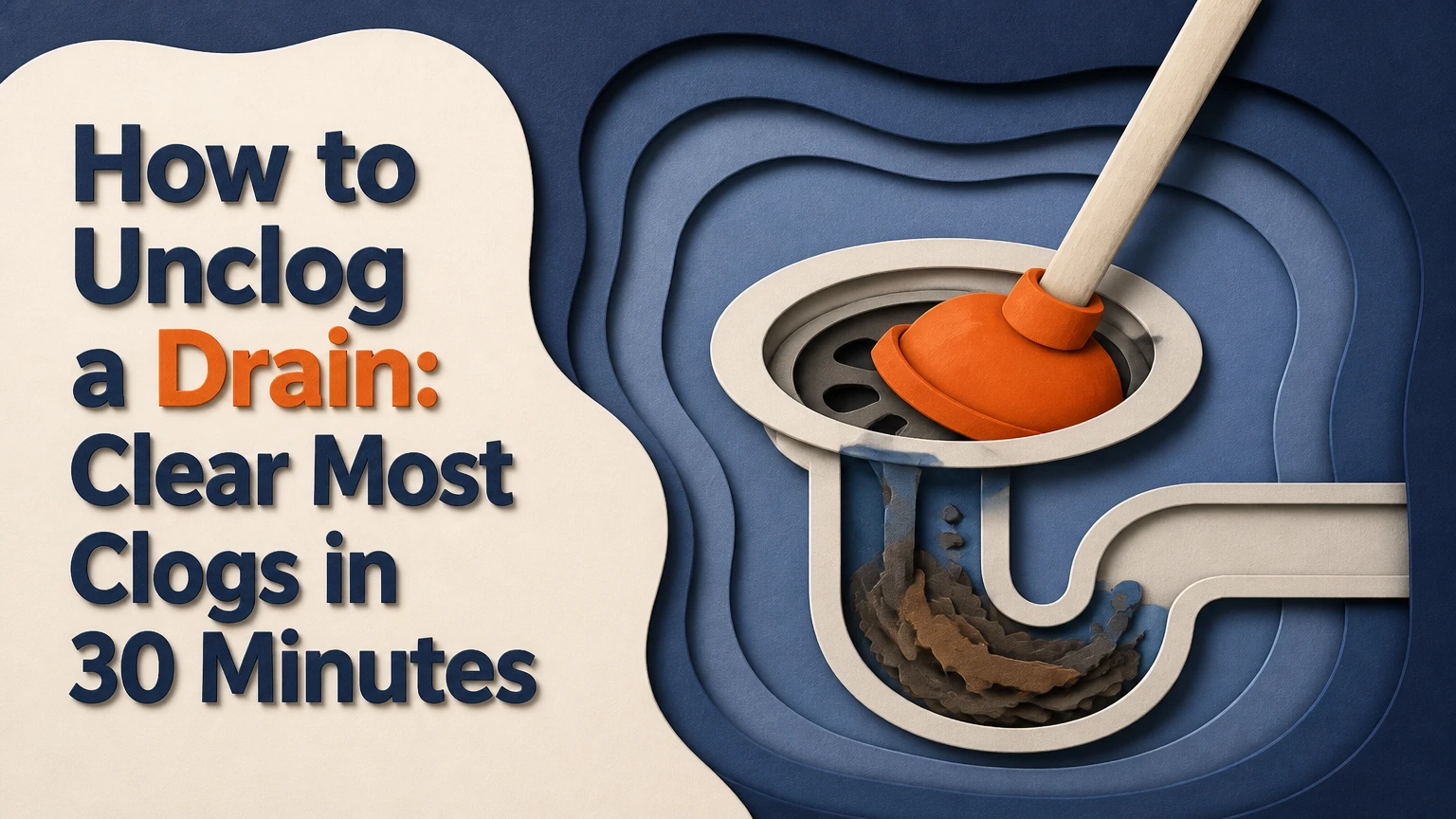
To unclog a drain, remove standing water, seal nearby openings, plunge the drain, and use a hand auger if the blockage remains. Most single-fixture sink, shower, and bathtub clogs take 10-30 minutes to clear, but several backing-up fixtures, sewage odors, or recurring blockages indicate a deeper drain or sewer-line problem.
Key facts
A cup plunger works best on flat sink and shower drains; a flange plunger seals toilet outlets more effectively.
A 1/4-inch hand auger typically reaches 15-25 feet, enough for many branch-line clogs.
Never mix drain cleaners, bleach, ammonia, vinegar, or other chemicals.
Do not plunge a drain containing undiluted chemical cleaner because splashing can burn skin and eyes.
Boiling water can damage some PVC fittings and does not reliably dissolve a solid hair or food clog.
Multiple fixtures backing up at once usually points beyond the individual trap.
How to Unclog a Drain Safely
The safest general sequence is mechanical removal: protect yourself, remove accessible debris, plunge for pressure, clean the trap when appropriate, and snake the pipe when the clog is deeper. Mechanical methods avoid leaving corrosive liquid inside plumbing and usually reveal whether the blockage has actually been removed rather than temporarily pierced.
Before you start
Gather rubber gloves, eye protection, a bucket, old towels, a flashlight, a cup or flange plunger, and a hand auger. Typical tool costs are $5-$20 for a plunger and $15-$45 for a household hand snake; professional drain cleaning commonly costs $150-$500, depending on access, severity, and location.
Turn off the garbage disposal before working near a kitchen drain. If chemical cleaner has already been poured into the drain, stop and read the product label or contact Poison Control in the United States at 1-800-222-1222 before using a plunger or opening the trap.
Step 1: Identify the blockage
Run only a small amount of water and observe what happens. A slow single sink usually has a local buildup, while a completely full basin can indicate a solid obstruction in the trap or branch pipe.
Stop using water immediately if a toilet, shower, floor drain, and sink back up together. Shared symptoms make a main drain or sewer connection more likely, and additional water can spread contaminated wastewater across floors.
Step 2: Remove visible debris
Pull out the stopper, strainer, or drain cover and inspect the opening with a flashlight. Remove hair, food particles, grease-coated material, and soap residue with a plastic drain tool or bent wire, taking care not to force debris farther down the pipe.
Bathroom clogs often sit within the first 12 inches of the drain opening. Kitchen clogs may extend beyond the P-trap because grease and food particles adhere to cooler pipe walls downstream.
Step 3: Plunge the drain
Add enough water to cover the rubber cup by approximately 1 inch. Seal the sink overflow with a wet rag, and seal the second bowl of a double sink with a stopper or tightly pressed cloth so pressure cannot escape.
Place the plunger squarely over the outlet. Push down slowly once to expel air, then make 15-20 firm vertical strokes without breaking the seal; finish by pulling sharply upward, and repeat the cycle two or three times.
You will know the plunger worked when the water level drops rapidly and the drain accepts a continuous stream. A plunger creates pressure and suction, but it cannot remove tree roots, heavy mineral scale, or a lodged solid object.
Step 4: Clean the P-trap
Place a bucket under the U-shaped P-trap before loosening its slip nuts. Remove the trap carefully, empty the water, clear the obstruction, rinse the fitting, and replace the washers in their original orientation.
This method is especially effective for bathroom sinks, where a stopper pivot rod can catch hair and toothpaste residue directly above or inside the trap. Do not force corroded metal fittings with excessive torque because a cracked trap can cause an under-sink leak.
Run water briefly after reassembly and inspect every joint. A dry paper towel wrapped around the connections will reveal small leaks more reliably than visual inspection alone.
Step 5: Snake the branch line
Use a 1/4-inch hand auger for most household sinks, showers, and tubs. Feed 15-25 feet of cable through the drain opening or, for a sink, through the trap opening when direct access gives better control.
Turn the handle clockwise while applying gentle forward pressure. When the cable meets resistance, rotate it repeatedly instead of forcing it, because the tip must hook, cut, or loosen the obstruction while moving through pipe bends.
Withdraw the cable slowly and wipe it clean as it emerges. Repeat the insertion several times, then flush with hot tap water for several minutes.
A successful snake job retrieves hair, sludge, or a foreign object and restores sustained flow. A cable that returns clean while the drain remains slow may have traveled along the side of a larger clog rather than removing it.
Which Tool Should You Use First?
The best first tool is a plunger for a single, active blockage, a plastic hair-removal tool for a shallow bathroom clog, and a hand auger when plunging fails or the obstruction is deeper. Chemical cleaners rank behind mechanical methods because they introduce handling hazards and often leave the actual cause in the pipe.
| Tool or method | Best clog type | Typical reach or time | Typical cost | Main limitation |
|---|---|---|---|---|
| Plastic drain zip tool | Hair within 12 inches | 2-5 minutes | $3-$8 | Cannot reach deep bends |
| Cup plunger | Sink, shower, bathtub | 5-15 minutes | $5-$20 | Needs a reliable seal |
| Flange plunger | Toilet outlet blockage | 5-15 minutes | $8-$25 | Poor fit on flat sinks |
| 1/4-inch hand auger | Branch-line hair or sludge | 15-30 minutes, 15-25 feet | $15-$45 | Limited cutting power |
| Enzyme cleaner | Slow organic buildup | 8-24 hours | $10-$25 | Does not clear solid stops |
| Professional hydro-jetting | Grease, scale, roots | 1-3 hours | $300-$800 typical | Requires professional equipment |
A plunger is the strongest low-risk starting point because it can move a blockage without chemically changing the wastewater. A drain auger is more informative: the cable may retrieve the material and show whether the clog is hair, food, paper, or a foreign object.
What Causes a Drain to Clog?
A drain clogs when transported material catches on a restriction and progressively reduces the pipe’s open area. Hair combines with soap scum in bathroom drains, food and fat accumulate in kitchen pipes, and paper or unsuitable objects obstruct toilet traps.
Household drainage depends on gravity, pipe slope, a continuous air path, and unobstructed internal diameter. The P-trap retains water to block sewer gases, but the trap also creates a low point where sediment and objects can settle.
Common clog materials
| Clog material | Typical fixture | Observable clue | Best first response |
|---|---|---|---|
| Hair and soap scum | Shower or bathtub | Water drains slowly after bathing | Remove grate, use zip tool, then plunge |
| Toothpaste and hair | Bathroom sink | Stopper moves slowly or holds sludge | Clean stopper and P-trap |
| Grease and food residue | Kitchen sink | Flow worsens after cooking | Plunge, clean trap, then auger |
| Excess paper or wipes | Toilet | Bowl rises after flushing | Flange plunger, then toilet auger |
| Soil, roots, or scale | Exterior or multiple fixtures | Repeated backups and gurgling | Professional inspection and cleaning |
Grease is particularly deceptive. Hot water may carry liquid fat farther into the pipe, but the material can cool and solidify downstream, creating a larger obstruction than the original deposit.
How Do You Unclog Specific Fixtures?
Fixture design determines the most effective access point. Sink traps are removable, shower drains are shallow but hair-prone, and toilets require a flange plunger or closet auger because their internal trap has a different shape.
Kitchen sink
Remove standing water with a cup or wet vacuum if necessary, then plunge one basin while sealing the other. If the sink has a garbage disposal, do not place hands inside it; use tongs only after disconnecting power and follow the disposal manufacturer’s reset and cleaning instructions.
For a persistent kitchen blockage, remove and clean the P-trap, then feed an auger into the wall-side pipe. Avoid repeated grease flushing, even with detergent, because detergent does not permanently dissolve a thick fat deposit.
Bathroom sink
Lift out the stopper and remove hair from its shaft and pivot mechanism. If the drain remains slow, place a bucket below the P-trap, clean the trap, and inspect the horizontal tailpiece for toothpaste and sediment.
Bathroom sink clogs are often local and inexpensive to fix. Replacing a damaged pop-up stopper or missing washer may prevent the same obstruction from returning.
Shower or bathtub
Remove the grate and pull out hair with a plastic drain tool. Seal the overflow plate with duct tape or a wet cloth before plunging a bathtub because the overflow opening otherwise dissipates pressure.
If the tub still drains slowly, insert a small hand auger through the overflow opening after removing the cover and linkage, when the fixture design allows it. The overflow route can provide straighter access to the trap than the drain opening.
Toilet
Use a flange plunger with the extended rubber collar inside the toilet outlet. Begin with gentle strokes to avoid splashing, then increase pressure for 15-20 cycles while keeping the bowl from overflowing.
If plunging fails, use a toilet auger rather than a bare drain snake. A closet auger has a protective sleeve that reduces the chance of scratching porcelain and a short cable designed for the toilet trap.
Do Baking Soda, Vinegar, or Drain Cleaner Work?
Baking soda and vinegar can loosen light surface residue, but the foaming reaction rarely clears a compacted hair, grease, paper, or foreign-object blockage. Enzyme products can reduce organic buildup over 8-24 hours, while caustic drain openers may work faster on some materials but create significant handling and plumbing risks.
Do not treat household mixtures as a substitute for mechanical clearing. Baking soda is sodium bicarbonate, and vinegar is acetic acid; their visible fizz mainly produces carbon dioxide and water, which provides little sustained pressure inside a blocked pipe.
Chemical cleaner safety
Read the label, wear chemical-resistant gloves and eye protection, ventilate the area, and use only the stated quantity. Never combine an acid cleaner with a bleach product, ammonia, another drain opener, or a homemade mixture.
The National Capital Poison Center warns, “Never mix household cleaning products.” The risk is not theoretical: incompatible products can release chlorine gas or generate heat and corrosive splashes.
Avoid chemical opener in a completely blocked drain. The product may remain above the obstruction, leaving caustic liquid in the basin when someone later removes the trap or plunges the drain. Septic-system owners should follow the septic manufacturer’s guidance rather than assume every product is compatible.
Hot tap water is a reasonable final flush for many drains. Boiling water is not a universal remedy, and repeated 100°C water can soften some plastic components, damage seals, or stress glued PVC connections.
What Are the Costs and Timeframes?
A DIY drain clearing usually costs $3-$45 in tools and takes 5-30 minutes, while professional service commonly ranges from $150-$800 depending on access, emergency timing, camera inspection, hydro-jetting, and root removal. Prices vary substantially by region, building type, and whether the blockage is inside a fixture or beneath the property.
| Service or purchase | Typical US cost | Typical duration | Suitable situation |
|---|---|---|---|
| Plastic drain tool | $3-$8 | 2-5 minutes | Shallow shower hair |
| Cup or flange plunger | $5-$25 | 5-15 minutes | Single fixture blockage |
| Hand or toilet auger | $15-$60 | 15-45 minutes | Deeper branch clog |
| Standard professional augering | $150-$400 | 30-90 minutes | Stubborn fixture or branch line |
| Sewer camera inspection | $250-$600 | 1-2 hours | Recurrent or buried-line blockage |
| Hydro-jetting or root cleaning | $300-$800 | 1-3 hours | Grease, scale, or roots |
These are typical planning ranges, not guaranteed quotes. Ask whether the price includes travel, after-hours charges, access through a cleanout, wastewater cleanup, and a camera inspection.
Why Does a Drain Keep Clogging?
A drain that reclogs within days usually contains residual material, a damaged or undersized pipe, improper slope, mineral scale, tree-root intrusion, or an uncorrected source such as grease or hair. A quick flow improvement can mean the tool created a narrow channel through the blockage instead of removing it.
Use a larger cutting head only when the cable and pipe are compatible. Old galvanized steel can be fragile, and aggressive augering may dislodge scale or damage a deteriorated line.
Recurring-clog diagnosis
| Symptom | Likely location | Safe next action | Escalation trigger |
|---|---|---|---|
| One sink slows monthly | Stopper, trap, or branch | Clean stopper and trap | Clog returns after augering |
| Shower and tub slow together | Shared bathroom branch | Snake through best access point | Water backs into another fixture |
| Toilet gurgles when sink drains | Drain or vent connection | Limit water use and inspect | Repeated gurgling or backup |
| Several fixtures back up | Main building drain | Stop using water | Sewage, flooding, or no cleanout access |
| Drain smells after clearing | Trap, residue, or vent issue | Clean trap and flush | Persistent sewer-gas odor |
A vent problem can mimic a blockage because restricted air movement slows drainage and causes gurgling. Vent work often requires roof access and should not be confused with simply pushing a cable farther into the drain.
When Should You Call a Plumber?
Call a plumber immediately for sewage backup, contaminated water, flooding near electrical equipment, a suspected buried sewer problem, or multiple fixtures that stop draining together. Schedule professional service for a clog that returns after proper plunging and augering, because recurrence can indicate roots, collapsed pipe, severe scale, or a structural defect.
Stop DIY work when the cable will not advance without force, the pipe connection begins to move, or chemical cleaner may be present. A damaged fitting can turn a $20 clearing attempt into a concealed leak inside a wall or cabinet.
Professional diagnosis may involve a main-line auger, hydro-jetting, or a sewer camera. Hydro-jetting cleans pipe walls with high-pressure water, but a camera inspection is sensible first when corrosion, root intrusion, or pipe collapse is possible.
Common Mistakes and How to Fix Them
Using the wrong plunger
A flat cup plunger may not seal a toilet outlet, while a toilet flange may sit poorly on a sink. Use the tool whose rubber geometry matches the fixture opening.
Plunging without sealing the overflow
An open overflow lets air escape, reducing pressure at the obstruction. Seal the overflow and any second sink bowl before starting again.
Forcing a snake
Force can kink the cable, damage a trap, or drive a foreign object deeper. Rotate steadily, advance in small increments, and withdraw the cable when resistance remains unchanged.
Mixing cleaners
Mixing drain opener with bleach, ammonia, vinegar, or another opener can release toxic gas or create a corrosive reaction. Leave the area, ventilate from a safe position, and contact Poison Control if exposure occurs.
Flushing more water into a backup
Additional water cannot solve a main-line blockage and may spread sewage. Stop using washing machines, dishwashers, showers, and toilets until the affected line is assessed.
Assuming a temporary improvement means success
A drain that empties once may still contain a large deposit. Run several minutes of water, observe the flow, and check whether nearby fixtures gurgle or rise.
How Can You Prevent Future Drain Clogs?
Prevent drain clogs by keeping solids, grease, hair, wipes, and fibrous food out of the plumbing. Install a removable mesh strainer, wipe greasy cookware into the trash, brush hair before showering, and flush only toilet paper and human waste.
Use these maintenance practices:
- Empty sink strainers after each meal and wash them weekly.
- Clean shower and bathtub screens every 1-2 weeks.
- Remove and wash bathroom sink stoppers monthly.
- Run hot tap water for 30-60 seconds after normal kitchen use.
- Never flush “flushable” wipes unless the local utility and plumbing system specifically permit them.
- Investigate any recurring clog rather than treating it indefinitely with chemicals.
Enzyme maintenance products may help reduce organic film in some systems, but they cannot repair poor pipe slope, remove roots, or clear a solid obstruction. Prevention works best when the material source is corrected.
FAQ
Can I unclog a drain without a plunger?
Yes. Remove visible debris with a plastic drain tool, clean a removable P-trap, or use a hand auger sized for the fixture. Hot tap water may help after mechanical clearing, but baking soda and vinegar rarely remove a complete blockage because their reaction does not provide sustained cutting or pulling force.
How long should I plunge a clogged drain?
Plunge for 15-20 firm strokes per cycle, then repeat two or three cycles if the water level changes. Maintain a tight seal and use moderate force; vigorous plunging without an airtight seal wastes effort and can splash contaminated water.
Is it safe to use a drain snake in PVC pipe?
A hand auger is generally suitable for intact PVC branch lines when used gently and at the correct diameter. Do not force the cable, and stop if fittings move, the cable binds sharply, or the pipe is old and visibly deteriorated.
Why is my drain gurgling but not clogged?
Gurgling can indicate restricted venting, a partial branch-line blockage, or a developing main-drain obstruction. If gurgling occurs when another fixture drains, especially alongside slow flow or sewer odor, reduce water use and arrange a plumbing inspection.
Can grease be dissolved with hot water?
Hot water can temporarily move liquid grease, but it may cool farther downstream and solidify against pipe walls. Scrape fats and oils into a sealed container or trash, and do not rely on hot water to remove an established kitchen drain blockage.
Should renters use chemical drain cleaner?
Renters should check the lease and notify the landlord before using corrosive drain opener, particularly in an older building or a completely blocked drain. Mechanical clearing is safer, while repeated or structural clogs may be the property owner’s maintenance responsibility.
The Bottom Line
To unclog a drain, start with visible-debris removal and a properly sealed plunger, then clean the P-trap or use a 1/4-inch hand auger for a deeper branch-line obstruction. Avoid chemical mixtures and boiling water, confirm sustained flow after clearing, and call a plumber when sewage, multiple fixtures, recurring clogs, roots, or damaged piping are involved.