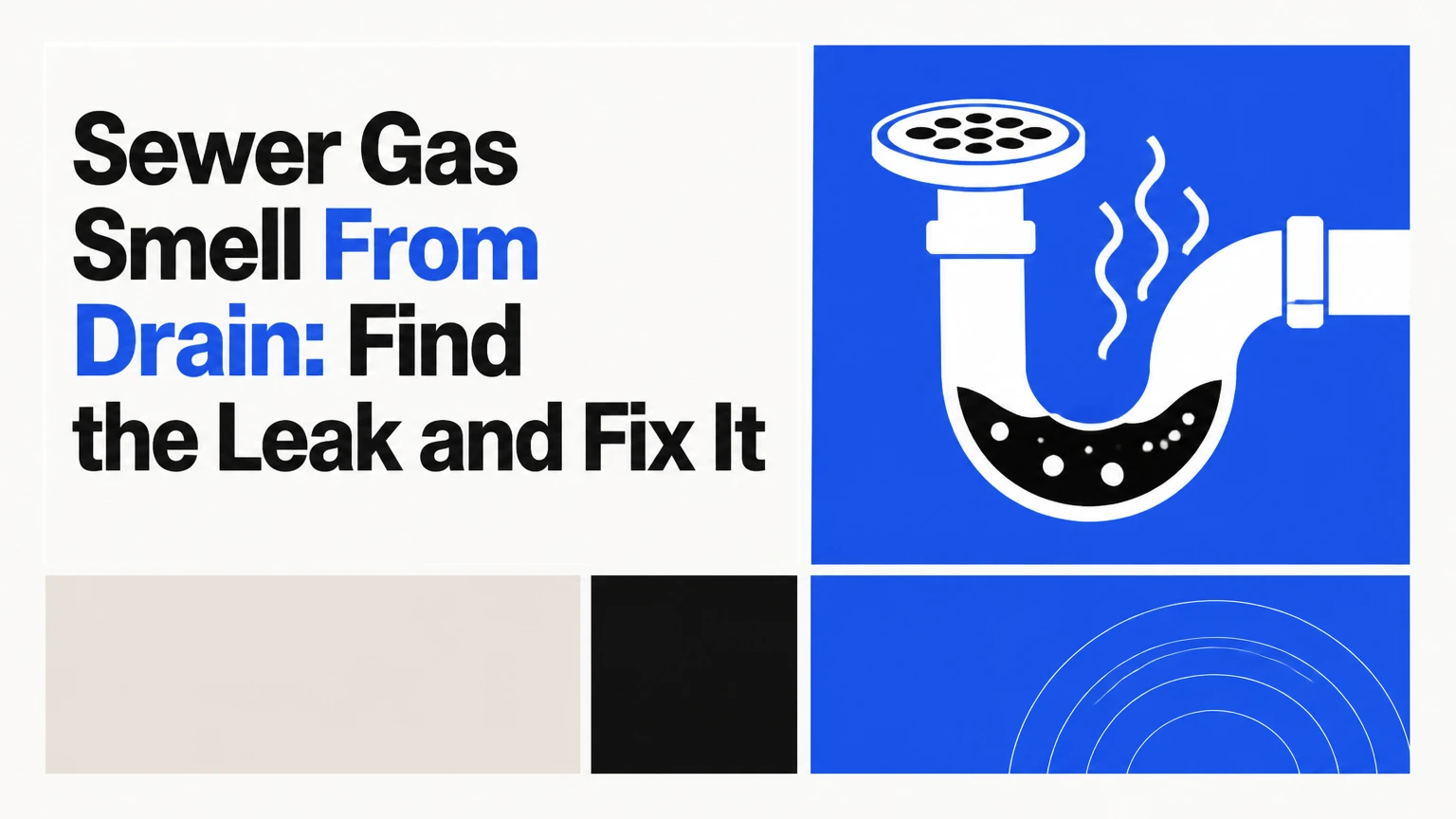
A sewer gas smell from drain plumbing usually means a dry or damaged P-trap, drain biofilm, blocked vent, failed toilet seal, or leaking waste pipe is allowing sewer air indoors. Restore the trap seal first, then isolate the fixture; persistent, widespread, or symptom-producing odors require prompt professional diagnosis.
Key Facts at a Glance
- A P-trap normally holds water that blocks sewer gases from entering a room.
- Hydrogen sulfide produces the characteristic rotten-egg odor, but smell is not a reliable safety test because the nose can lose sensitivity.
- A single smelly drain usually indicates a local trap, stopper, overflow, or buildup problem.
- Odor from several fixtures, gurgling, or repeated trap drying points toward venting, pressure, or main-line problems.
- Never mix bleach, ammonia, acids, or commercial drain cleaners.
- A natural-gas odor without a clear drain source requires leaving the building and contacting the gas utility or emergency services.
What Does a Sewer Gas Smell From a Drain Mean?
A sewer odor from a drain means sewer air is bypassing the plumbing barrier or organic material is decomposing inside the fixture drain. The odor may come from hydrogen sulfide, ammonia, methane, or other gases, although the rotten-egg character most commonly comes from hydrogen sulfide.
Sewer gas is not one gas with one predictable toxicity. Hydrogen sulfide can irritate the eyes and airways at elevated concentrations, while methane creates a fire or explosion hazard in enclosed spaces. Household drain odors are often low-level nuisance problems, but concentration cannot be determined reliably by smell alone.
The U.S. Occupational Safety and Health Administration identifies hydrogen sulfide as a toxic, flammable gas and warns that odor fatigue can occur. The practical rule is simple: if the odor is strong, sudden, widespread, or accompanied by physical symptoms, leave the area and ventilate only if doing so is safe.
How plumbing normally blocks sewer gas
A household drainage system uses two related controls. The P-trap creates a water seal beneath a sink, shower, tub, floor drain, or appliance standpipe. The vent system balances air pressure and carries sewer gases above the roof or through an approved air-admittance arrangement.
Water can leave a trap while the seal remains in place because the bend retains a small volume after each use. Evaporation, siphoning, pressure surges, a cracked trap, or poor installation can remove that seal. A drain with no effective water barrier becomes an open path from the drainage system into the room.
When Is the Odor an Emergency?
A sewer gas odor is an emergency when it is overwhelming, occurs throughout a building, follows a suspected gas-line leak, or accompanies headache, dizziness, nausea, confusion, breathing difficulty, or eye irritation. Leave immediately, avoid flames and electrical switches, and call emergency services or the gas utility from outside.
Do not assume a rotten-egg smell is sewage. Natural gas is odorized with sulfur compounds that can smell similar. A hissing sound, odor near a gas appliance or meter, or an odor that does not concentrate around a drain increases the likelihood of a fuel-gas leak.
Hydrogen sulfide also creates a dangerous misconception: smell can disappear even while exposure continues. The Centers for Disease Control and Prevention states that “you cannot rely on your sense of smell to indicate the presence of hydrogen sulfide.” Do not sniff repeatedly to judge whether a room is safe.
| Warning sign | More likely concern | Immediate response |
|---|---|---|
| Rotten-egg odor near gas meter | Natural-gas leak | Leave and call the utility outside |
| Strong odor with dizziness | Concentrated sewer gas or fuel gas | Leave, avoid ignition sources, call emergency services |
| Odor at one unused floor drain | Dry P-trap | Add water if no symptoms or gas-line concern exists |
| Sewage backup or contaminated water | Drain or sewer failure | Stop using fixtures and arrange urgent service |
| Odor after toilet movement | Failed wax ring or flange | Stop using toilet and schedule repair |
| Several drains gurgling | Blocked vent or main drain | Limit water use and call a plumber |
Which Causes Are Most Likely?
The most likely cause depends on the number of affected fixtures, recent usage, drainage speed, and whether the odor comes from the drain opening or the surrounding floor and wall. A dry trap is common in an unused fixture, while multiple smelly drains usually indicate a pressure or venting problem.
Drain biofilm can also create a sewage-like smell without exposing the home to the main sewer line. Hair, skin oils, soap, food particles, and toothpaste collect in the stopper, overflow channel, tailpiece, or strainer. Cleaning the visible drain opening may help, but it cannot repair a missing trap seal or leaking pipe.
| Cause | Typical location | Distinguishing symptoms | Usual remedy |
|---|---|---|---|
| Evaporated P-trap | Guest sink, shower, floor drain | Fixture unused for 2-8 weeks | Add 0.5-2 liters of water |
| Drain biofilm | Sink stopper, overflow, shower strainer | One fixture smells, drainage remains normal | Remove and scrub accessible parts |
| Blocked vent | Roof vent or branch vent | Gurgling, slow drainage, several fixtures affected | Professional vent diagnosis |
| Failed toilet seal | Toilet flange and floor | Rocking bowl, stains, odor at base | Reset toilet and replace seal |
| Cracked or open pipe | Wall, crawl space, basement | Odor persists after trap restoration | Leak inspection and pipe repair |
| Dry appliance standpipe | Laundry area | Washer area smells after vacancy | Restore trap or repair trap primer |
| Septic or cleanout fault | Yard, basement, septic tank area | Outdoor sewage odor or backups | Septic or sewer-line service |
Why does the smell come from only one drain?
One smelly drain usually has a local cause: a dry P-trap, dirty stopper, clogged overflow, missing trap primer, or damaged trap. If other fixtures drain normally and do not smell, start at that fixture rather than opening the roof vent or excavating the sewer line.
A bathroom sink overflow is a frequent blind spot. The overflow channel can retain soap and organic residue above the P-trap, so the drain appears clean while the overflow passage produces odor. Remove the stopper and clean the stopper, drain flange, overflow opening, and accessible tailpiece.
Why do several drains smell at once?
Several smelly drains suggest a blocked vent, partial main-line obstruction, failed ejector or sump seal, negative indoor pressure, or a sewer-line defect. Gurgling after a toilet flush or when a washing machine discharges is especially useful evidence because it indicates air-pressure movement within the drainage system.
Strong exhaust fans can worsen an already weak trap seal in a tightly sealed home, particularly when a vent is obstructed. Storms, cold weather, and building settlement can also expose old cracks or change pressure patterns. Refill every accessible trap, then arrange a plumbing inspection if the odor returns.
How Do You Find the Offending Drain?
Find the source by comparing drain openings, nearby toilet bases, cleanouts, cabinets, and appliance connections rather than relying on room-level odor. Close suspected drains temporarily, ventilate the room, and check whether the odor collects at one covered opening.
Use this isolation method:
- Inspect every drain in the room, including floor drains, shower drains, condensate drains, laundry standpipes, and rarely used utility sinks.
- Pour a small amount of water into each trap only if no gas-line emergency is suspected.
- Cover one suspected opening with plastic film and removable tape for several hours, without sealing a fixture that must be used.
- Compare the room after the test. A smell trapped beneath the cover supports that drain as the source.
- Check the toilet base and cabinet interior separately because a failed seal may make the room smell like a drain.
Do not pour water into a drain connected to a sewage backup if contaminated water may rise. Stop water use and request professional service instead.
Step 1: Restore the Water Seal
Restore a dry P-trap with approximately 0.5-2 liters of clean water, then wait 10-15 minutes and reassess the odor. A floor drain may need more water than a bathroom sink because its trap is larger, while a shower trap may require enough flow to displace stagnant residue.
For an infrequently used drain, add 1-2 tablespoons of mineral oil after the water. Mineral oil slows evaporation, but it does not repair a trap, replace a trap primer, or make a drain safe for discharge into a septic system without checking local guidance. Commercial trap-seal products may be preferable where plumbing codes or building managers prohibit oil.
You will know this step worked when the odor falls sharply within minutes and does not return after normal ventilation. If the smell returns within hours or days, suspect siphoning, a leak, or an improperly installed trap.
Common mistake: adding water to the visible drain while a separate nearby floor drain remains dry. Check every trap in the affected room.
Step 2: Clean Drain Buildup Safely
Clean a smelly sink or shower drain mechanically before using chemicals. Remove the stopper or strainer, pull out hair and sludge, scrub accessible surfaces with detergent and a brush, and rinse with hot tap water.
Baking soda and vinegar can loosen light residue, but their foaming reaction has limited cleaning force and does not disinfect the entire drainage system. Do not describe the mixture as a reliable cure for sewer gas. Boiling water can soften or damage some plastic piping, seals, and fixtures, so use hot tap water unless the manufacturer permits higher temperatures.
Enzyme products may reduce organic residue when used according to the label, but they cannot clear a solid obstruction or fix a failed seal. Chemical drain openers are a poor choice for an unexplained sewer odor because they may damage old piping, create splash hazards, and endanger the plumber who later opens the line.
Common mistake: combining bleach with vinegar, ammonia, or an earlier drain cleaner. Mixing these products can create chlorine or chloramine gases. Flush with water only when the product label gives a safe procedure.
Step 3: Check Drainage, Gurgling, and Pressure
Run the fixture while observing drainage speed, bubbling, and nearby traps. A healthy drain empties without repeated bubbling, rising water, or gurgling from another fixture.
Use the symptom pattern to narrow the fault:
| Observation | Likely mechanism | Recommended action |
|---|---|---|
| Sink drains quickly but smells | Biofilm or overflow residue | Remove stopper and scrub |
| Drain empties slowly and gurgles | Partial branch obstruction | Stop repeated plunging and inspect |
| Toilet bubbles when sink drains | Vent or shared branch issue | Arrange plumbing diagnosis |
| All fixtures drain slowly | Main-line restriction | Minimize water use and call promptly |
| Trap dries after each discharge | Siphoning or inadequate vent | Inspect venting and trap configuration |
| Odor returns after rain | Sewer surcharge or pipe defect | Check cleanout and sewer service |
A plunger can move a local obstruction, but it cannot correct a blocked roof vent or a missing trap. Avoid repeatedly plunging a toilet or sink when sewage may be displaced into another fixture.
Step 4: Inspect the Toilet Seal and Floor Flange
A failed toilet seal can release sewer gas even when the nearby drain trap is full. Press gently against the toilet bowl to check for rocking, inspect the base for staining or dampness, and notice whether the odor is strongest at floor level after flushing.
A rocking toilet does not prove that the wax ring is the only fault. The flange may be broken, the subfloor may be damaged, or the toilet bolts may be loose. Replacing the seal without correcting an unstable flange often produces a short-lived repair.
Removing a toilet involves lifting a heavy ceramic fixture, managing contaminated water, and correctly resetting the bowl. A competent DIY repair requires a replacement seal, new closet bolts, a supply-line check, and a level base. Tighten bolts evenly and only enough to stabilize the bowl, because excessive force can crack porcelain.
Step 5: Inspect the Vent System Safely
A blocked plumbing vent can siphon trap water, slow drainage, and distribute odor through multiple fixtures. Leaves, bird nests, ice, construction debris, and failed vent components are common obstructions, but roof inspection presents a fall hazard that outweighs the value of a casual homeowner check.
Do not climb onto a wet, icy, steep, or fragile roof. A plumber can inspect the vent opening, test airflow, clear the pipe, or use a camera when a blockage is suspected. A garden hose pushed into a vent is not a universal solution: water can worsen a hidden blockage or conceal a damaged pipe.
Air-admittance valves, where permitted, can fail or stick and may cause local odor or drainage symptoms. Replacing one without checking the rest of the vent system can hide a branch-vent defect.
What If the Odor Keeps Returning?
Recurring odor after water and cleaning indicates a failed water seal, vent-pressure problem, leaking pipe, toilet-flange defect, drain connection, or septic-system fault. Recurrence is the point at which repeated household cleaning becomes less useful than targeted diagnosis.
A plumber may use several tests:
- Smoke testing: non-toxic artificial smoke is introduced into a sealed drainage system to reveal open joints, cracked pipes, missing traps, and unsealed cleanouts.
- Drain camera inspection: a small camera identifies roots, offsets, collapses, corrosion, and obstructions inside accessible sewer lines.
- Water or pressure testing: the system is evaluated for leakage where local code and conditions permit.
- Trap and vent testing: the technician checks whether a trap holds water after nearby fixtures discharge.
- Dye testing: colored water helps identify toilet or fixture leaks, but dye alone does not locate every gas pathway.
Smoke testing can locate an opening; it cannot determine the complete structural repair cost without access, excavation, or additional inspection. Smoke should be introduced only by trained personnel using appropriate equipment.
How Much Does Sewer-Gas Repair Cost?
Typical US residential costs range from $5-$20 for restoring a trap to $1,500-$5,000 or more for major sewer-stack or buried-line work. Regional labor rates, access, permits, pipe material, damage to finishes, and whether excavation is required create substantial variation.
| Repair or test | Typical US cost | Typical duration | Main cost variable |
|---|---|---|---|
| Water and mechanical drain cleaning | $5-$50 | 15-45 minutes | Access and residue severity |
| Trap or trap-primer repair | $150-$500 | 1-3 hours | Wall or floor access |
| Toilet seal and flange repair | $200-$700 | 2-5 hours | Subfloor and flange condition |
| Vent clearing or diagnosis | $200-$600 | 1-3 hours | Roof access and obstruction |
| Smoke test | $300-$800 | 2-4 hours | Number of vents and fixtures |
| Camera sewer inspection | $250-$800 | 1-3 hours | Cleanout access and line length |
| Buried sewer-line repair | $1,500-$10,000+ | 1-5 days | Excavation, lining, and landscaping |
The most economical sequence is diagnosis before replacement. Pipe lining may reduce excavation for suitable pipes, but it is not appropriate for every collapse, offset, missing connection, or failed building drain.
What Should Renters, Owners, and Vacant-Home Managers Do?
Renters should refill accessible unused traps, avoid chemical mixtures, document the location and timing of the odor, and report persistent or widespread smells to the landlord or property manager. Tenants should not open roof vents, remove toilets, or cut walls without authorization.
Homeowners can safely perform fixture isolation, trap restoration, stopper cleaning, and visual checks around toilets and cabinets. Owners should escalate when symptoms involve multiple drains, recurring trap loss, sewage backup, a crawl space, or an odor that persists after the local drain is sealed.
Vacant-home managers should run water through every fixture periodically and maintain approved trap primers. A typical maintenance visit every 2-4 weeks reduces evaporation risk; mineral oil or a commercial trap seal may extend protection, but product compatibility and local rules matter.
Common Mistakes That Prolong the Odor
- Cleaning instead of testing the trap: Surface cleaner cannot restore a missing water seal.
- Ignoring floor drains: Basement, garage, laundry, and utility-room drains often go unused for months.
- Replacing a wax ring without checking movement: A broken flange or damaged subfloor can recreate the leak.
- Inspecting the roof casually: Falls are a more immediate hazard than most household drain odors.
- Using bleach as a universal solution: Bleach does not repair venting, seals, cracks, or thick hair buildup.
- Relying on smell alone: Hydrogen sulfide odor fatigue can create false reassurance.
- Testing every fixture simultaneously: A controlled, one-drain-at-a-time process identifies the source faster.
A practitioner’s rule of thumb is that one fixture with normal drainage usually deserves local cleaning and trap inspection first. Three or more fixtures with gurgling or slow drainage deserve a vent or shared-line assessment before chemical treatment.
FAQ
Can a dry drain trap cause a sewer smell in a bathroom?
Yes. A dry P-trap allows sewer air to travel directly through a sink, shower, tub, or floor drain. Run water long enough to refill the bend, then monitor the odor for 24 hours. If the smell returns quickly, siphoning, a cracked trap, or an inadequate vent may be removing the water seal.
Why does my shower drain smell after I run the washing machine?
A shower drain that smells when a washing machine discharges may share a branch drain with a partial obstruction or inadequate venting. The washing machine releases a large volume quickly, moving air through the branch and potentially siphoning the shower trap. Stop using chemical openers and arrange a drainage assessment if gurgling occurs.
Can a sewer smell come from a cleanout plug?
Yes. A missing, loose, cracked, or poorly fitted cleanout plug can release sewer gas. Cleanouts may be located in basements, crawl spaces, garages, yards, or utility rooms. Check only for visible damage and do not remove a plug when sewage is backing up or the fitting is under pressure.
Is a sewer smell normal in a septic-system house?
A mild outdoor odor near a septic tank or drain field can occur, but persistent indoor odor is not normal. Possible causes include dry traps, a failed septic tank lid, blocked plumbing vents, an overloaded tank, or drain-field failure. Sewage surfacing, slow fixtures, or backups require prompt septic-system service.
How long should a drain smell last after refilling the trap?
A dry-trap odor should improve within minutes to several hours after adding water and ventilating the room. Residue in the drain or overflow may take longer to clear. If the smell remains after 24 hours, returns after fixture use, or affects multiple drains, investigate beyond evaporation.
Does an air freshener fix sewer gas from a drain?
No. Air fresheners mask odor but do not restore a trap seal, remove contaminated residue, or repair a vent, toilet seal, or pipe. Masking is particularly risky when it delays recognition of a natural-gas leak or exposure symptoms. Identify and correct the plumbing pathway instead.
The Bottom Line
A sewer gas smell from drain plumbing most often starts with a dry P-trap or organic buildup, but recurring or widespread odor points toward venting, toilet seals, shared drains, septic equipment, or damaged pipework. Refill and isolate drains first, clean accessible buildup without mixing chemicals, and call a qualified plumber when the odor persists, returns, or produces symptoms.