Sewer Camera Inspection for Clogged Drain: Find the Cause
A sewer camera inspection for clogged drain problems uses a waterproof camera on a flexible push rod to view the inside of a drain or sewer lateral. The inspection identifies the obstruction’s location and cause, such as roots, grease, a broken pipe, or an offset joint, without excavating the property. Key Facts at a Glance […]
How to Find Tree Roots With Sewer Camera: 7 Steps
To find tree roots with a sewer camera, insert a push camera through the sewer cleanout, identify the root intrusion on live video, record the cable distance, then use the camera’s sonde and a compatible locator to mark the point above ground. The complete inspection typically takes 30-60 minutes, but clear footage depends on flow, […]
Sewer Camera Inspection vs Home Inspection: Decide
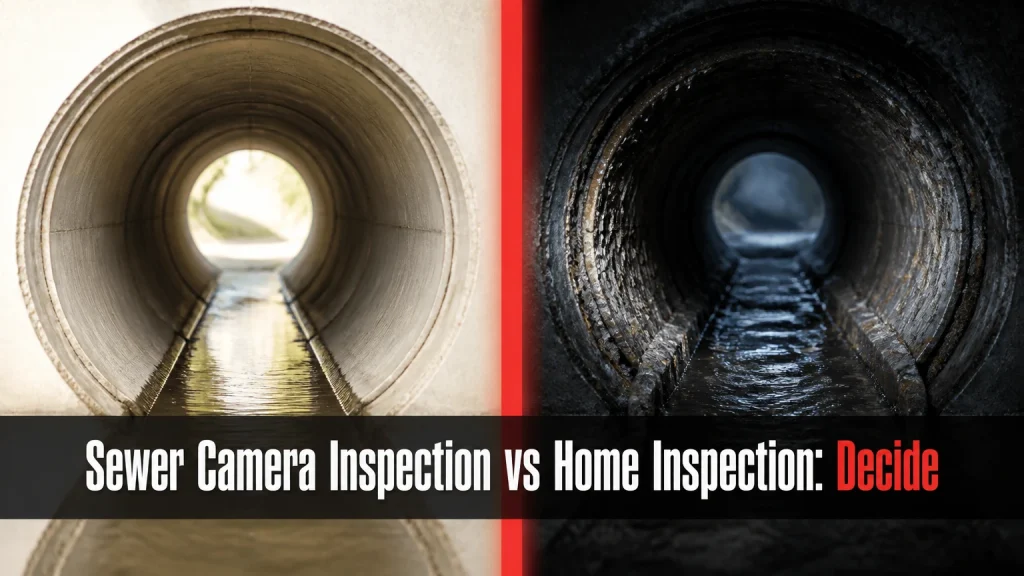
A sewer camera inspection and a standard home inspection answer different questions. A home inspection evaluates visible, accessible building systems, while a sewer scope views the inside of the underground private sewer lateral. For most buyers, neither replaces the other: the right choice depends on property age, pipe material, symptoms, access, and financial risk. Key […]
Sewer Camera Inspection After Drain Cleaning: What It Proves
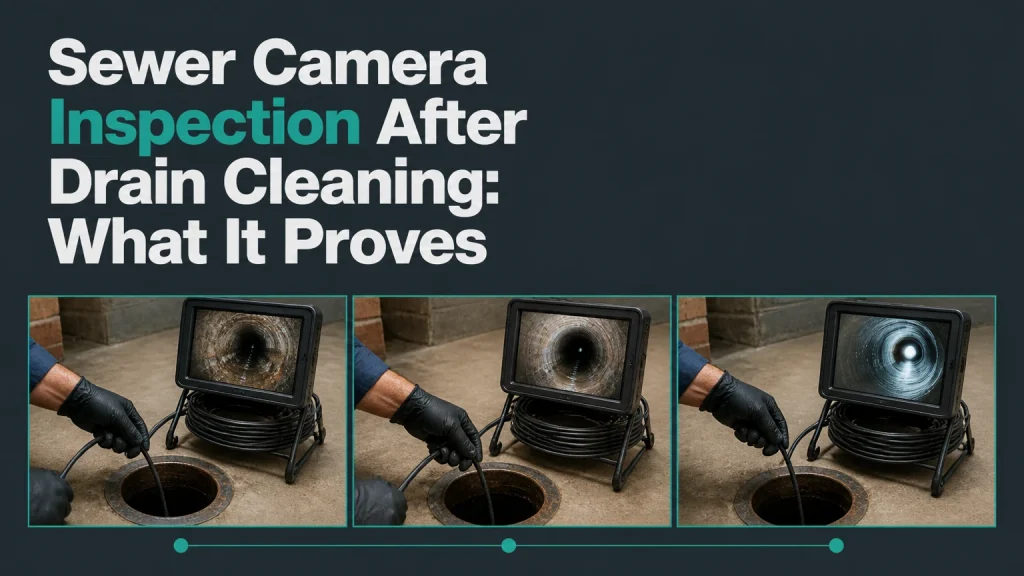
A sewer camera inspection after drain cleaning uses a waterproof CCTV camera on a flexible push rod to verify that a blockage was removed and examine the pipe for roots, cracks, offsets, sags, corrosion, or collapse. The inspection provides visual evidence, but it cannot prove that the pipe is leak-free outside its walls or guarantee […]
Sewer Camera Inspection Before Hydro Jetting: Safe Prep
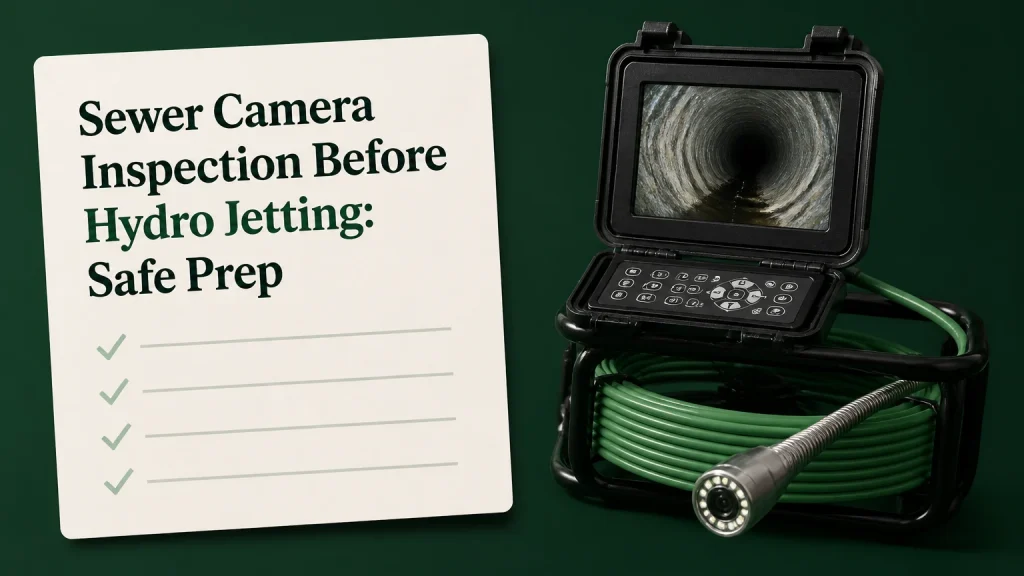
A sewer camera inspection before hydro jetting is a diagnostic check that identifies pipe material, blockage type, structural damage, and access conditions before high-pressure water enters the line. The inspection is strongly recommended for older, damaged, repeatedly blocked, or unknown sewer lines, although it is not universally mandatory for every pipe. Key Facts at a […]
Sewer Camera Inspection for Old House: What to Check
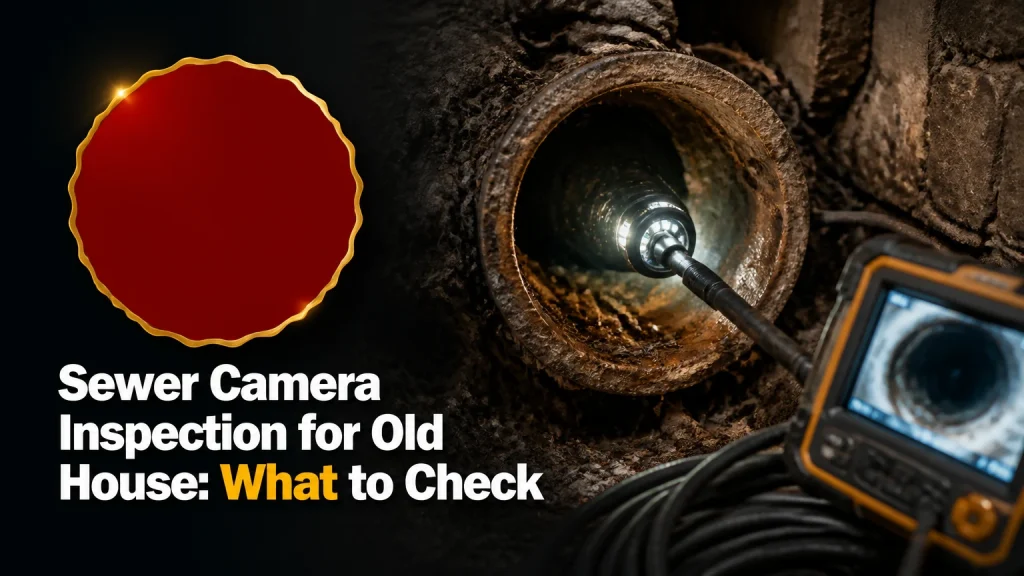
A sewer camera inspection for an old house is a recorded visual examination of the private sewer lateral, from an accessible cleanout or fixture toward the municipal main or septic tank. The inspection can reveal root intrusion, cracked clay, corroded cast iron, Orangeburg deformation, belly sections, offsets, and collapse before those defects cause a backup. […]
How to Find Sewer Belly With Camera: Locate and Measure Sags
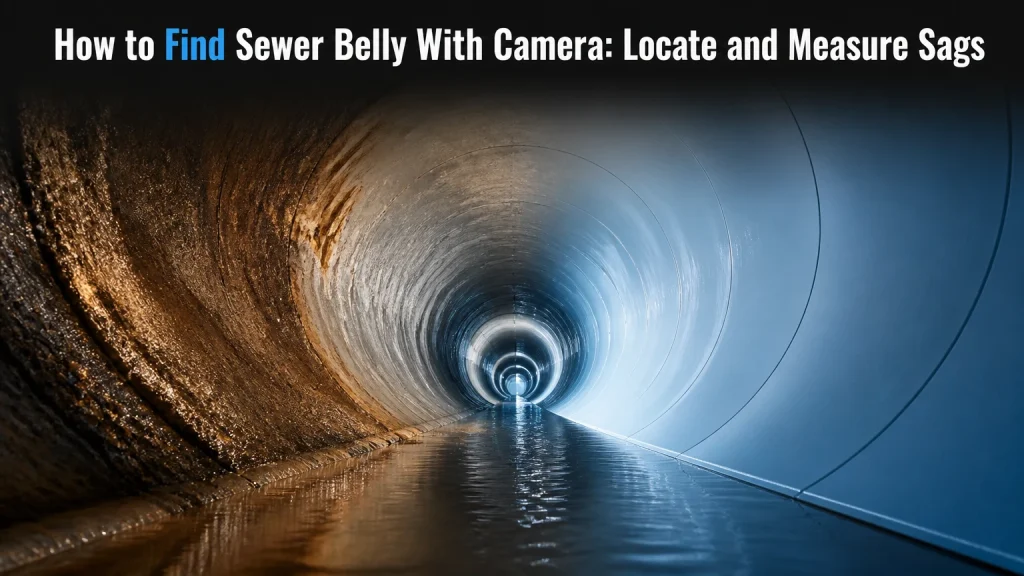
A sewer belly is found with a cleared-line camera inspection by identifying where the camera enters standing water, recording the cable distance, locating the camera’s sonde above ground, and noting where the lens emerges. A true sag requires inspection beyond the water pocket, because a downstream blockage can create the same underwater view. Key Facts […]
How to Inspect Sewer Line With Camera Safely and Accurately
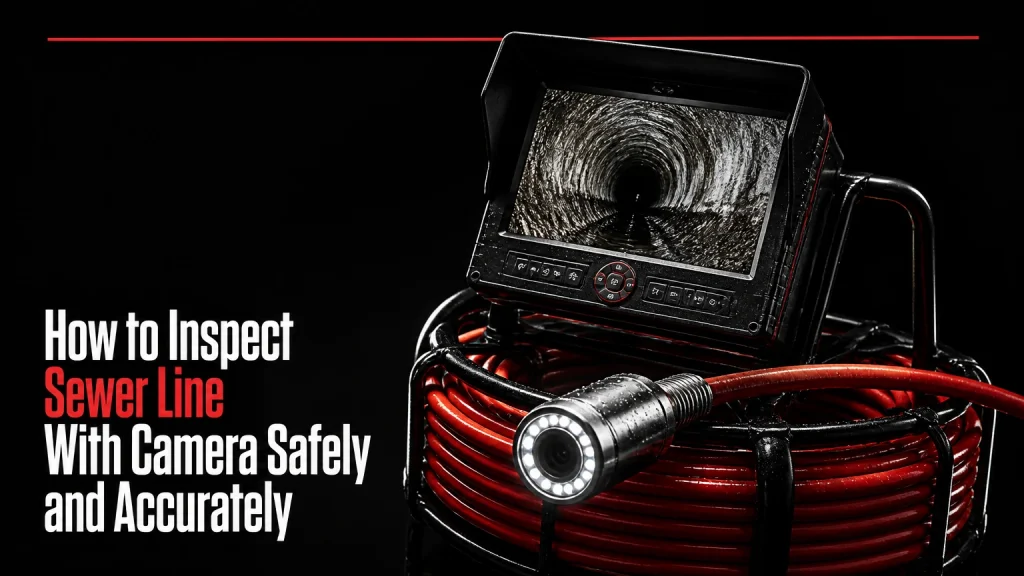
To inspect a sewer line with a camera, open an accessible cleanout, insert a waterproof push camera, advance it slowly while recording distance and pipe conditions, then locate and document defects above ground. A typical residential inspection takes 30-60 minutes, but success depends most on a clear line and correct camera access. Key Facts A […]
Sewer Camera Inspection vs. Smoke Test: Which Finds What?
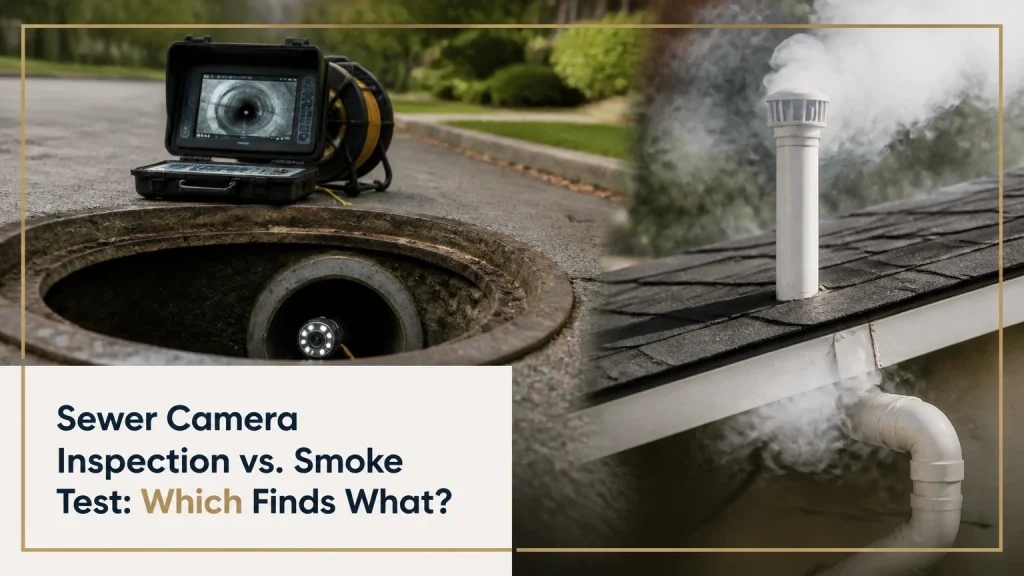
A sewer camera inspection shows the pipe’s internal condition, including roots, cracks, offsets, grease, scale, blockages, and standing water. A sewer smoke test traces air pathways from a sewer line to the surface or a building, revealing odor routes, defective connections, and inflow sources. Choose the camera for structural proof and the smoke test for […]
Sewer Camera Inspection vs Plumbing Inspection: Which Wins?
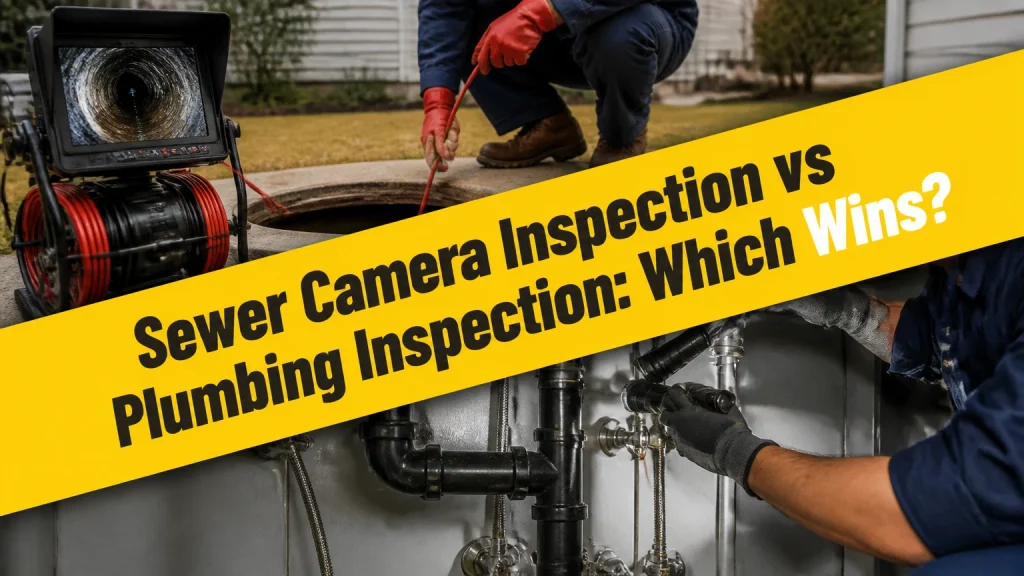
A sewer camera inspection examines the inside of an underground private sewer lateral, while a plumbing inspection evaluates visible water, waste, fixtures, valves, and water-heating equipment throughout a property. Neither replaces the other: choose a sewer camera inspection for buried drain-line risk and a plumbing inspection for whole-system condition, safety, and operation. Key Facts A […]