Why Does My Drain Smell? Causes, Fixes, and Warning Signs
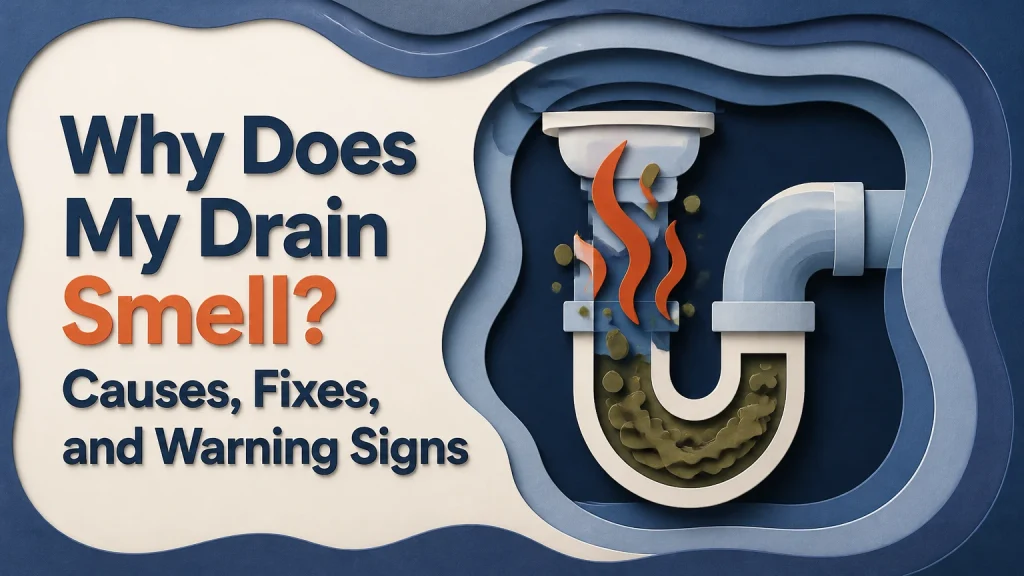
A smelly drain usually indicates either sewer gas escaping through a failed water seal or organic residue decomposing inside the drain. The most common causes are a dry P-trap, biofilm, a blocked plumbing vent, a dirty garbage disposal, or a leaking drain connection. The odor’s location, timing, and accompanying sounds identify the likely fault. Key […]
Professional Drain Cleaning Process: 7 Steps Explained
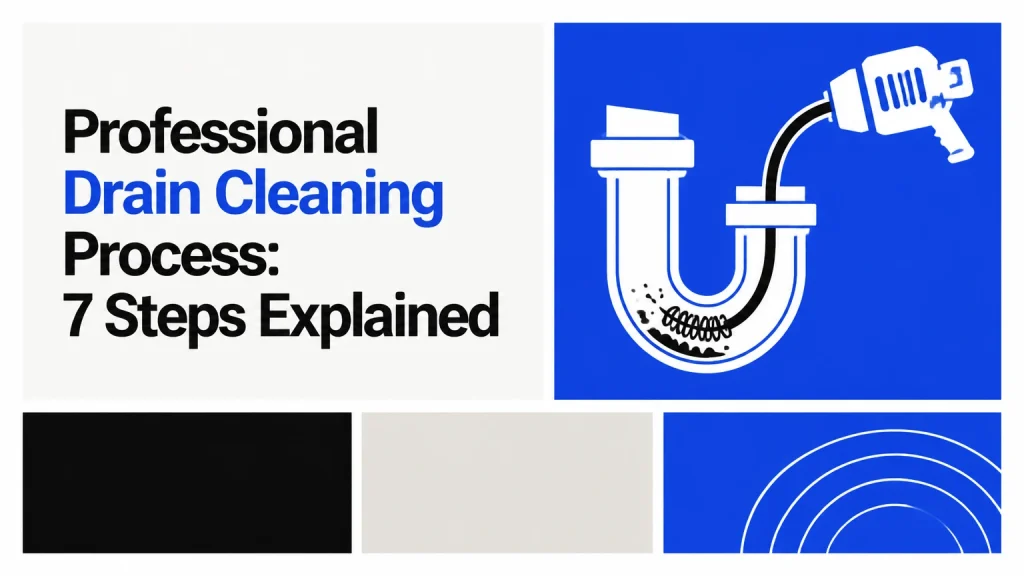
The professional drain cleaning process is a diagnostic and mechanical service that identifies a blockage, selects a compatible cleaning method, removes the obstruction and wall buildup, then verifies flow and pipe condition. A typical residential visit takes 45 minutes to 3 hours, depending on access, pipe size, blockage severity, and whether the technician uses a […]
How to Get Rid of Drain Smell: A Safe 30-Minute Fix
To get rid of drain smell, remove organic buildup, restore the water seal in the P-trap, and check for sewer-gas leaks. Most localized sink, shower, and tub odors improve within 20-30 minutes after physical cleaning and a warm-water flush, but recurring sewage odor, multiple affected drains, or toilet-base smells require plumbing diagnosis. Key facts A […]
Drain Cleaning vs Hydro Jetting: Choose by Pipe Risk
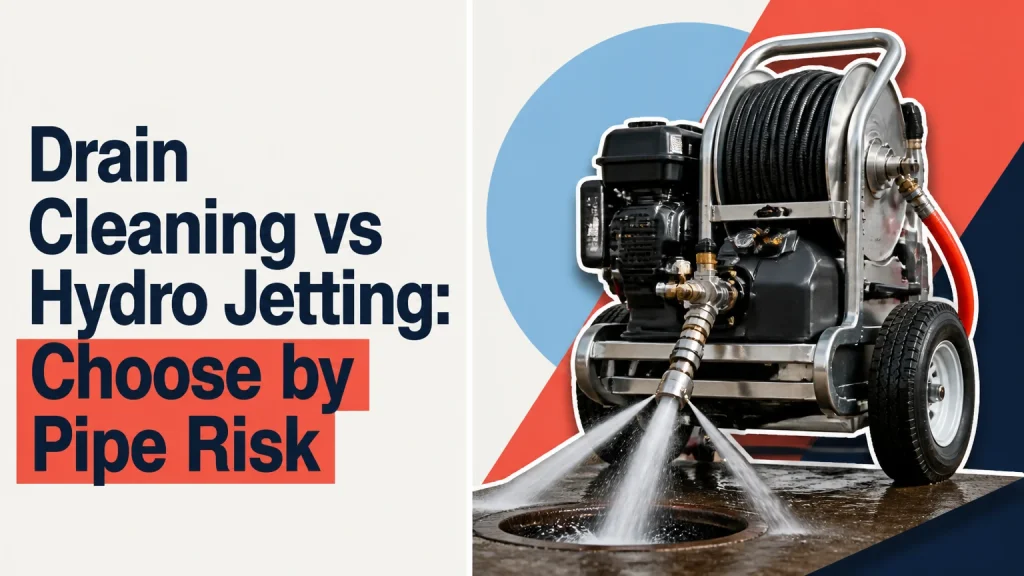
Drain cleaning vs hydro jetting is a choice between localized blockage removal and full-pipe scouring. Mechanical drain cleaning, commonly called snaking, is usually the safer and cheaper first response for a single soft clog, while hydro jetting is better for recurring grease, sludge, scale, or root-related restrictions in a structurally sound pipe. Key Facts at […]
Drain Snake vs Drain Auger: Choose the Right Tool

A drain snake is usually the right first tool for hair, soap, and soft clogs in sinks, showers, and tubs, while a drain auger is better for toilet traps, deeper lines, and tougher obstructions. The terms overlap, however: an auger is a cable-clearing tool, and many plumbers call powered augers and hand-crank machines “drain snakes.” […]
How to Remove Grease From Kitchen Drain Safely
To remove grease from a kitchen drain, first remove standing water, then plunge the drain and clean the P-trap if accessible. For a deeper grease blockage, use a hand auger rather than relying on baking soda and vinegar. Hot tap water with dish detergent helps rinse loosened residue, but a plumber may need to hydro-jet […]
Why Does My Drain Keep Clogging: Causes and Fixes

A drain keeps clogging when debris continues entering the pipe, the pipe remains only partly cleared, or an underlying defect restricts flow. Hair and soap usually affect bathroom fixtures, grease affects kitchen lines, while recurring clogs in several fixtures point toward a blocked, scaled, rooted, sagging, or collapsed main sewer line. Key Facts at a […]
What Causes Slow Drains? Find the Blockage Fast
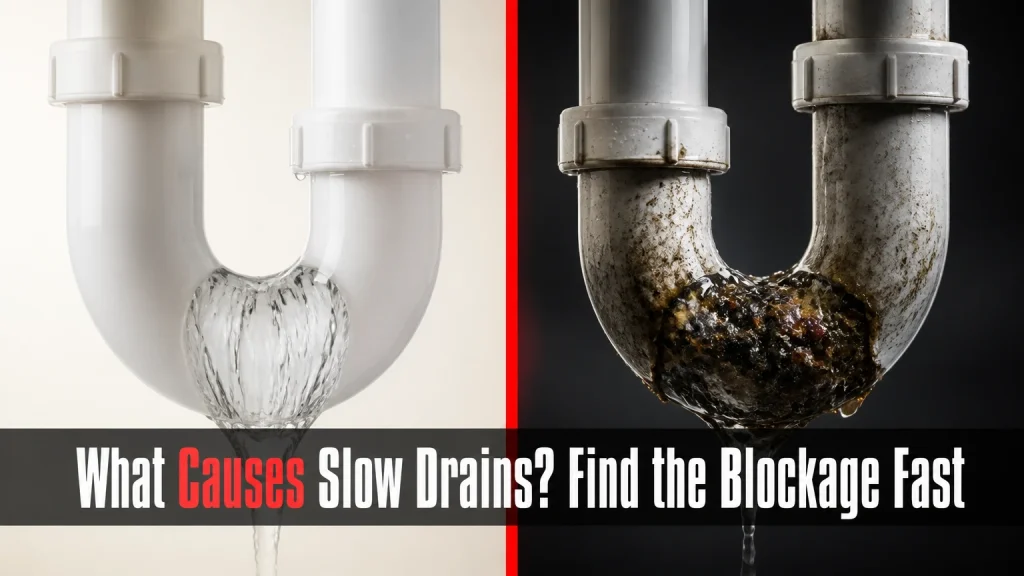
A slow drain is usually caused by a partial blockage from hair, grease, soap residue, food, mineral scale, or foreign material inside a branch pipe. Reduced flow can also result from a blocked vent, incorrect pipe slope, a sagging or damaged sewer line, or tree-root intrusion. The number of affected fixtures identifies the likely location. […]
How to Prevent Grease Buildup in Drains: A Practical Guide
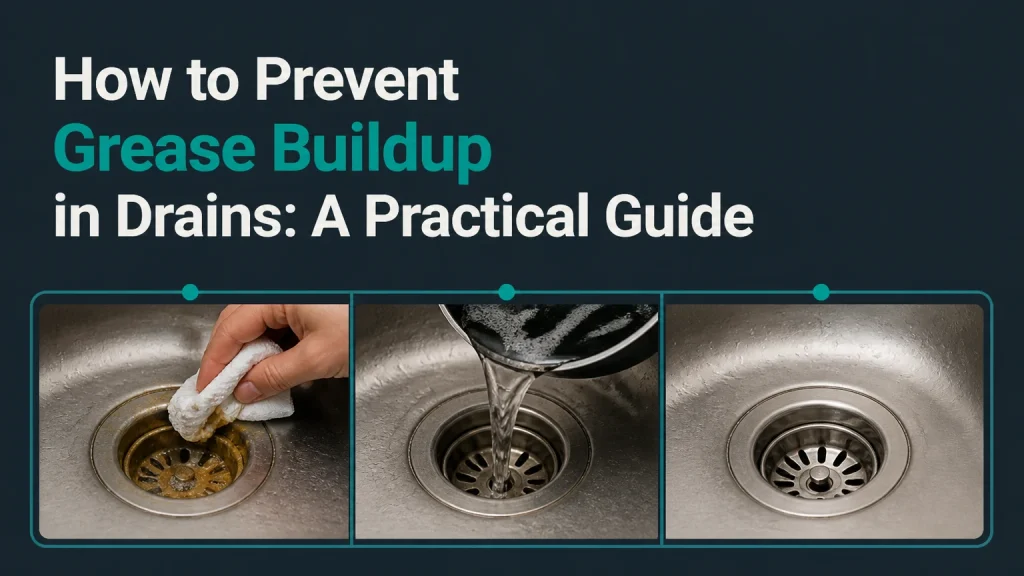
To prevent grease buildup in drains, keep fats, oils, and grease, known as FOG, out of the plumbing system before washing dishes. Scrape food into the trash, wipe oily cookware, collect liquid grease in a sealed container, use a sink strainer, and address slow drainage before residue hardens into a blockage. Key Facts / At […]
Why Is My Sink Draining Slowly? Fix It Safely
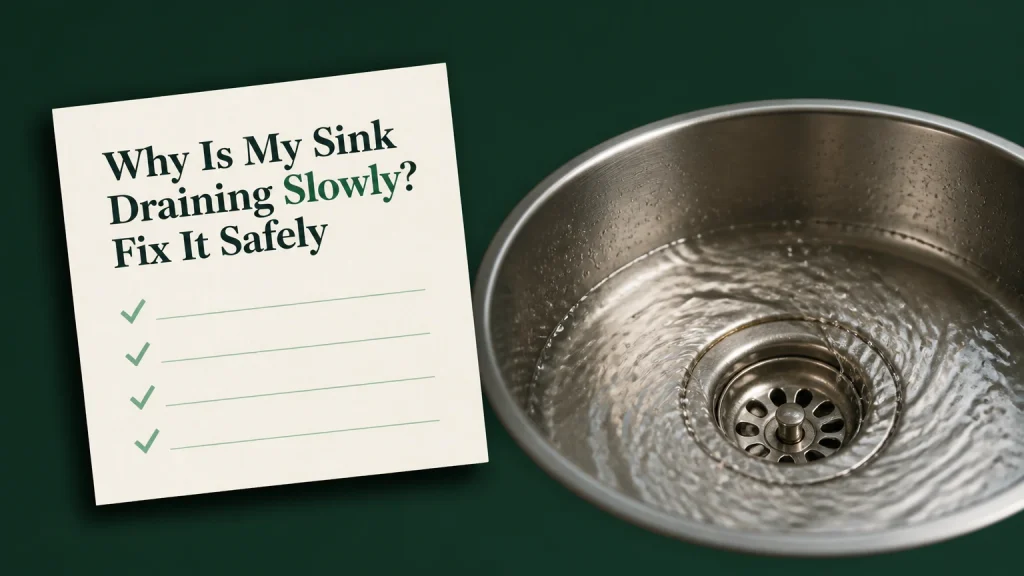
A sink drains slowly because a partial blockage, restricted air supply, or damaged drain line is reducing wastewater flow. Bathroom sinks usually collect hair, soap, and biofilm near the stopper or P-trap; kitchen sinks more often develop grease, food, and starch buildup. The location and pattern of the slowdown identify the safest repair. Key Facts […]