Signs of a Cracked Sewer Pipe: 9 Tests and Repair Costs
Signs of a cracked sewer pipe include repeated sewer backups, multiple slow drains, sewage odors, gurgling fixtures, unexplained wet or sunken lawn areas, sewage-contaminated soil, and roots or groundwater visible during a camera inspection. These symptoms can also result from a simple clog, so a professional camera inspection is the most reliable way to confirm […]
How Does a Grease Interceptor Work? Separation Explained
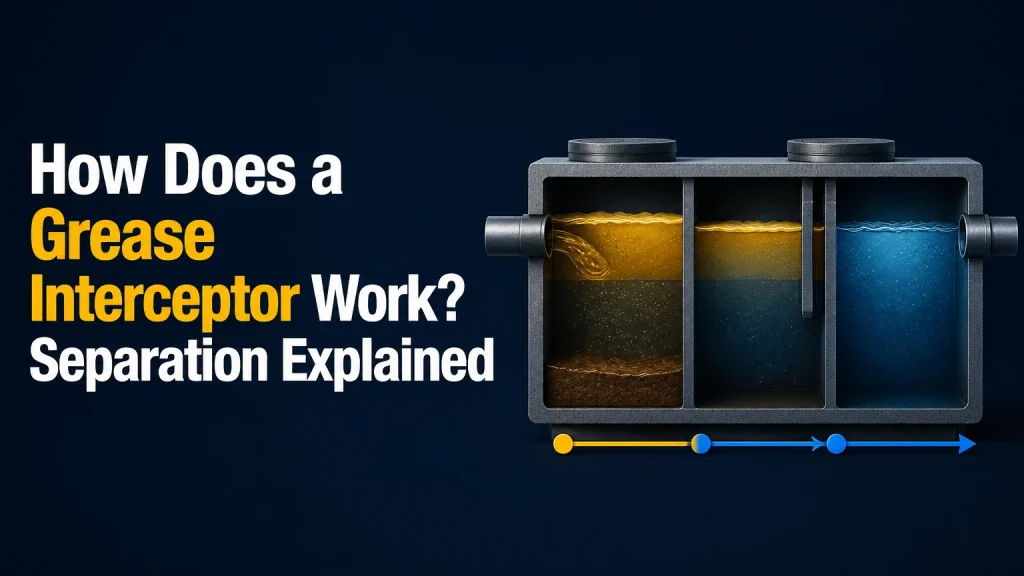
A grease interceptor separates fats, oils, grease, and settleable food solids from commercial kitchen wastewater before discharge to the sanitary sewer. Controlled flow gives the wastewater enough calm volume for lighter FOG to float and heavier solids to settle, while baffles direct the clearer middle layer toward the outlet. Key Facts at a Glance What […]
Grease Interceptor vs Oil Separator: Choose Correctly
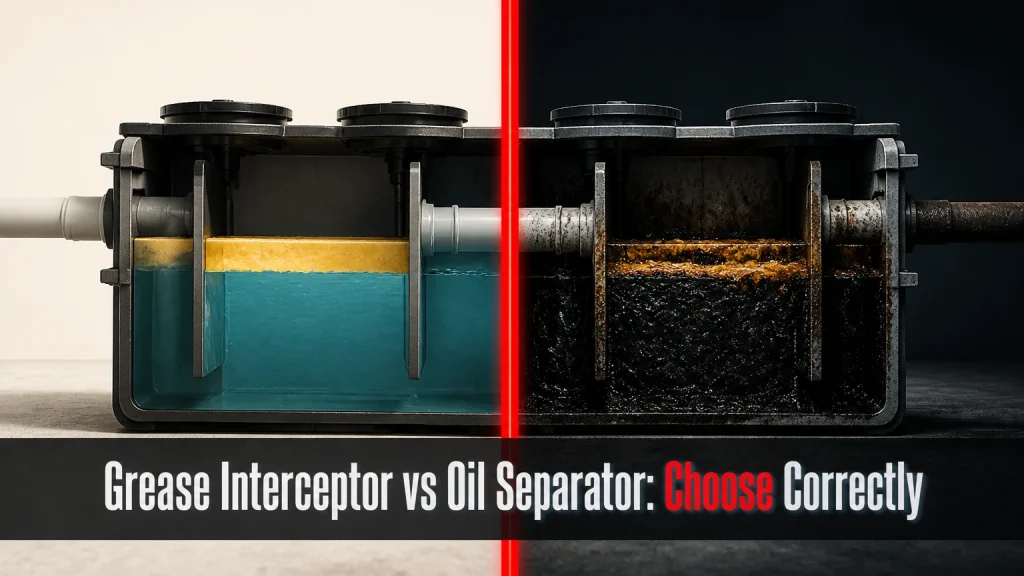
A grease interceptor captures food-related fats, oils, and grease (FOG) from commercial kitchen wastewater, while an oil separator captures petroleum hydrocarbons from industrial wash water or stormwater. The correct choice depends on the pollutant, drainage system, peak flow, discharge destination, and local plumbing or environmental approval. They are not interchangeable. Key Facts at a Glance […]
How to Repair Sewer Line: Methods, Steps, and Costs
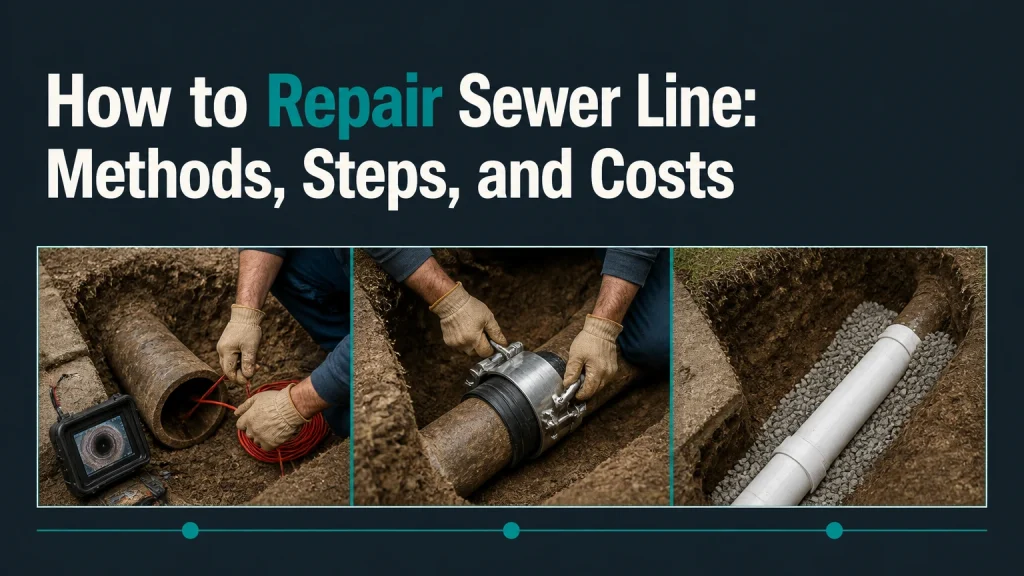
To repair a sewer line, first confirm the failure with a sewer camera, clear the pipe only when appropriate, then choose spot repair, open excavation, pipe bursting, or CIPP lining based on damage, alignment, depth, access, and surface restoration. A licensed contractor normally completes permits, utility locating, testing, final video inspection, and backfill. Key Facts […]
Sewer Line Repair Methods: Choose the Right Fix
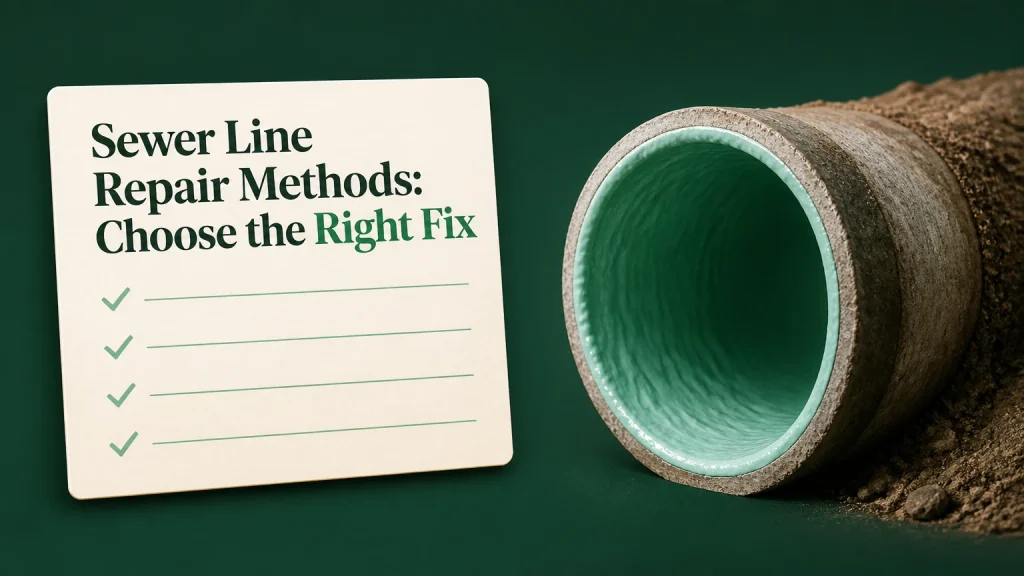
Sewer line repair methods include open-trench replacement, pipe bursting, cured-in-place pipe lining, slip lining, localized excavation, and robotic point repair. The correct choice depends on the camera-confirmed defect, pipe alignment and grade, access, diameter, soil conditions, property restoration, and whether the damaged pipe is privately owned or part of a public sewer system. Key Facts […]
Sewer Camera Inspection for Cast Iron Pipes: Complete Guide
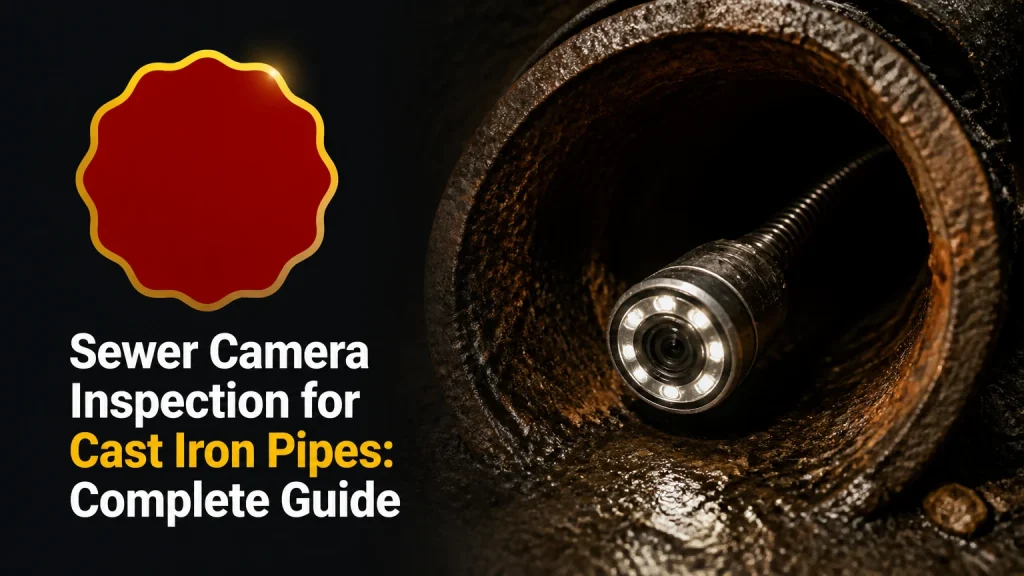
A sewer camera inspection for cast iron pipes uses a waterproof CCTV camera on a push cable to examine underground drain and sewer lines without excavation. The inspection can identify scale, corrosion, roots, cracks, offsets, bellies, and collapse, but it cannot directly measure the remaining thickness of the pipe wall. Key Facts A typical residential […]
Grease Trap Backup Causes: How to Diagnose and Prevent Them
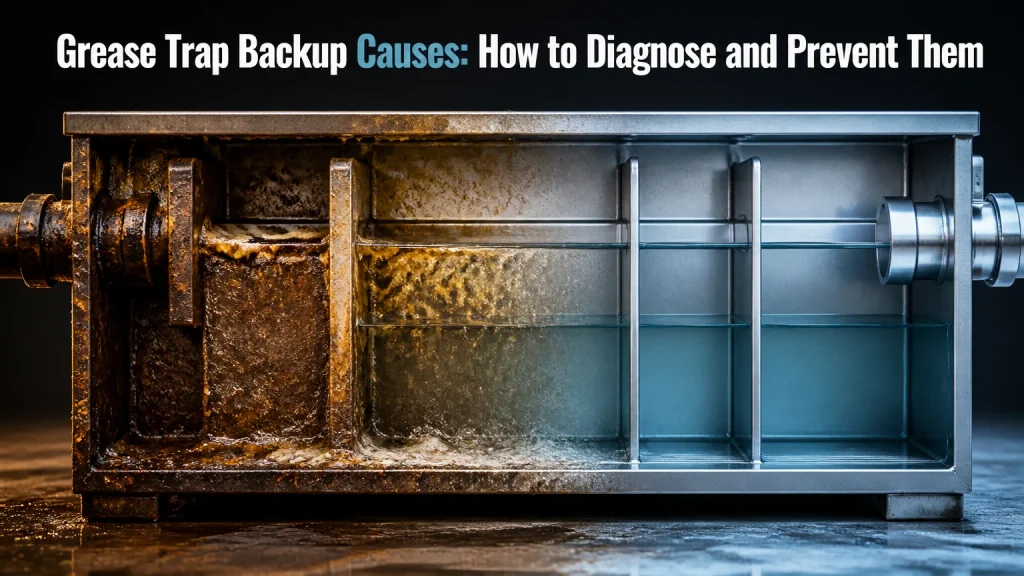
Grease trap backup causes usually fall into four locations: an overfilled interceptor, a blocked outlet baffle, a clogged pipe downstream, or an obstruction before the trap. Excess fats, oils, grease, food solids, undersized equipment, hot discharge, and missed pumping allow wastewater to reverse into sinks and floor drains. Key Facts at a Glance What Causes […]
Signs Grease Trap Needs Cleaning: The 25% Rule
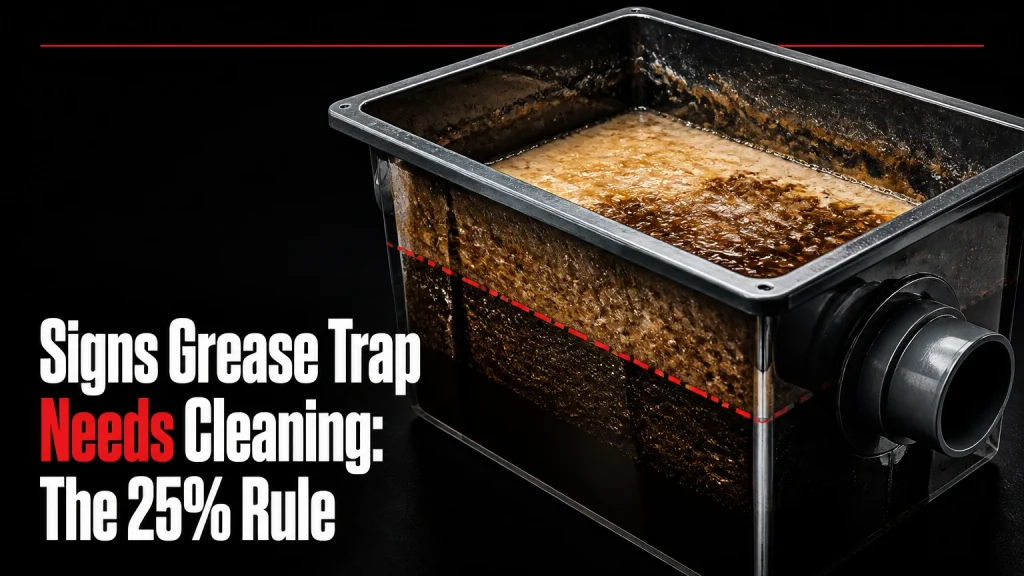
The clearest signs a grease trap needs cleaning are a grease or sludge layer reaching about 25% of the trap’s liquid depth, slow drains, rancid odors, gurgling, rising wastewater, or grease appearing downstream. A backup requires immediate service because a full trap can obstruct kitchen fixtures and discharge fats, oils, and grease into sewer lines. […]
Common Sewer Camera Inspection Findings: What They Mean
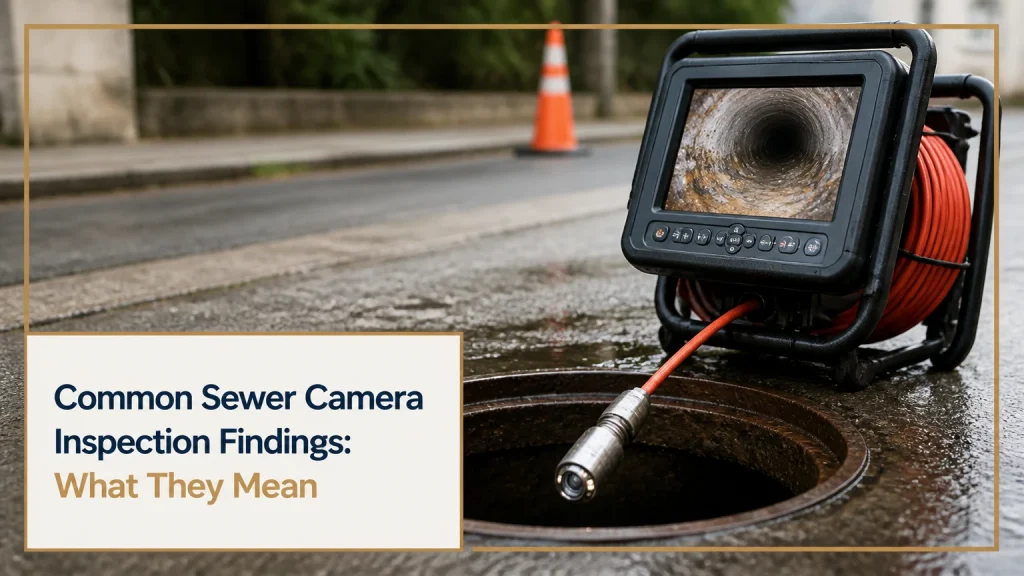
Common sewer camera inspection findings include root intrusion, grease, scale, cracks, offset joints, pipe bellies, corrosion, foreign objects, and structural collapse. A camera inspection shows where a defect occurs, how much of the pipe it affects, and whether cleaning, spot repair, trenchless lining, or excavation is proportionate. It cannot independently prove soil contamination, pipe ownership, […]
Restaurant Grease Trap Maintenance: A Working Plan
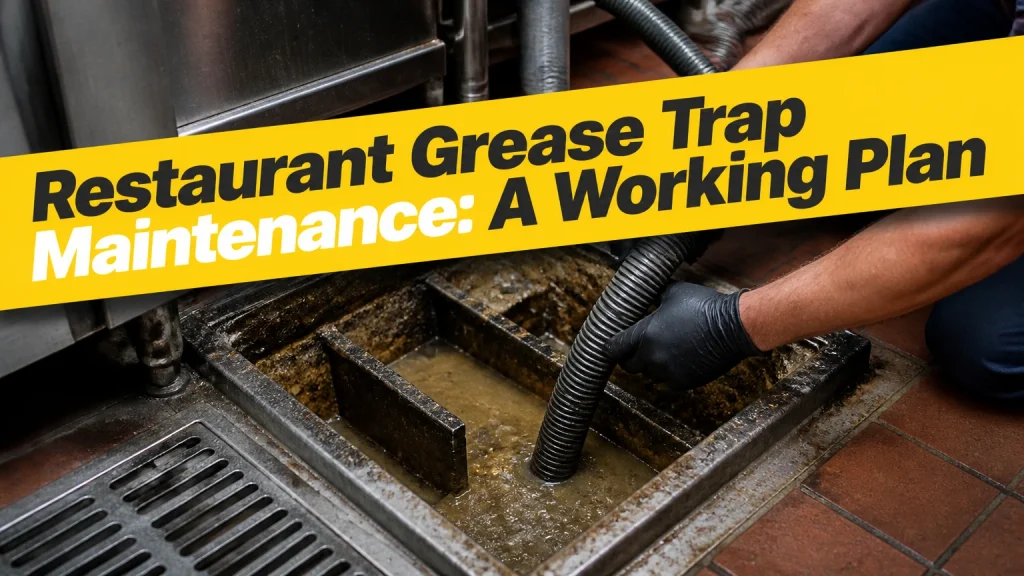
Restaurant grease trap maintenance is the scheduled inspection, cleaning, repair, and documentation of equipment that removes fats, oils, grease, and food solids from commercial kitchen wastewater. A reliable program combines source control with cleaning before the trap is overloaded, while local wastewater rules determine required frequency, records, and disposal. Key Facts at a Glance A […]