What Causes Grease Trap Overflow? Causes, Fixes, Prevention
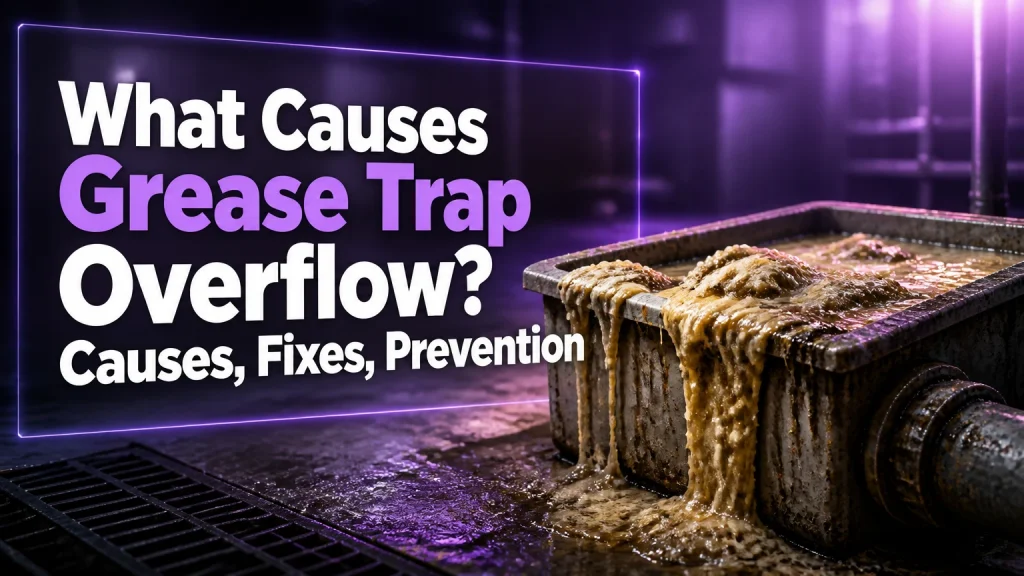
A grease trap overflows when accumulated fats, oils, grease, and food solids reduce the trap’s usable capacity or block the outlet, so incoming wastewater cannot pass into the drainage line. The most common causes are overdue pumping, excessive solids, an undersized or poorly installed interceptor, damaged internal baffles, and a clogged downstream pipe. Key Facts […]
Grease Trap Cleaning vs. Pumping: Which Service Wins?
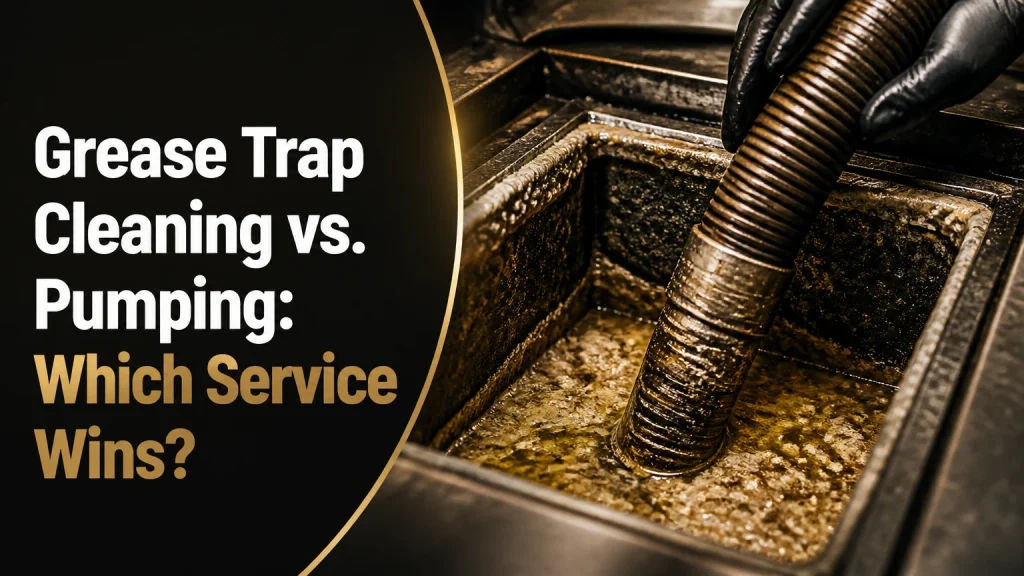
Grease trap cleaning removes liquid waste, settled solids, floating FOGS, and hardened deposits from walls and baffles, while grease trap pumping primarily evacuates the trap’s contents by vacuum. Pumping is faster and cheaper for routine removal, but full cleaning is required when grease scaling, odor, restricted capacity, inspection, or recurring blockage makes residual buildup a […]
How Does a Grease Trap Work? A Practical Guide
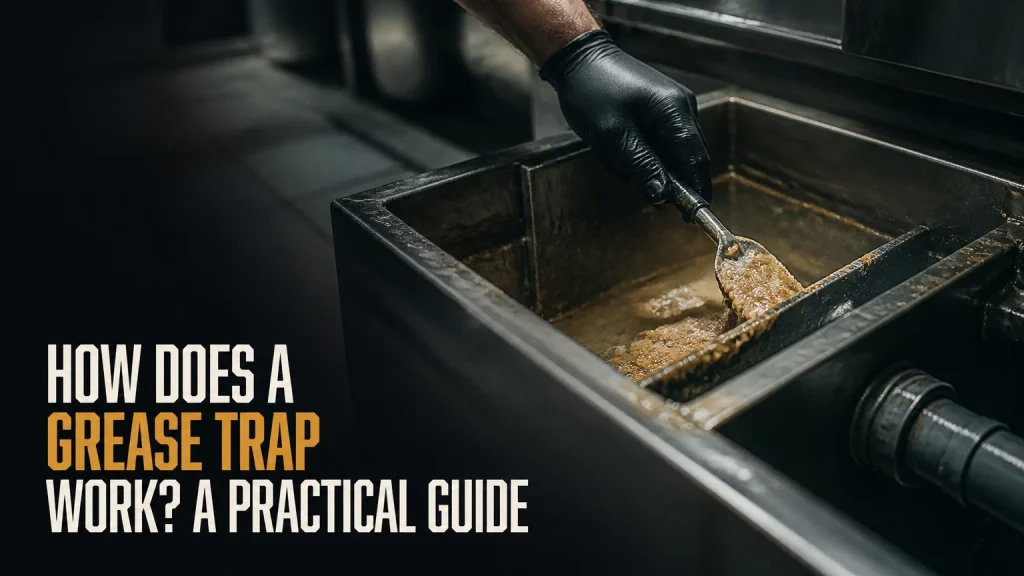
A grease trap is a plumbing device that separates fats, oils, grease, and settleable food solids from kitchen wastewater before discharge to a sewer. It slows the wastewater inside a baffled chamber, allowing lighter FOG to float, heavier solids to settle, and the clearer middle layer to leave through the outlet. Key Facts at a […]
Grease Trap Maintenance: The 25% Rule, Costs and Fixes
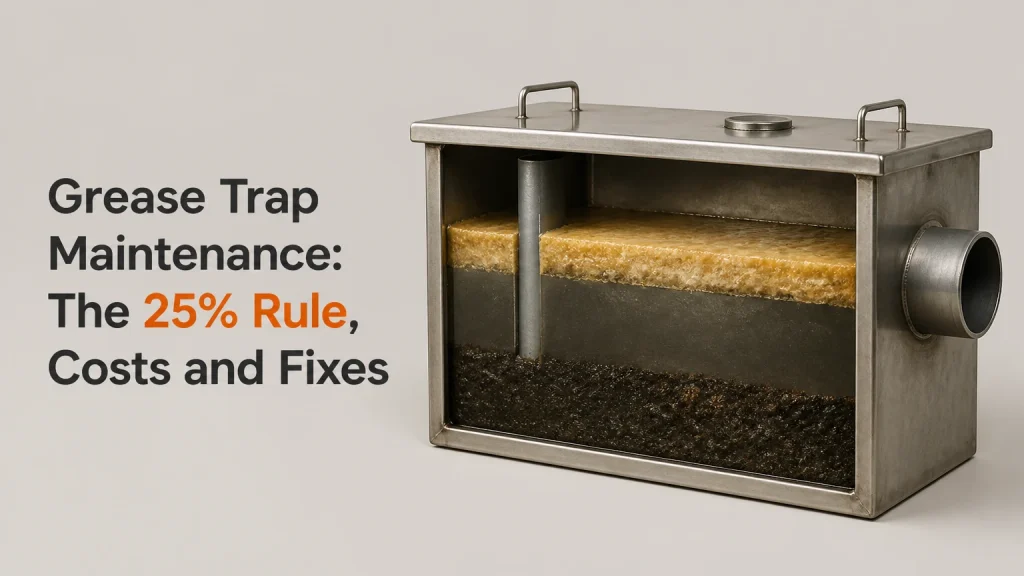
Grease trap maintenance is the inspection, measurement, cleaning, repair, and recordkeeping required to keep fats, oils, grease, and food solids out of sanitary sewer lines. A reliable program combines source control with cleaning before grease and sludge approach the limit set by the local sewer authority, commonly the 25% rule. Key Facts at a Glance […]
How to Prevent Grease Trap Clogs: A Practical Guide
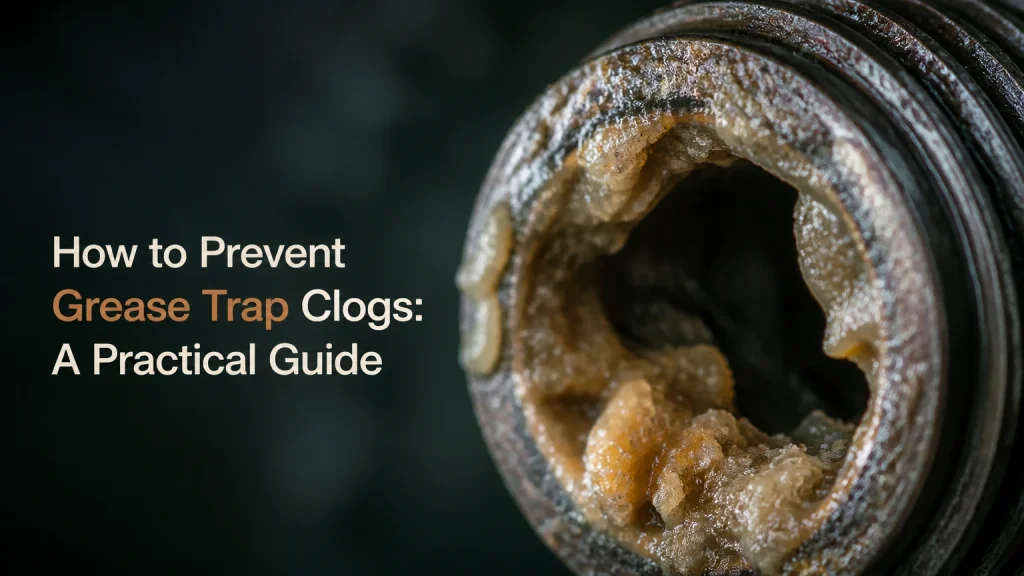
To prevent grease trap clogs, keep fats, oils, grease, and food solids out of wastewater, control incoming flow, inspect accumulation, and pump the trap before grease and sludge occupy 25% of its liquid capacity. Train staff at every sink, clean strainers during each shift, avoid chemical drain cleaners, and adjust service frequency to actual kitchen […]
How Often Should Grease Trap Be Cleaned? The 25% Rule
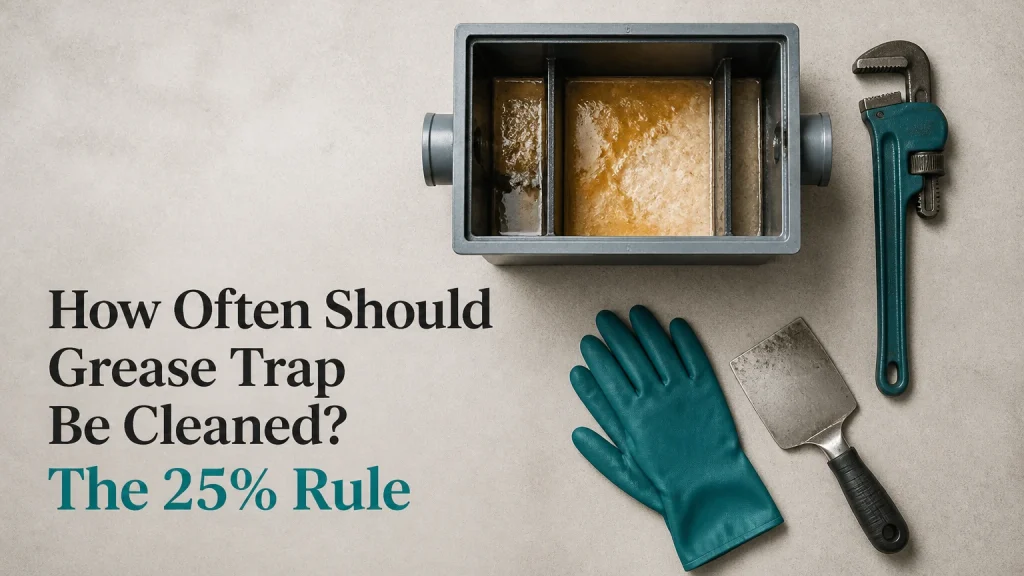
A commercial grease trap should usually be cleaned every 1-3 months, but the correct interval is the earliest of the local legal deadline, the manufacturer’s schedule, or the point when floating grease plus settled solids reaches 25% of the liquid depth. High-volume kitchens may need cleaning weekly or every 2-4 weeks, while a low-volume café […]
Commercial Grease Trap Cleaning: A Compliance Guide
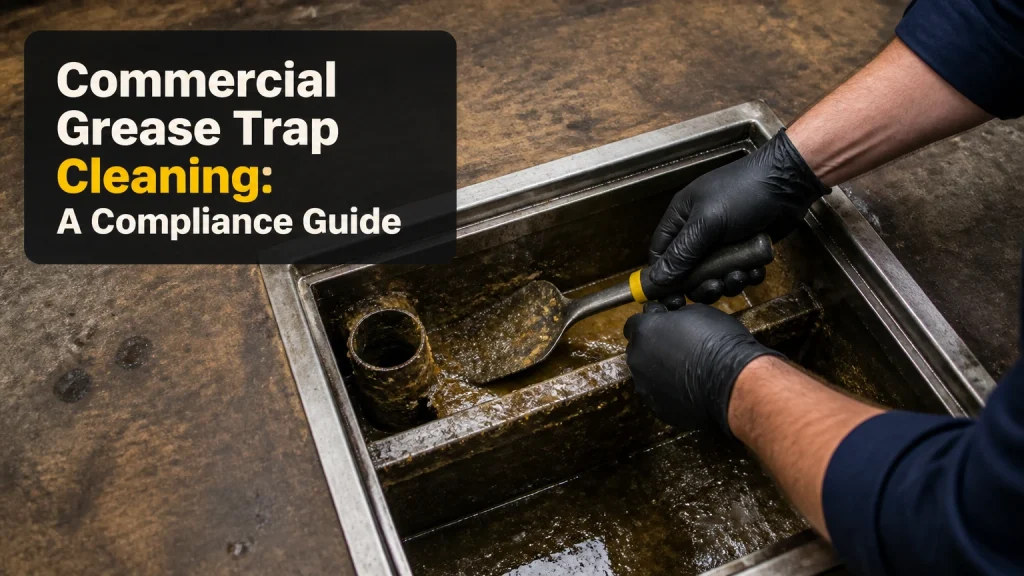
Commercial grease trap cleaning removes accumulated fats, oils, grease, food solids, and wastewater from a commercial grease trap or interceptor. Professional service prevents restricted flow, sewer blockages, odors, equipment damage, and local wastewater violations by measuring buildup, pumping the entire unit, inspecting components, and documenting legal disposal. Key Facts at a Glance What Does Commercial […]
Restaurant Grease Trap Cleaning: Costs, Steps, and Rules
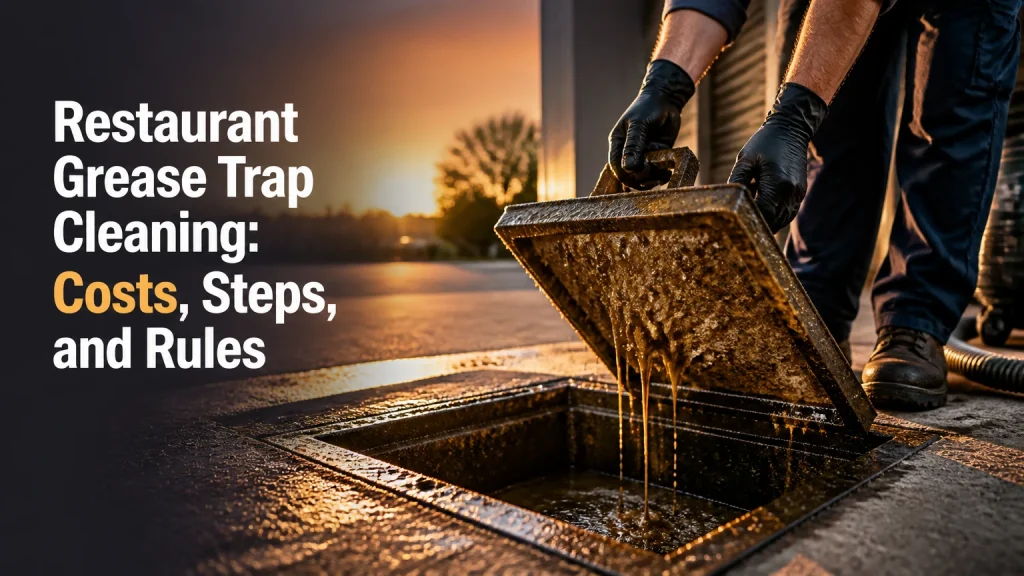
Restaurant grease trap cleaning removes accumulated fats, oils, grease, and food solids from a grease interceptor before those materials block plumbing or enter the sanitary sewer. The correct method depends on whether the restaurant has an indoor hydromechanical trap, an outdoor gravity interceptor, or an automatic grease removal device, while local sewer rules determine required […]
Grease Trap Clog Symptoms: Signs, Causes, and Fixes
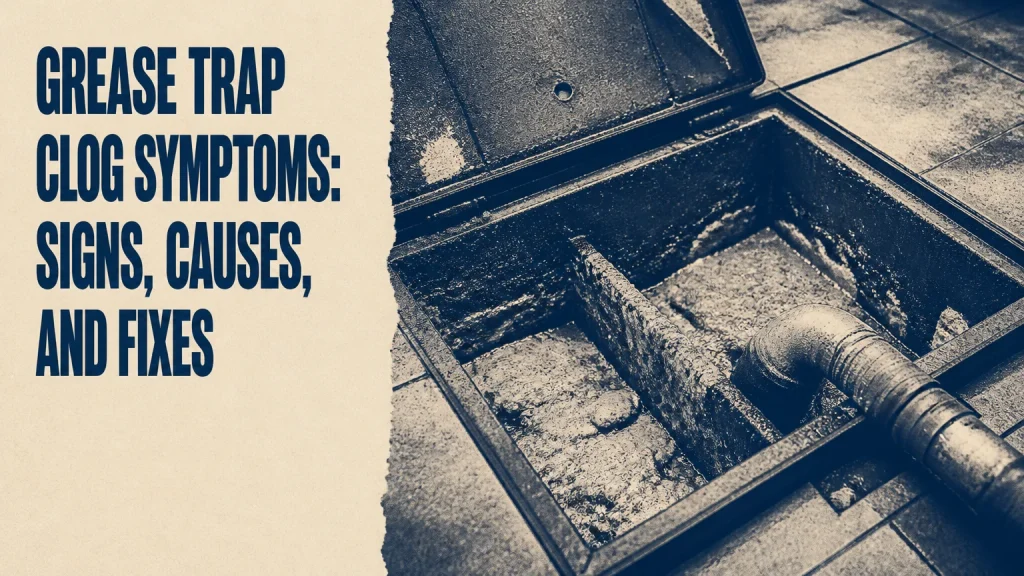
Grease trap clog symptoms usually begin with slow drainage or persistent rancid odors and progress to gurgling, standing water, grease overflow, and backups at multiple fixtures. The blockage may be inside the grease trap, in the inlet pipe, or farther downstream, so the correct diagnosis depends on which fixtures are affected and how wastewater behaves […]
Sewer Camera Inspection for Clay Pipes: Read the Footage

A sewer camera inspection for clay pipes is a CCTV examination of a buried or concealed sanitary sewer lateral using a waterproof camera on a flexible push cable. The technician records the pipe interior, measures defect locations, and may use a sonde transmitter to mark breaks, root masses, and offsets above ground without excavation. Key […]