Grease Trap vs Grease Interceptor: Which Fits Your Kitchen?
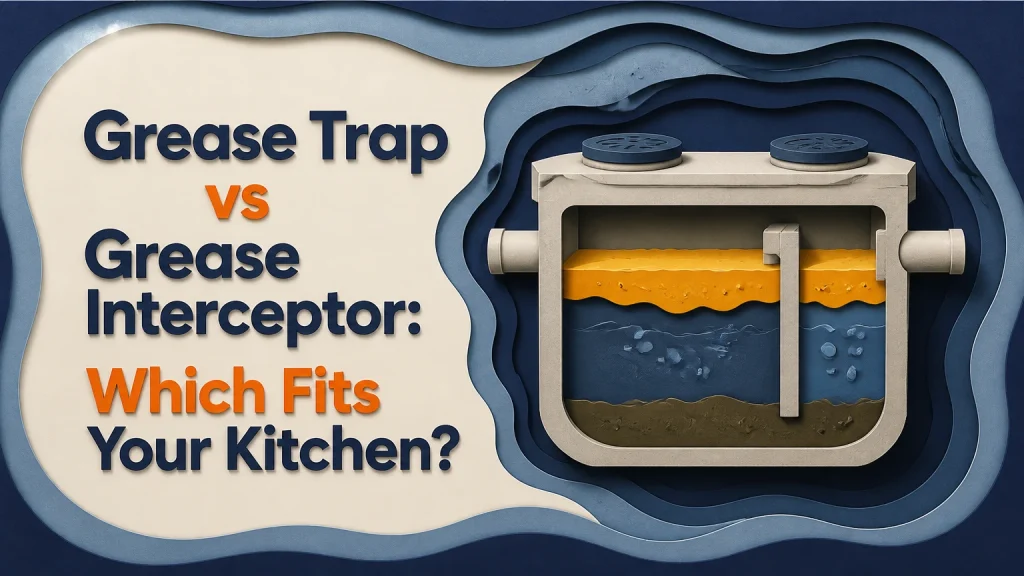
A grease trap is a compact hydro-mechanical grease interceptor, usually installed indoors near one or more kitchen fixtures, while a grease interceptor commonly means a larger gravity tank installed outside or below ground. Both remove fats, oils, and grease from wastewater, but flow rate, retention volume, installation location, maintenance access, and local code determine the […]
Broken Sewer Line Symptoms: Signs and Repair Costs
Broken sewer line symptoms usually include repeated backups in multiple fixtures, toilet gurgling, sewage odors, unexplained wet or sunken ground, and unusually lush grass over the pipe route. A single slow sink usually indicates a local drain problem, while simultaneous reactions from toilets, tubs, and floor drains suggest a main sewer lateral restriction or structural […]
Grease Interceptor Maintenance: Prevent Backups and Fines
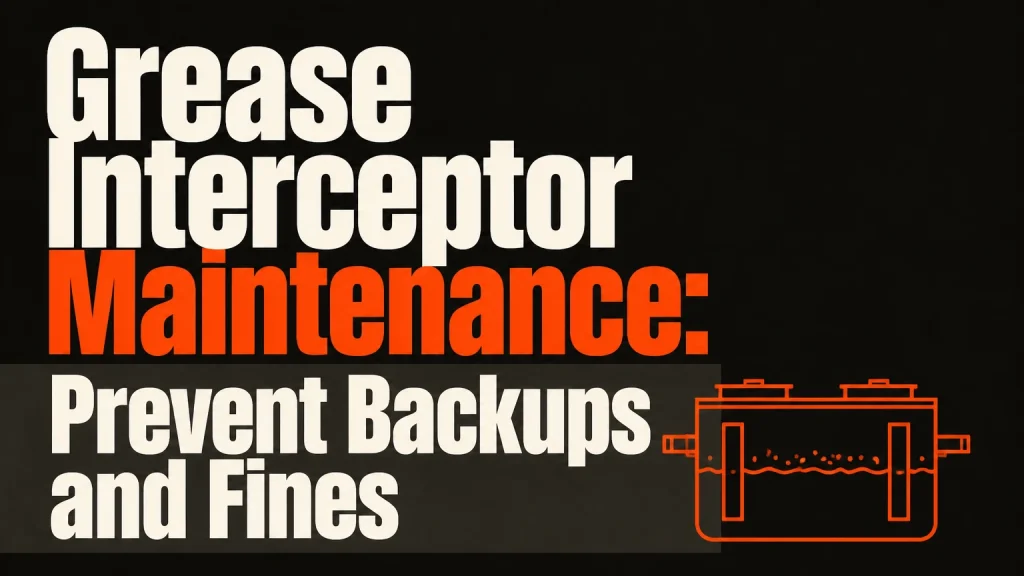
Grease interceptor maintenance is the scheduled inspection, measurement, pumping, cleaning, repair, and documentation required to keep fats, oils, grease, and food solids from entering a sanitary sewer. Effective maintenance keeps grease and settled solids below the applicable local threshold, preserves hydraulic flow, and proves compliance through service records. Key Facts at a Glance A grease […]
Collapsed Sewer Line Symptoms: Diagnose and Repair
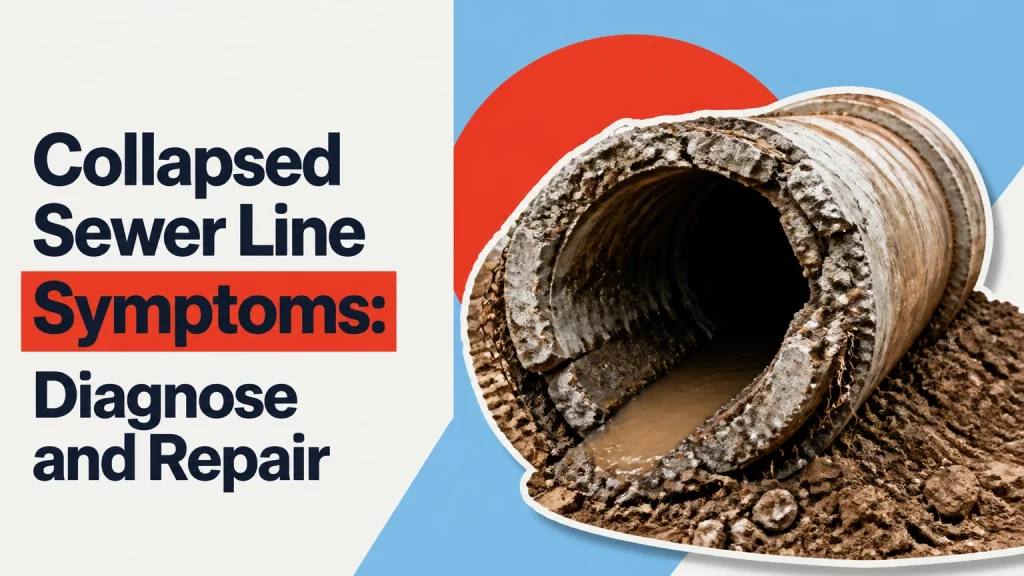
Collapsed sewer line symptoms usually include backups in multiple fixtures, recurring blockages after cleaning, gurgling drains, sewage odors, and unusual wet or sunken ground above the lateral. These signs indicate a possible structural failure, but only a CCTV inspection can distinguish a collapse from roots, a severe clog, a pipe belly, or a broken connection. […]
Grease Trap Cleaning with Hydro Jetting: Cost and Process
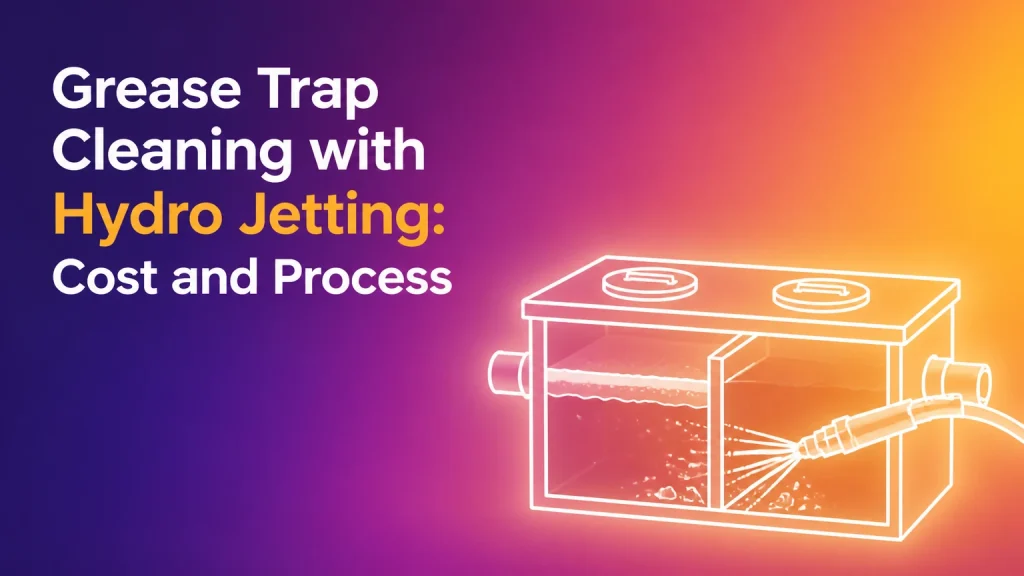
Grease trap cleaning with hydro jetting combines complete interceptor pumping with high-pressure water cleaning of grease-coated pipes, baffles, and tank surfaces. Vacuum extraction removes FOG and solids; controlled jetting clears the connected drain lines that pumping alone cannot clean. The correct pressure, nozzle, access point, and disposal method determine the result. Key Facts at a […]
Signs of a Cracked Sewer Pipe: 9 Tests and Repair Costs
Signs of a cracked sewer pipe include repeated sewer backups, multiple slow drains, sewage odors, gurgling fixtures, unexplained wet or sunken lawn areas, sewage-contaminated soil, and roots or groundwater visible during a camera inspection. These symptoms can also result from a simple clog, so a professional camera inspection is the most reliable way to confirm […]
How Does a Grease Interceptor Work? Separation Explained
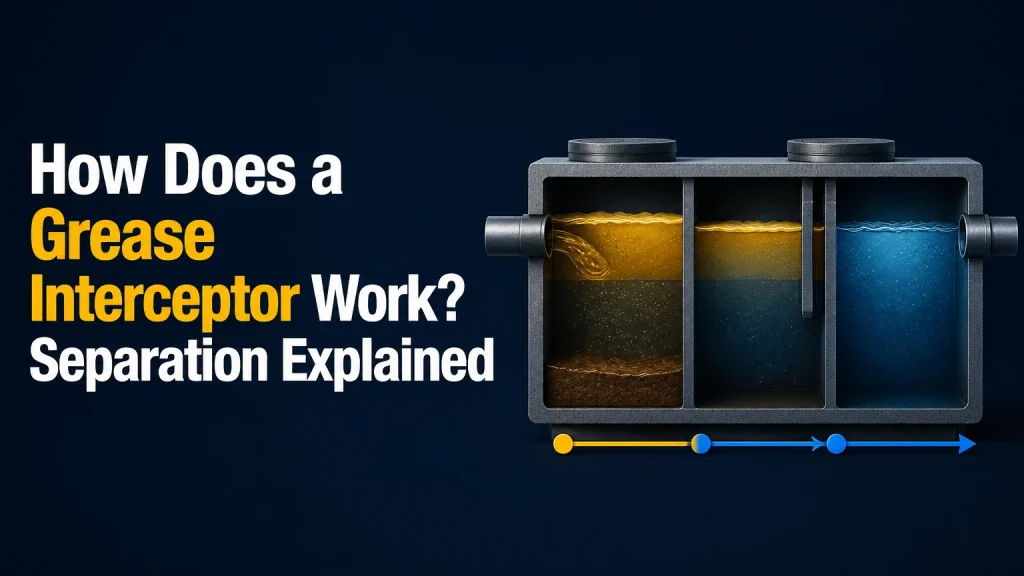
A grease interceptor separates fats, oils, grease, and settleable food solids from commercial kitchen wastewater before discharge to the sanitary sewer. Controlled flow gives the wastewater enough calm volume for lighter FOG to float and heavier solids to settle, while baffles direct the clearer middle layer toward the outlet. Key Facts at a Glance What […]
Grease Interceptor vs Oil Separator: Choose Correctly
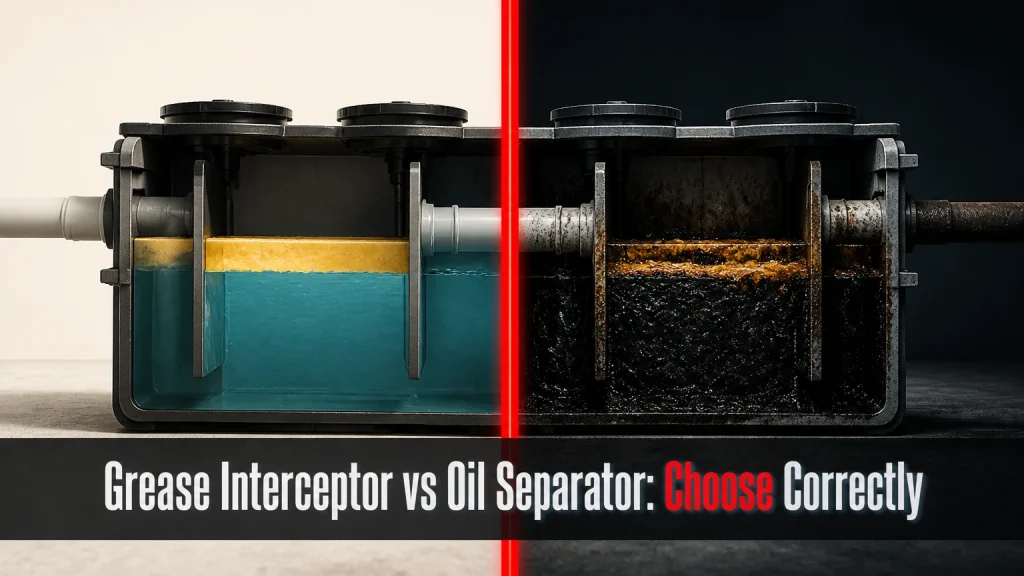
A grease interceptor captures food-related fats, oils, and grease (FOG) from commercial kitchen wastewater, while an oil separator captures petroleum hydrocarbons from industrial wash water or stormwater. The correct choice depends on the pollutant, drainage system, peak flow, discharge destination, and local plumbing or environmental approval. They are not interchangeable. Key Facts at a Glance […]
How to Repair Sewer Line: Methods, Steps, and Costs
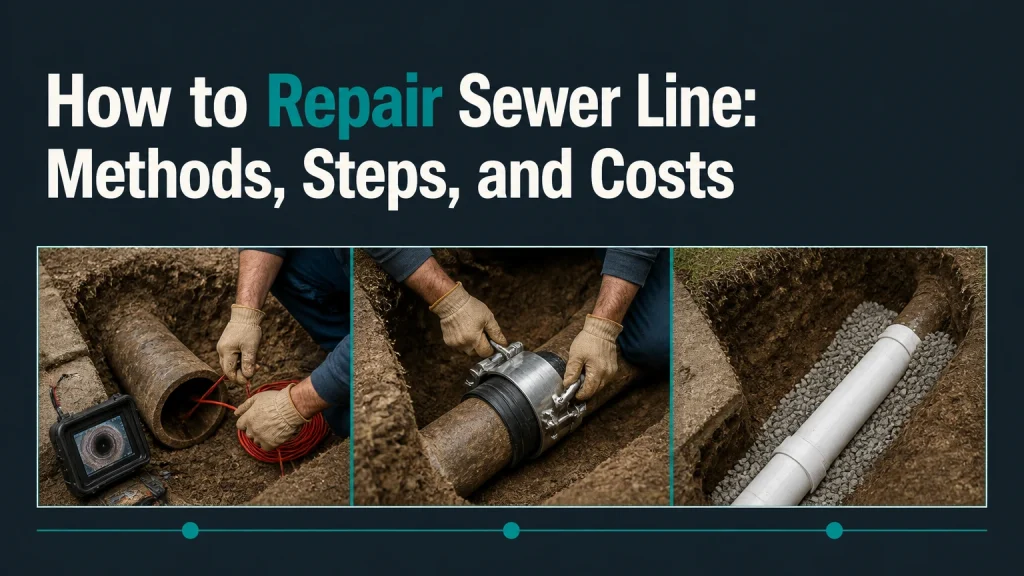
To repair a sewer line, first confirm the failure with a sewer camera, clear the pipe only when appropriate, then choose spot repair, open excavation, pipe bursting, or CIPP lining based on damage, alignment, depth, access, and surface restoration. A licensed contractor normally completes permits, utility locating, testing, final video inspection, and backfill. Key Facts […]
Sewer Line Repair Methods: Choose the Right Fix
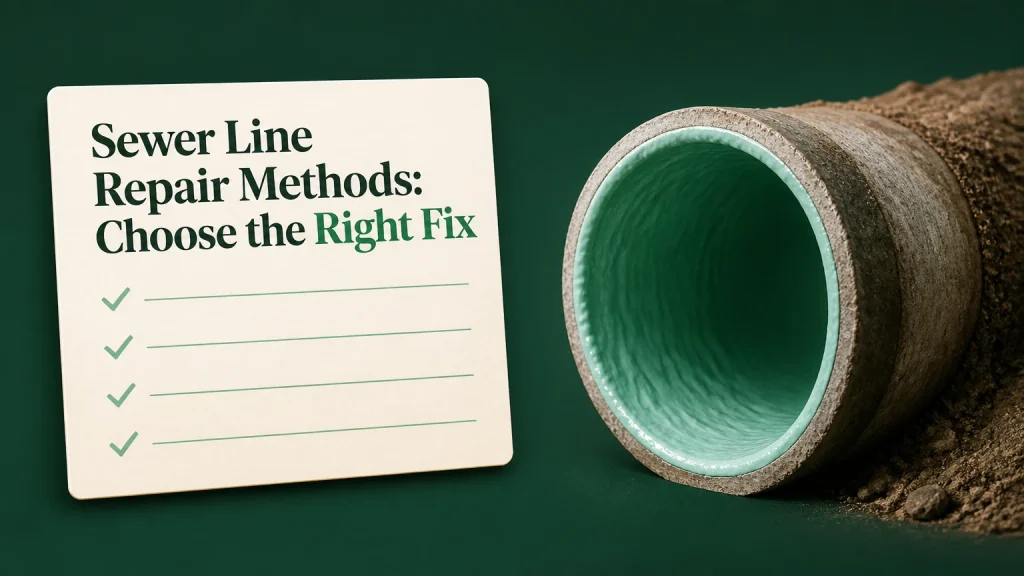
Sewer line repair methods include open-trench replacement, pipe bursting, cured-in-place pipe lining, slip lining, localized excavation, and robotic point repair. The correct choice depends on the camera-confirmed defect, pipe alignment and grade, access, diameter, soil conditions, property restoration, and whether the damaged pipe is privately owned or part of a public sewer system. Key Facts […]