How to Prevent Commercial Drain Clogs: A Practical FOG Plan
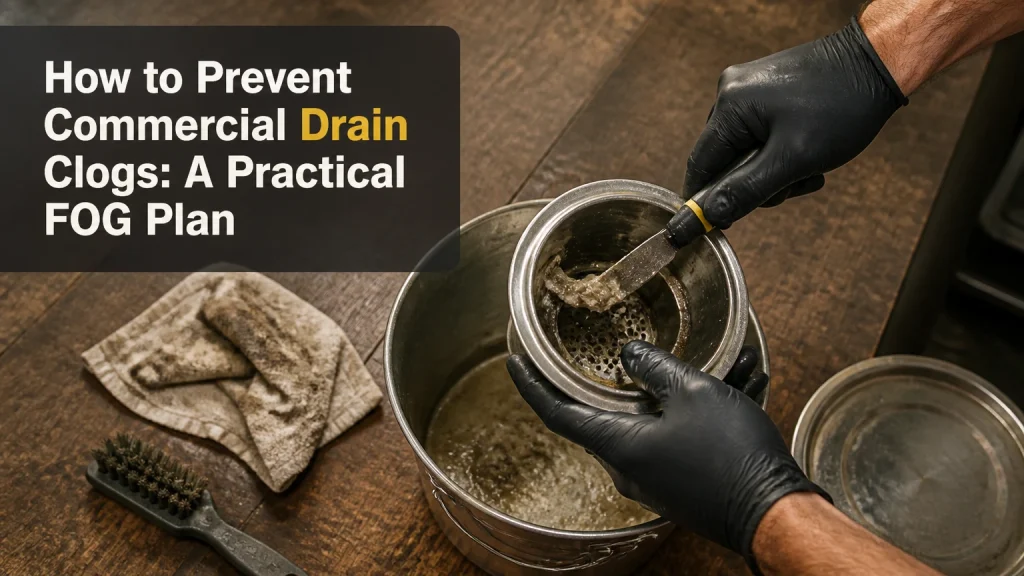
To prevent commercial drain clogs, control solids at the source, separate fats, oils, and grease before wastewater reaches building mains, inspect drainage assets on a schedule, and clean lines before flow becomes restricted. The most reliable program combines staff procedures, correctly sized grease-control equipment, documented pumping, targeted biological treatment, and periodic professional inspection. Key Facts […]
Why Sewage Comes Up Through Floor Drain: Causes and Fixes
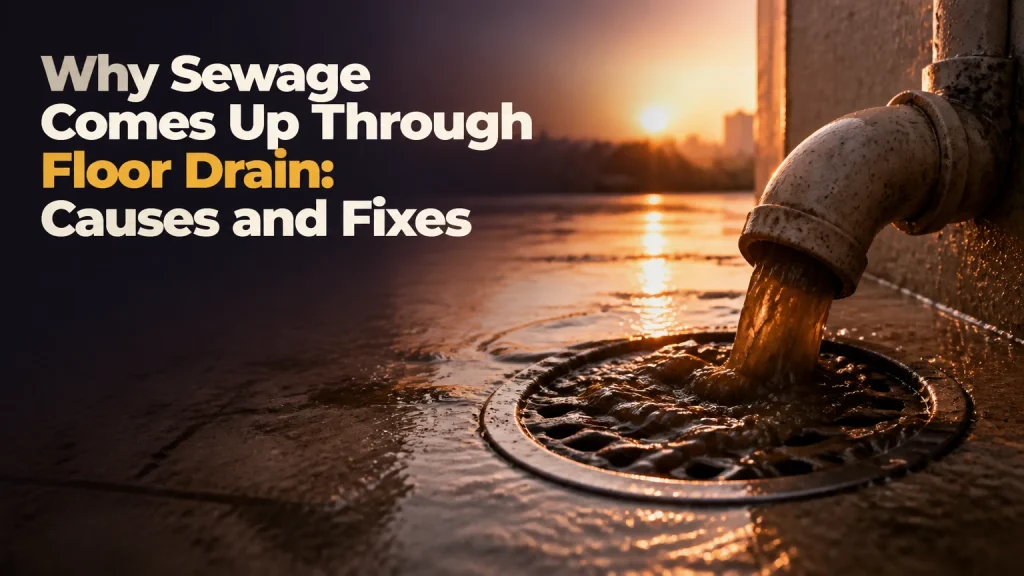
Sewage comes up through a floor drain when wastewater cannot continue through the building sewer or public sewer, so pressure reverses the flow toward the lowest available opening. A basement floor drain is often that opening because it connects near the main drain and sits below toilets, sinks, showers, and washing machines. Key Facts at […]
Sewer Emergency Warning Signs: Act Before a Backup
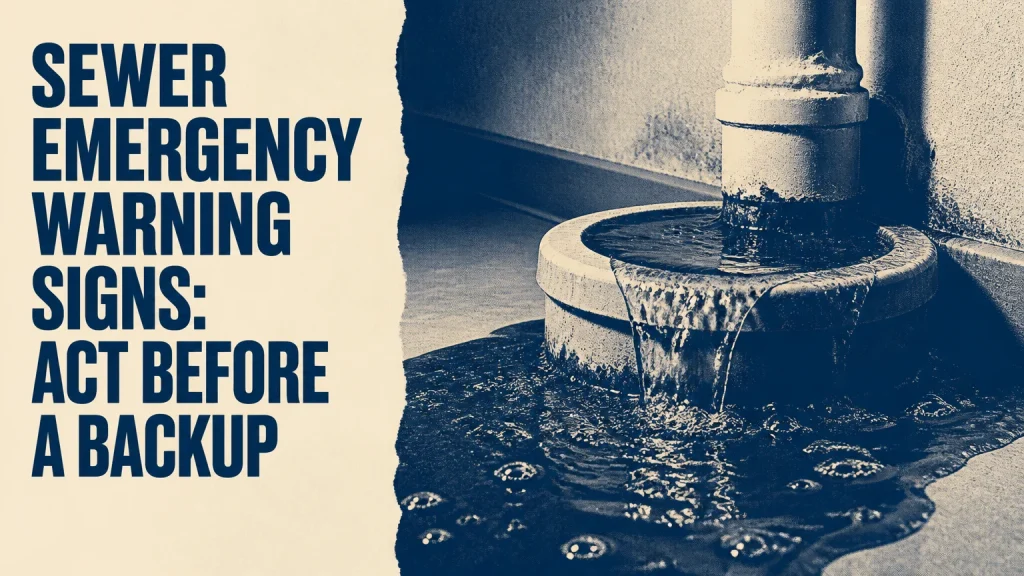
Sewer emergency warning signs include several fixtures draining slowly, wastewater moving between fixtures, repeated toilet gurgling, persistent sewage odors, cleanout overflow, and unexplained wet or sunken ground. Multiple symptoms together indicate a main sewer lateral, municipal sewer, or septic-system problem that requires immediate water stoppage and professional diagnosis. Key Facts at a Glance A single […]
How to Prevent Restaurant Drain Clogs With FOG Control
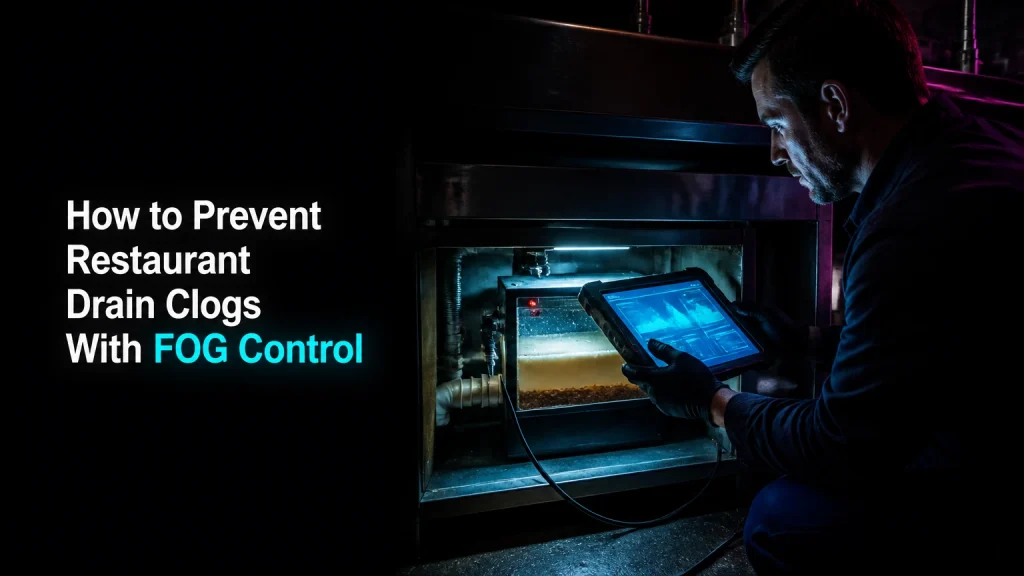
To prevent restaurant drain clogs, control fats, oils, and grease at the source, keep food solids out of wastewater, maintain strainers and grease interceptors, and train every shift to follow the same procedure. The most effective system combines dry scraping, measured trap pumping, correct equipment sizing, biological maintenance where appropriate, and documented inspections. Key Facts […]
Sewer Backup vs Drain Clog: Fast Home Diagnosis
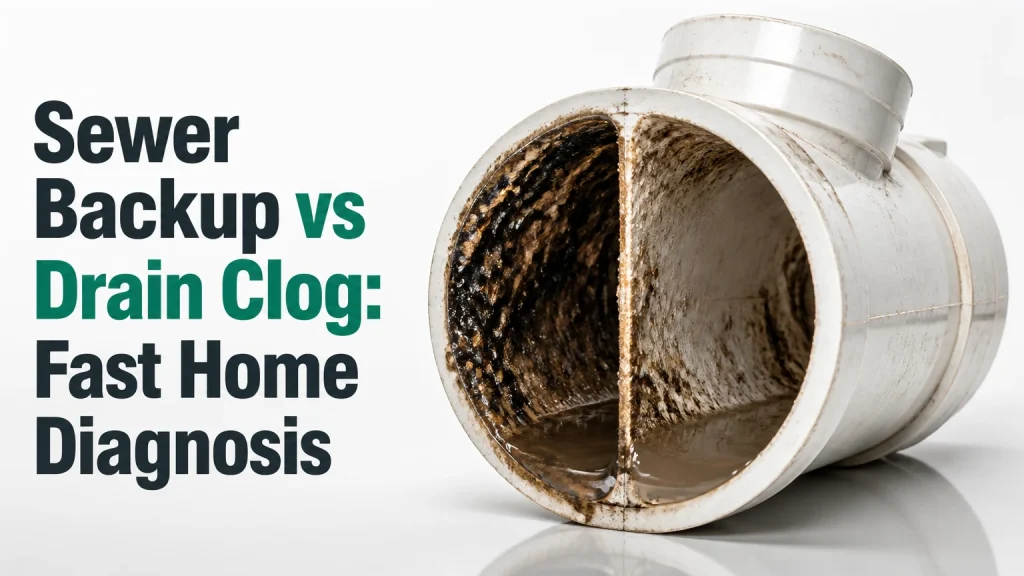
A drain clog is usually a localized blockage affecting one fixture or branch pipe, while a sewer backup is a restriction or failure in the building’s main sewer lateral, municipal sewer, or septic outlet. One slow sink suggests a branch clog; sewage rising from a basement drain or several fixtures backing up indicates a main-line […]
Why Toilet Gurgles When Shower Drains: Diagnose Clogs
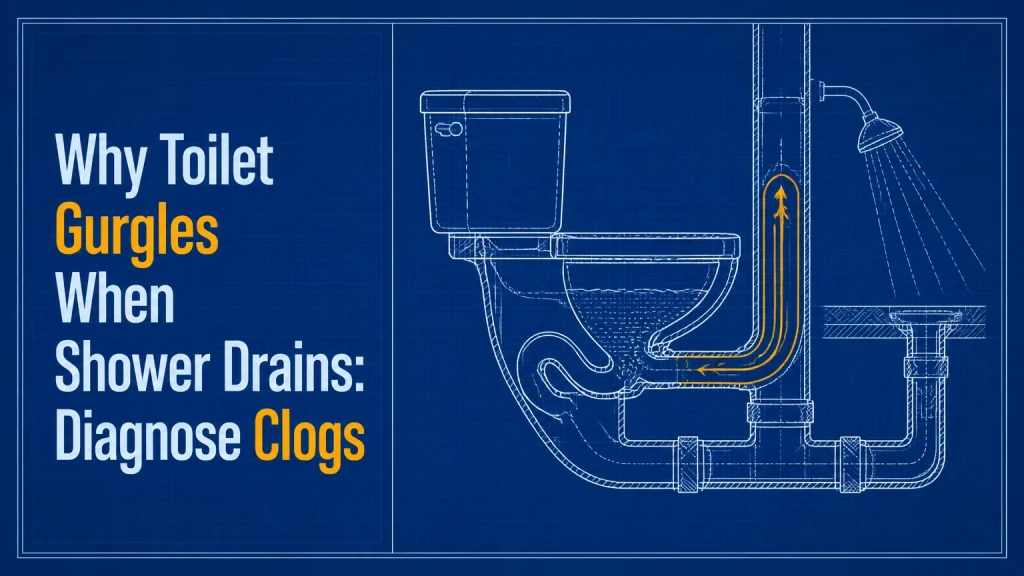
A toilet gurgles when the shower drains because water is moving through a restricted or poorly vented drain-waste-vent system. The shower and toilet may share a branch drain, so escaping air uses the toilet trap as a pressure-release path. The result is bubbling, chugging, or a brief change in toilet-bowl water level. Key Facts at […]
Why Water Backs Up Into Bathtub: Causes and Fixes
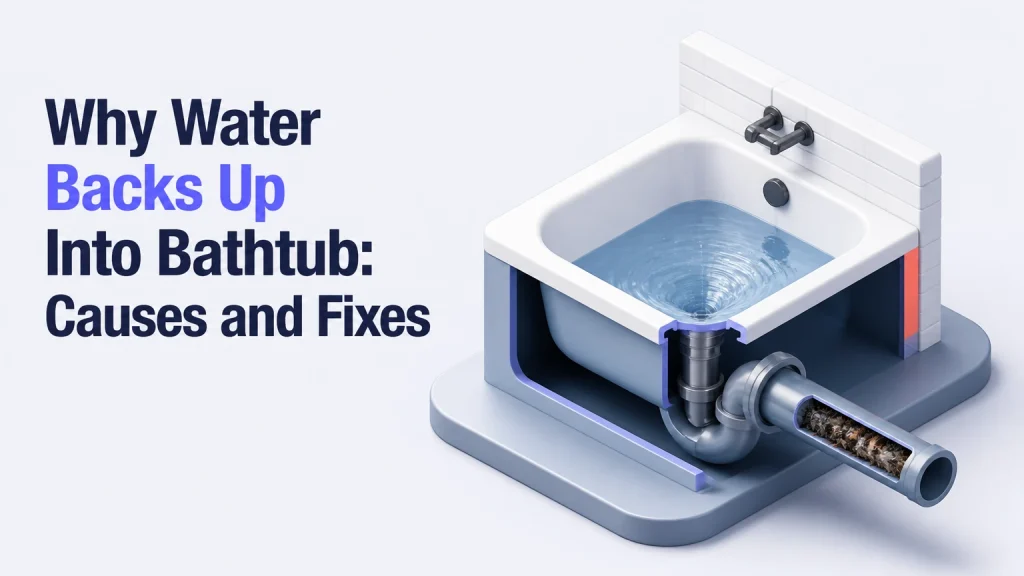
Water backs up into a bathtub because a blockage, damaged pipe, full septic system, or municipal sewer restriction prevents wastewater from leaving the home. The bathtub is often the lowest open fixture, so water discharged by a toilet, washing machine, sink, or shower can reverse through the tub drain before it reaches higher fixtures. Key […]
Restaurant Drain Clog Causes and Prevention Guide
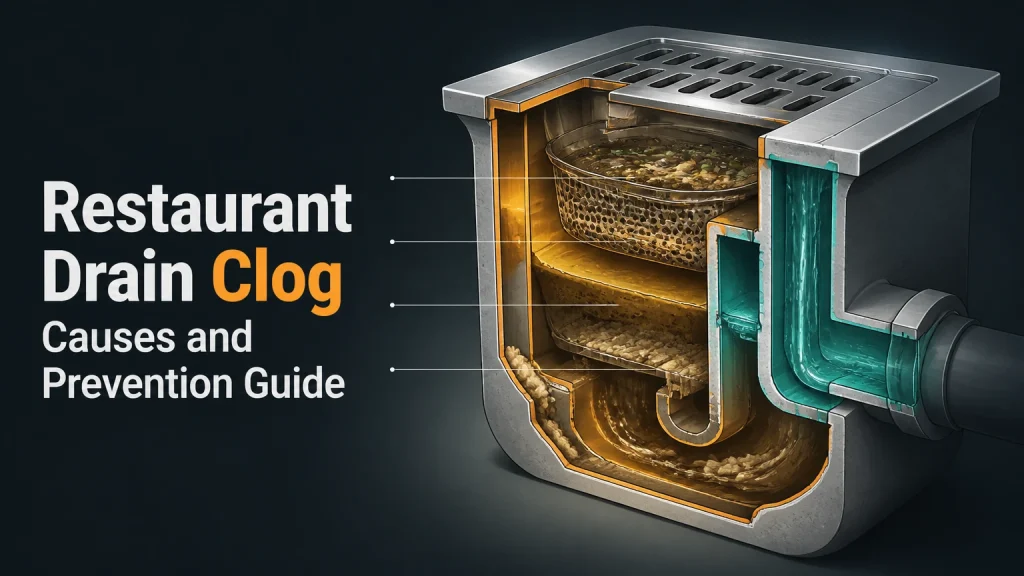
Restaurant drain clog causes usually combine fats, oils, grease, food solids, foreign objects, and defective pipe conditions. FOG cools and coats the line, while starches, fibers, scale, and debris attach to that rough surface until wastewater cannot pass. Commercial kitchens clog faster than homes because high-volume sinks, dishwashers, floor drains, and grease interceptors discharge repeatedly […]
Sewer Line Clog vs Septic Tank Problem: Spot the Difference
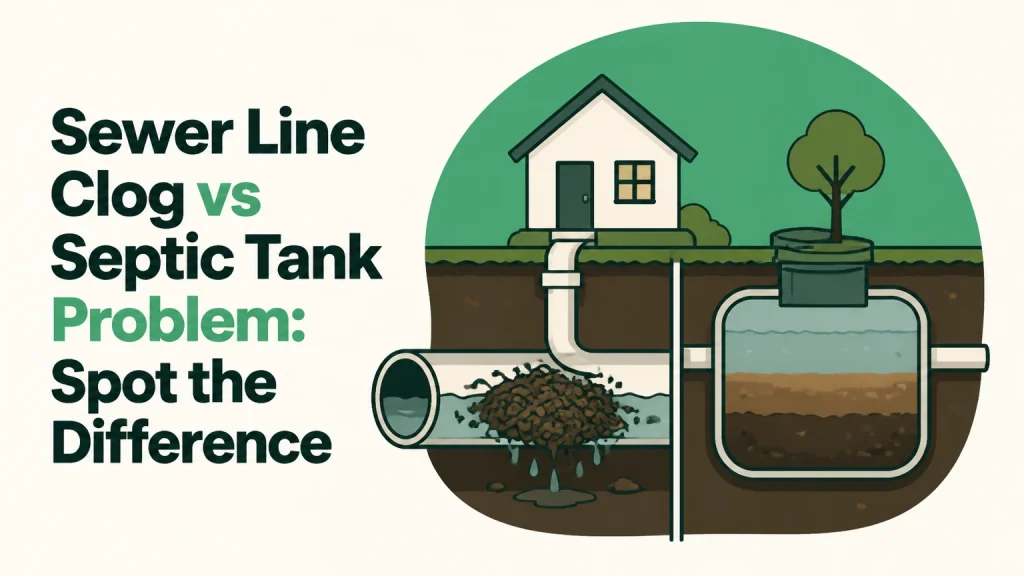
A sewer line clog vs septic tank problem comparison comes down to the failed component: a sewer-line clog restricts a pipe, while a septic problem affects the tank, effluent outlet, pump, or drainfield. Multiple indoor backups can indicate either condition, but sewage in the yard, a high tank level, or a failed pump points more […]
How to Prevent Sewer Backup With a Backwater Valve Safely
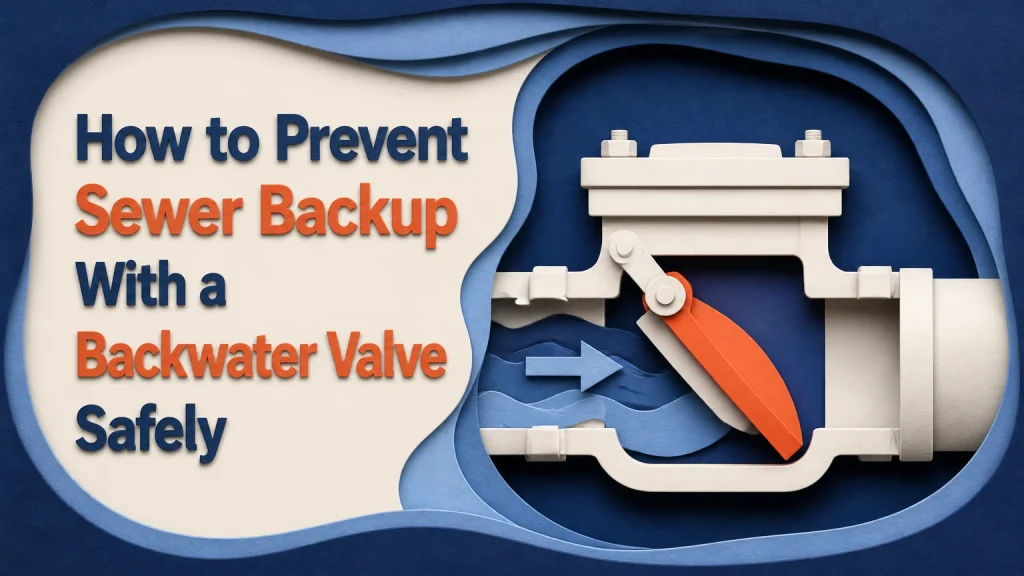
A backwater valve prevents sewer backup by allowing household wastewater to flow toward the municipal sewer while blocking reverse flow into the building drain. For most basement homes, a licensed plumber installs a correctly sized, normally open valve downstream of protected fixtures, adds accessible maintenance access, and tests the flapper before restoring the floor. Key […]